1. Introduction: Singapore’s Energy Challenge and Opportunity
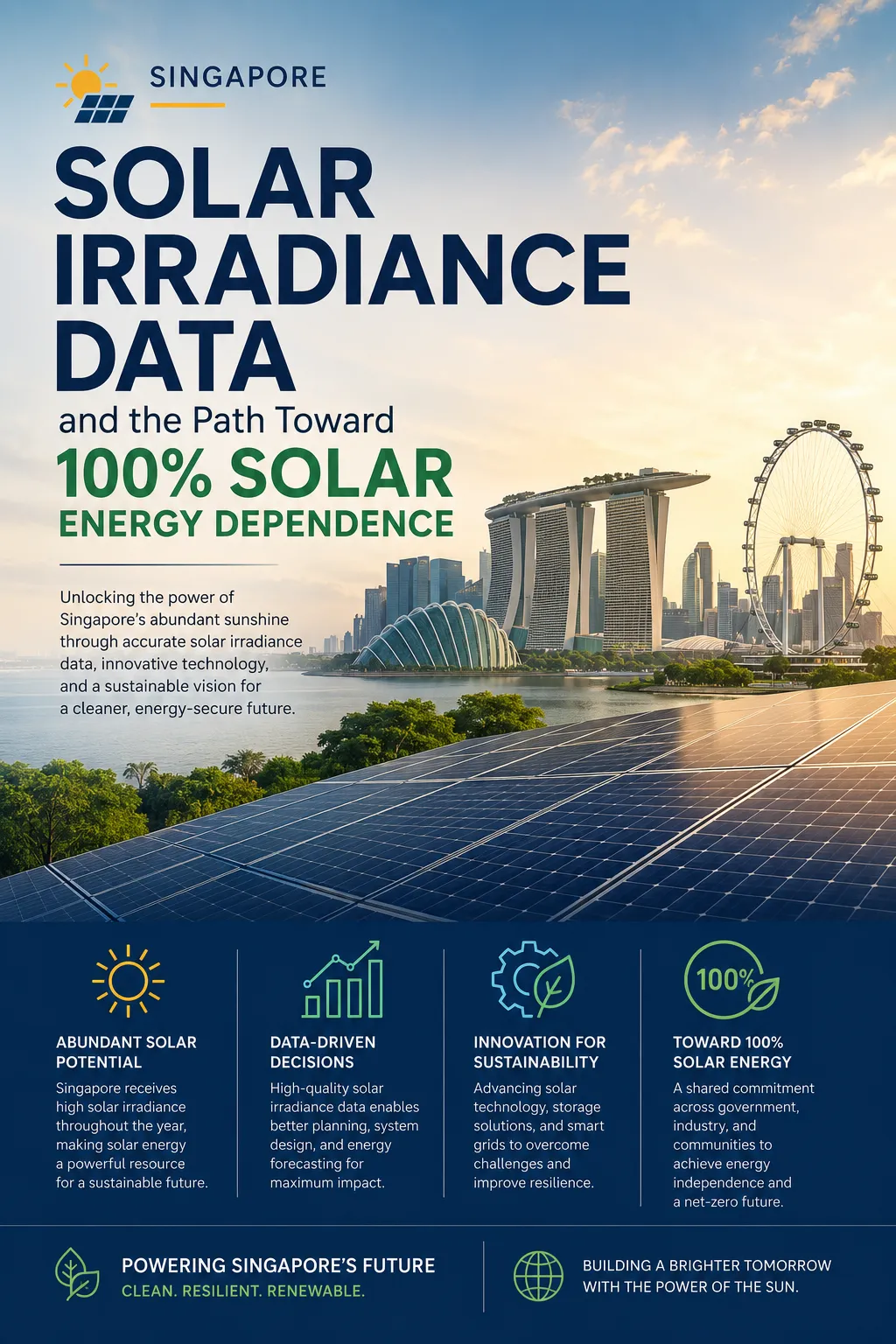
Singapore is a highly urbanized island nation with limited natural resources and one of the highest electricity demands per square kilometer in the world. Currently, over 95% of Singapore’s electricity is generated using imported natural gas, making energy security and carbon neutrality a pressing national concern. As global climate commitments tighten, solar energy has emerged as the most viable renewable resource for Singapore, given its equatorial location and high year-round solar irradiance.
This post critically analyzes Singapore’s solar irradiance data and evaluates whether the nation can realistically achieve 100% energy dependence on solar power through technology, policy, and regional cooperation.
2. Understanding Solar Irradiance in Singapore
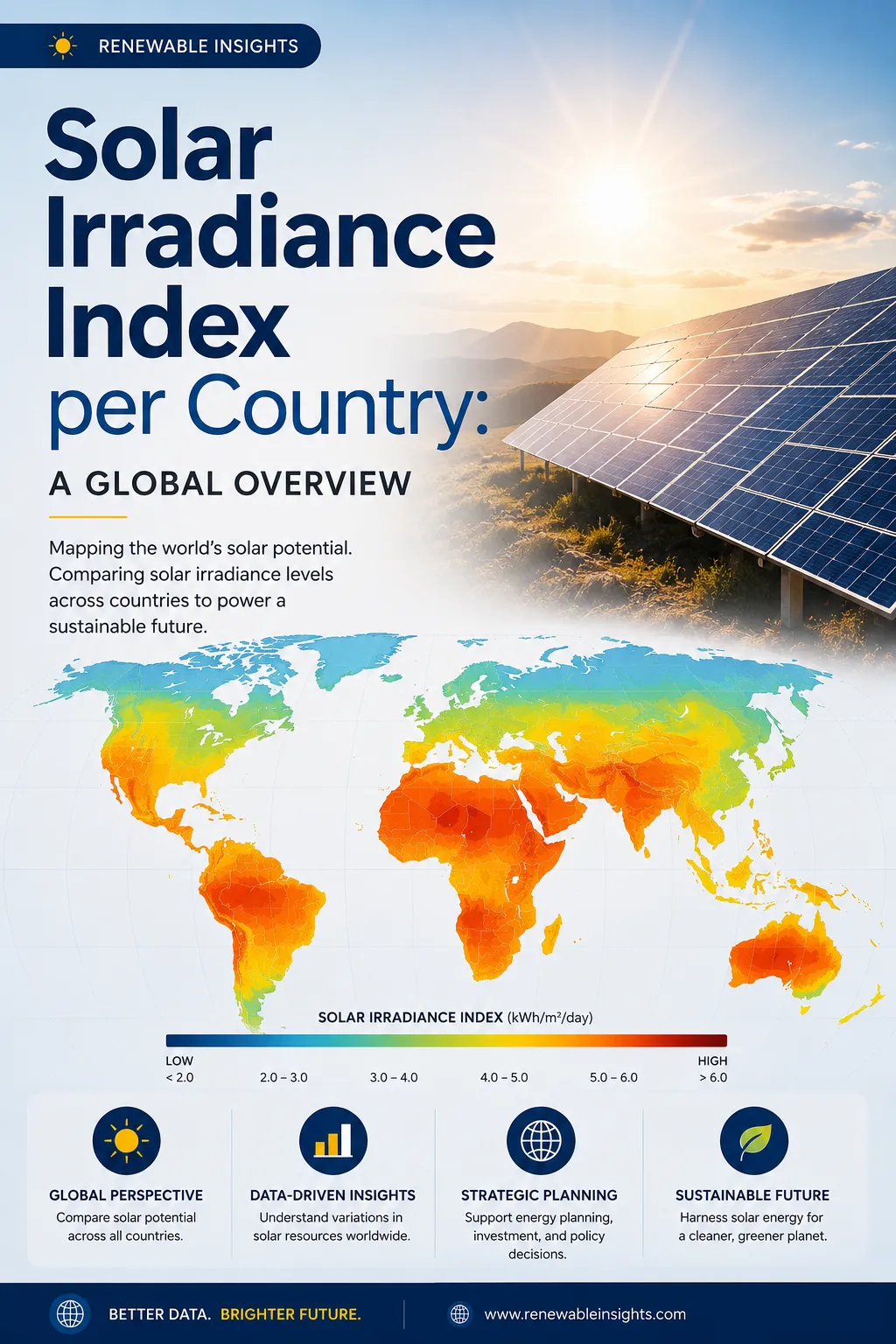
Solar irradiance refers to the power of solar radiation received per unit area, typically measured in kilowatt-hours per square meter per day (kWh/m²/day). Due to its geographic position near the equator, Singapore enjoys relatively stable solar exposure throughout the year.
Key Solar Irradiance Metrics
- Average Global Horizontal Irradiance (GHI): 4.0–4.5 kWh/m²/day
- Annual Solar Irradiance: ~1,600 kWh/m²/year
- Seasonal Variability: Minimal compared to temperate regions
According to the National Solar Repository of Singapore, solar output fluctuations are largely influenced by cloud cover rather than seasonal sun angle shifts. This consistency provides a strong technical foundation for large-scale solar deployment.
(Source: https://www.seris.nus.edu.sg)
3. Review of Singapore’s Solar Resource Potential
Despite land constraints, Singapore’s solar potential is significant when evaluated through surface optimization rather than land expansion.
Available Solar Surfaces
- Rooftops of HDB flats and commercial buildings
- Floating solar farms on reservoirs
- Vertical façades (Building Integrated Photovoltaics – BIPV)
A study by the Solar Energy Research Institute of Singapore (SERIS) estimates that rooftop and reservoir-based solar alone could support up to 8–10 GWp of installed capacity, producing approximately 10–12 TWh annually.
(Source: https://www.nus.edu.sg/research/seris)
4. Current Energy Demand vs Solar Supply Gap
Singapore’s total electricity consumption currently exceeds 55 TWh per year. Even under aggressive domestic solar deployment, local generation can only meet 20–25% of national demand.
Key Limitation Factors
- Limited land availability
- High population density
- Competing urban infrastructure needs
This gap indicates that 100% solar dependence cannot rely on domestic solar alone, necessitating a multi-layered energy strategy.
5. Technological Advancements Improving Solar Efficiency
Recent technological progress significantly enhances Singapore’s solar viability:
High-Efficiency PV Cells
- Monocrystalline panels exceeding 22% efficiency
- Perovskite-silicon tandem cells under active development
Floating Solar Innovation
Singapore hosts one of Southeast Asia’s largest floating solar farms at Tengeh Reservoir, reducing land use conflicts while improving panel efficiency through evaporative cooling.
(Source: https://www.pub.gov.sg)
6. Energy Storage as the Critical Enabler
Solar power’s intermittency requires robust energy storage solutions to ensure grid stability.
Storage Technologies Under Deployment
- Lithium-ion grid-scale batteries
- Vanadium redox flow batteries
- Hydrogen electrolysis for long-term storage
Singapore’s Energy Market Authority (EMA) has already commissioned a 200 MWh energy storage system, laying the groundwork for a solar-heavy grid.
(Source: https://www.ema.gov.sg)
7. Regional Solar Imports: The ASEAN Power Grid
To reach 100% solar dependence, Singapore must expand beyond its borders.
Cross-Border Solar Energy Strategy
- Importing solar electricity from Australia and Malaysia
- Participation in the ASEAN Power Grid initiative
- Undersea HVDC transmission lines
The Australia-Asia PowerLink project alone proposes exporting up to 15 GW of solar power to Singapore.
(Source: https://www.sun-cable.com)
This regional approach allows Singapore to offset land scarcity while maintaining solar-centric energy independence.
8. Policy Framework and Government Commitment
Singapore’s government plays a decisive role in accelerating solar adoption.
Key Policy Instruments
- SolarNova Programme for public sector deployment
- Carbon tax driving renewable investment
- Mandatory solar readiness for new developments
The Green Plan 2030 explicitly targets 2 GWp of solar capacity by 2030, positioning solar as the backbone of Singapore’s clean energy transition.
(Source: https://www.greenplan.gov.sg)
9. Economic and Environmental Implications
Economic Benefits
- Reduced fossil fuel import costs
- Growth in clean energy jobs
- Long-term electricity price stability
Environmental Impact
- Reduction of over 20 million tons of CO₂ annually
- Improved urban air quality
- Alignment with Paris Agreement targets
Solar dependence also enhances national resilience against volatile global energy markets.
10. Challenges to 100% Solar Dependence
Despite strong fundamentals, challenges remain:
- Grid intermittency management
- High upfront capital costs
- Public acceptance of infrastructure expansion
However, these barriers are increasingly mitigated through declining solar costs and improved energy market regulations.
11. Roadmap to 100% Solar Energy Dependence
Phase-Wise Strategy
- Maximize domestic solar surfaces
- Scale energy storage infrastructure
- Import regional solar power
- Digitalize grid management with AI forecasting
- Phase down natural gas dependency
This hybrid solar ecosystem allows Singapore to achieve effective 100% solar reliance, even if not all energy is domestically generated.
12. Conclusion: A Solar-Powered Singapore Is Achievable
Singapore’s solar irradiance profile, combined with technological innovation, strategic regional partnerships, and strong policy support, makes 100% energy dependence on solar power a realistic long-term goal. While domestic limitations prevent total self-generation, a diversified solar strategy—integrating local production, energy storage, and cross-border imports—ensures energy security, economic competitiveness, and environmental sustainability.
With continued investment and regional collaboration, Singapore can emerge as a global model for solar-driven urban energy systems.