
FarmingSustainability

Best Yield Crop Per Square Meter in India: An Analysis of High Productivity Farming Models

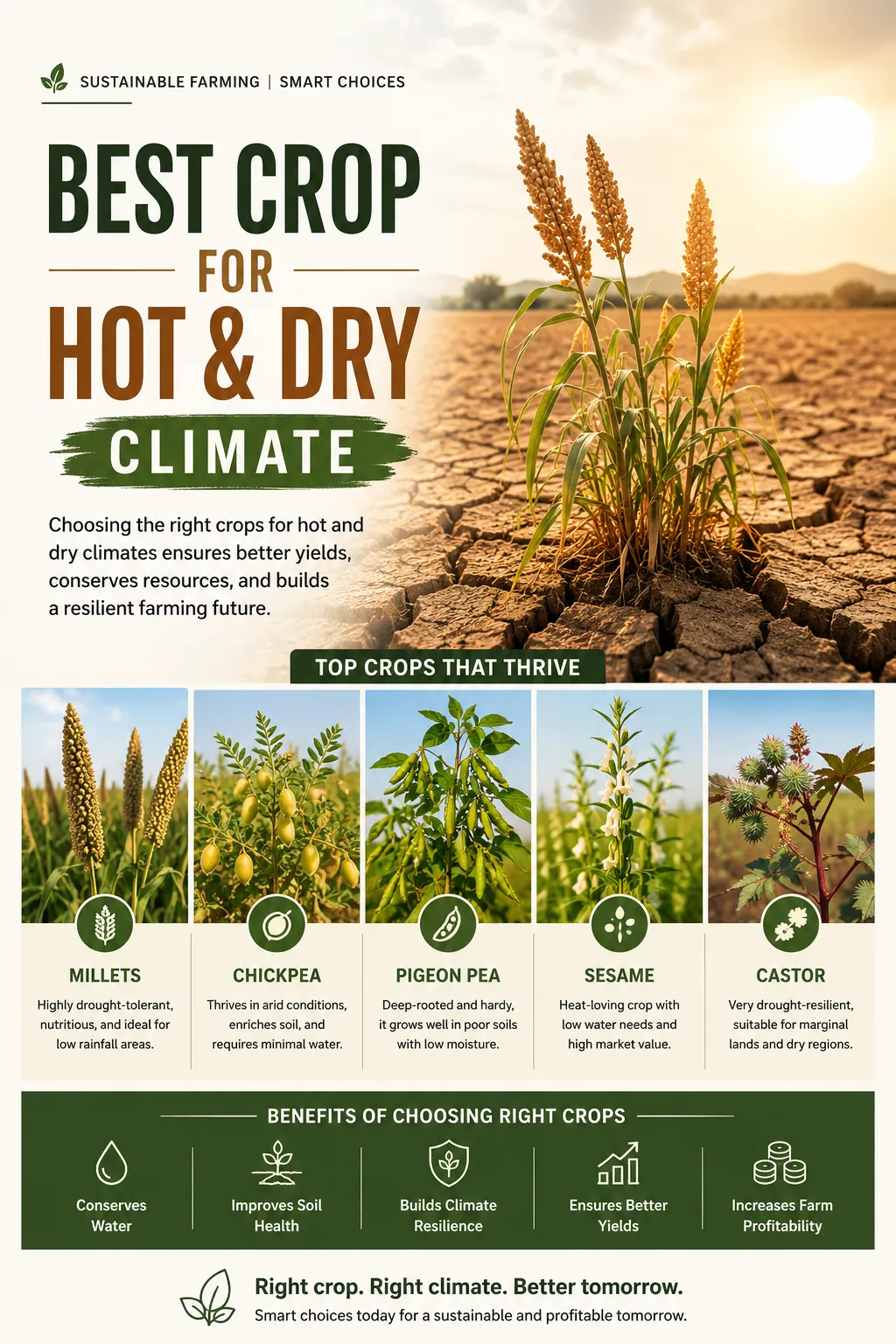
India’s agricultural economy is rapidly shifting from acreage-focused cultivation to productivity-focused cultivation. With rising land prices, shrinking farm holdings, water scarcity, urban farming adoption, and demand for premium vegetables, the question modern farmers increasingly ask is simple: Which crop generates the highest yield per square meter in India? The answer…

SustainabilityTechnologies

Types of Urban Farming: Research on Models Transforming Modern Cities

What Is Urban Farming? Urban farming, also referred to as urban agriculture, involves cultivating, processing, and distributing food within or around urban areas. Unlike traditional agriculture, urban farming utilizes compact spaces, advanced technologies, vertical infrastructure, and community-oriented systems to optimize food production in densely populated regions. Urban farming systems can…

SustainabilityWaste Reduction

Adaptive Reuse in Architecture

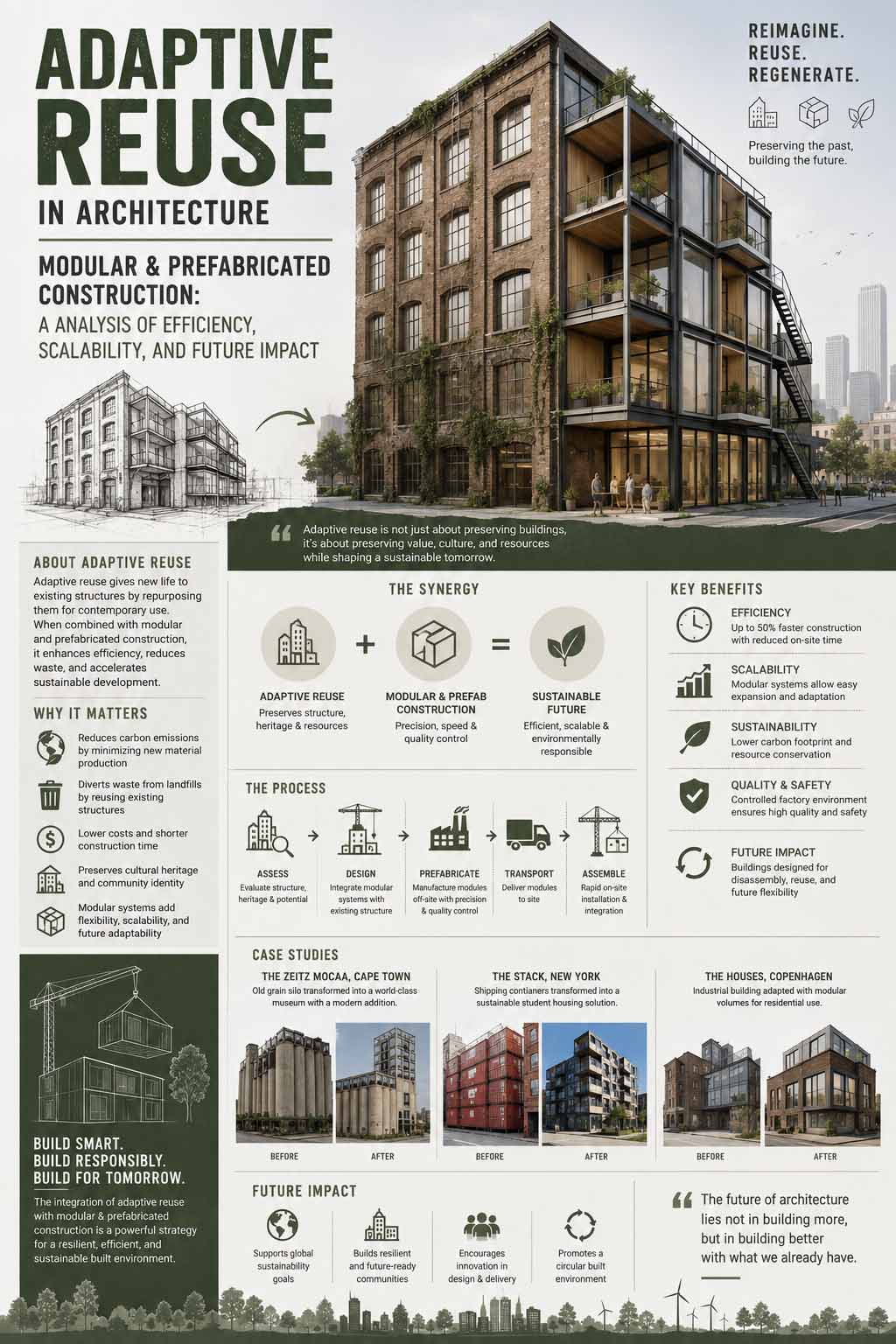
Adaptive reuse has emerged as a critical strategy in contemporary architecture and urban development, offering a pragmatic response to the environmental, economic, and cultural challenges posed by rapid urbanization. Unlike demolition and new construction, adaptive reuse emphasizes the transformation of existing structures into functional spaces while preserving their historical and…

Technology

Modular & Prefabricated Construction: A Analysis of Efficiency, Scalability, and Future Impact

Modular and prefabricated construction is rapidly transforming the global building industry by introducing efficiency, cost predictability, and sustainability at scale. Unlike traditional construction methods, which rely heavily on on-site processes, modular construction shifts a significant portion of work to controlled factory environments. This shift is not merely operational—it is deeply…

Sustainability

Integration with Nature & Biophilic Concepts: An Analytical Research Perspective

1. Conceptual Framework of Integration with Nature Integration with nature refers to the intentional incorporation of natural systems, processes, and elements into human-designed environments to enhance ecological balance, human well-being, and long-term sustainability. This concept is rooted in the recognition that human physiological and psychological systems evolved in close interaction…

China

New Chinese / “Neo-Chinese” Design Aesthetics: Cultural Continuity in a Contemporary Visual Language

Introduction: The Emergence of Neo-Chinese Design New Chinese, often referred to as “Neo-Chinese,” design aesthetics represent a defining shift in contemporary visual culture. Rather than functioning as a revivalist or nostalgic movement, Neo-Chinese design emerges from a critical reassessment of tradition under conditions of globalization, urbanization, and cultural rearticulation. It…

SustainabilityTechnologyWater Conservation

Singapore Water Security: Data-Driven Governance, Integrated Infrastructure, and Long-Term Resilience

1. Introduction: Water Security in a Water-Scarce City-State Singapore is globally recognised as a benchmark case in urban water security despite having no significant natural aquifers, limited land area, and high population density. Annual rainfall averages around 2,400 mm, yet spatial constraints and rapid urbanisation historically limited the country’s capacity…