Introduction
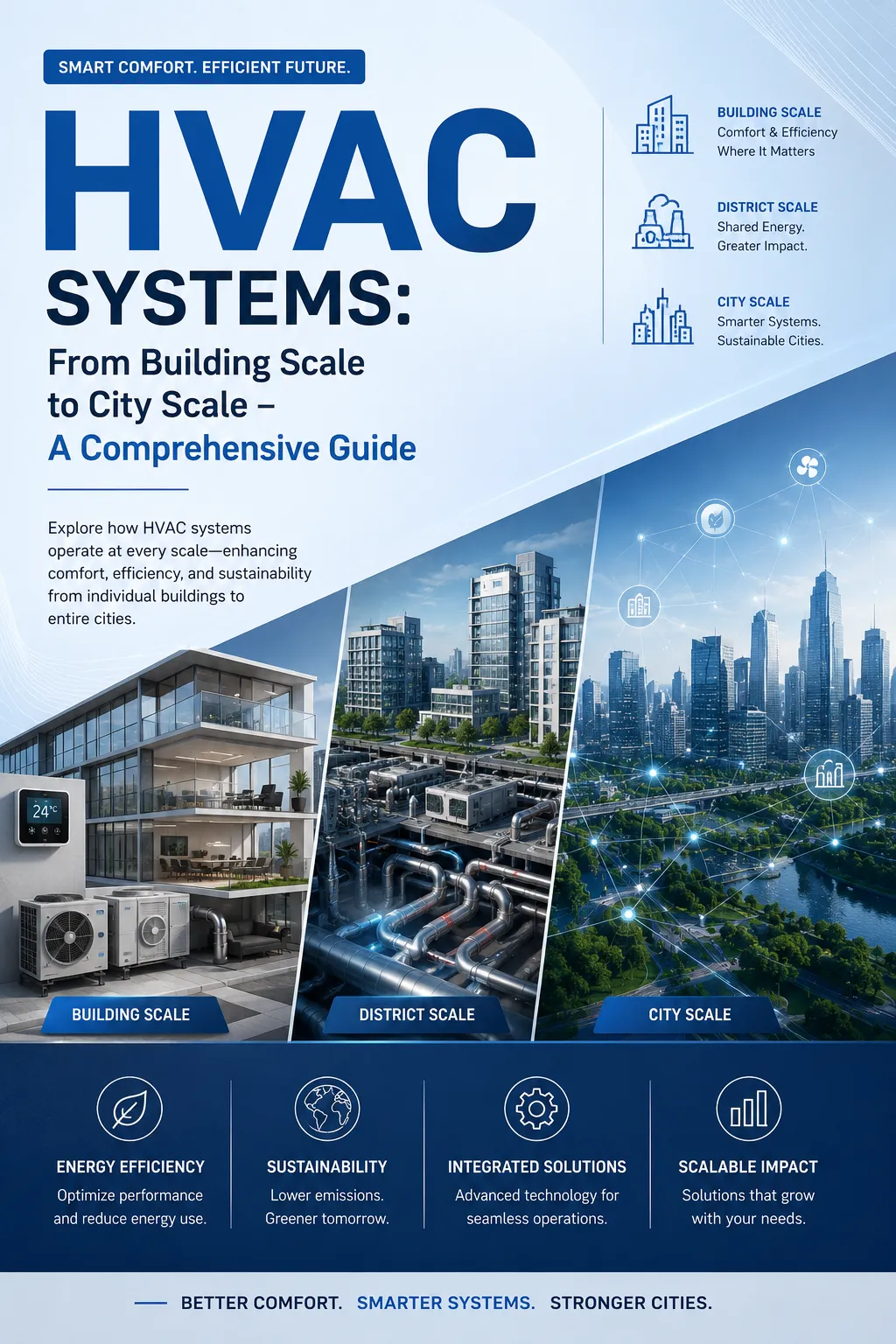
Heating, Ventilation, and Air Conditioning (HVAC) systems are integral to modern infrastructure, ensuring thermal comfort and air quality in various settings. As urbanization accelerates, the role of HVAC systems expands from individual buildings to entire cityscapes, influencing energy consumption, environmental sustainability, and public health.
| Aspect | Building-Scale HVAC Systems | City-Scale HVAC Systems |
|---|---|---|
| Definition | HVAC systems designed to provide heating, cooling, and ventilation for individual buildings. | Centralized HVAC systems serving multiple buildings or districts through interconnected infrastructure. |
| Primary Purpose | Maintain indoor thermal comfort and air quality for occupants. | Optimize energy use, reduce emissions, and improve environmental sustainability across urban areas. |
| Main Components | • Heating units (furnaces, boilers, heat pumps) • Cooling units (air conditioners, chillers) • Ventilation systems • Control systems (thermostats, BMS) | • Central heating/cooling plants • District heating and cooling networks • Insulated distribution pipelines • Smart monitoring and control systems |
| Advanced Technologies | • Variable Air Volume (VAV) • Variable Refrigerant Flow (VRF) • Heat Recovery Ventilation (HRV) • Demand-Controlled Ventilation (DCV) | • District Heating & Cooling (DHC) • Predictive maintenance using IoT sensors • AI-based energy optimization • Renewable energy integration |
| Energy Efficiency Measures | • High-efficiency HVAC equipment • Smart thermostats • Zoning systems • Renewable energy integration | • Centralized energy generation • Load balancing across buildings • Waste heat recovery • Integration with smart city infrastructure |
| Applications | Residential buildings, offices, hospitals, schools, commercial buildings | Smart cities, urban districts, campuses, industrial parks, mixed-use developments |
| Benefits | • Improved indoor comfort • Better indoor air quality • Reduced energy consumption • Lower operating costs | • Higher overall energy efficiency • Lower greenhouse gas emissions • Reduced maintenance costs • Sustainable urban development |
| Environmental Impact | Reduces building energy use through efficient equipment and controls. | Significantly lowers city-wide carbon emissions and supports climate goals. |
| Economic Advantages | Lower utility bills and maintenance expenses. | Economies of scale, reduced infrastructure redundancy, and long-term cost savings. |
| Health & Comfort | Maintains comfortable indoor temperatures and improves air quality. | Provides reliable thermal comfort and healthier environments across communities. |
| Challenges | • Initial installation cost • System maintenance • Proper equipment sizing | • High infrastructure investment • Complex system integration • Coordination among stakeholders • Regulatory compliance |
| Standards & Regulations | Building Management Systems (BMS), ASHRAE standards, energy-efficient equipment guidelines. | ASHRAE 90.1, district energy regulations, smart city policies, environmental standards. |
| Examples | Buildings using VRF, VAV, HRV, and DCV systems. | Singapore Marina Bay District Cooling System; Polk County Administration Building electrified HVAC project. |
HVAC Systems at the Building Scale
1. Overview of Building-Scale HVAC Systems
At the building level, HVAC systems are designed to regulate indoor environments, providing heating, cooling, and ventilation tailored to the occupants’ needs. These systems vary based on building size, function, and occupancy patterns.
2. Key Components
Heating Units: Furnaces, boilers, and heat pumps that provide warmth during colder periods.
Cooling Units: Air conditioners and chillers that remove heat to maintain comfortable temperatures.
Ventilation Systems: Ensure the circulation of fresh air, removing indoor pollutants and maintaining air quality.
Control Systems: Thermostats and building management systems (BMS) that regulate HVAC operations.onehourairphx.com
3. Advanced Technologies
Variable Air Volume (VAV) Systems: Adjust airflow based on demand, enhancing energy efficiency and comfort. Wikipedia
Variable Refrigerant Flow (VRF) Systems: Allow for individualized temperature control in different zones, improving comfort and reducing energy consumption. Wikipedia
Heat Recovery Ventilation (HRV): Recovers heat from exhaust air to precondition incoming fresh air, reducing energy usage. Wikipedia+1bcrcheating.com+1
Demand-Controlled Ventilation (DCV): Modulates ventilation rates based on occupancy and indoor air quality metrics, optimizing energy use. Wikipedia+1Wikipedia+1
4. Energy Efficiency and Sustainability
Modern HVAC systems incorporate energy-efficient components and smart controls to minimize energy consumption. Implementing zoning, utilizing high-efficiency equipment, and integrating renewable energy sources contribute to sustainable building operations.bcrcheating.com+1onehourairphx.com+1
HVAC Systems at the City Scale
1. Introduction to City-Scale HVAC
As urban areas grow, centralized HVAC solutions become essential for managing energy use and maintaining environmental quality across multiple buildings and districts.
2. District Heating and Cooling Systems
District systems provide centralized heating or cooling to multiple buildings through a network of insulated pipes.Wikipedia+2Wikipedia+2bcrcheating.com+2
District Cooling: Delivers chilled water to buildings for air conditioning, often using seawater or other natural sources for cooling. Wikipedia
District Heating: Supplies heat generated from centralized plants to buildings, improving efficiency and reducing emissions.bcrcheating.com
3. Integration with Smart City Infrastructure
City-scale HVAC systems are increasingly integrated with smart city technologies, enabling:
Predictive Maintenance: Utilizing sensors and data analytics to anticipate system failures and schedule maintenance proactively.
Energy Optimization: Adjusting operations based on real-time data, weather forecasts, and occupancy patterns to enhance efficiency.
Renewable Energy Integration: Incorporating solar, wind, and other renewable sources to power HVAC systems, reducing reliance on fossil fuels. MDL Solutions
4. Case Studies
Polk County Administration Building: Upgraded to an electric HVAC system to reduce greenhouse gas emissions by 90% by 2040. Axios
Singapore’s Marina Bay: Implemented a district cooling system supplying chilled water to multiple buildings, enhancing energy efficiency. Wikipedia
Benefits of Scaling HVAC Systems
1. Energy Efficiency
Centralized systems reduce redundancy, optimize energy use, and lower operational costs.
2. Environmental Impact
Efficient HVAC systems contribute to reduced greenhouse gas emissions and support climate goals.bcrcheating.com
3. Economic Advantages
Lower energy bills, reduced maintenance costs, and potential incentives for sustainable practices offer economic benefits.
4. Enhanced Comfort and Health
Improved air quality and consistent indoor temperatures enhance occupant comfort and well-being.bcrcheating.com+1onehourairphx.com+1
Challenges and Considerations
1. Infrastructure Investment
Implementing city-scale HVAC systems requires significant upfront investment in infrastructure and technology.
2. System Integration
Ensuring compatibility between various technologies and existing systems is crucial for seamless operation.
3. Regulatory Compliance
Adhering to standards like ASHRAE 90.1 ensures energy efficiency and environmental responsibility. Wikipedia
Conclusion
HVAC systems are pivotal in shaping sustainable, comfortable, and energy-efficient environments from individual buildings to entire cities. Embracing advanced technologies and integrated approaches enables communities to meet the challenges of urbanization and climate change effectively.Wikipedia