Introduction
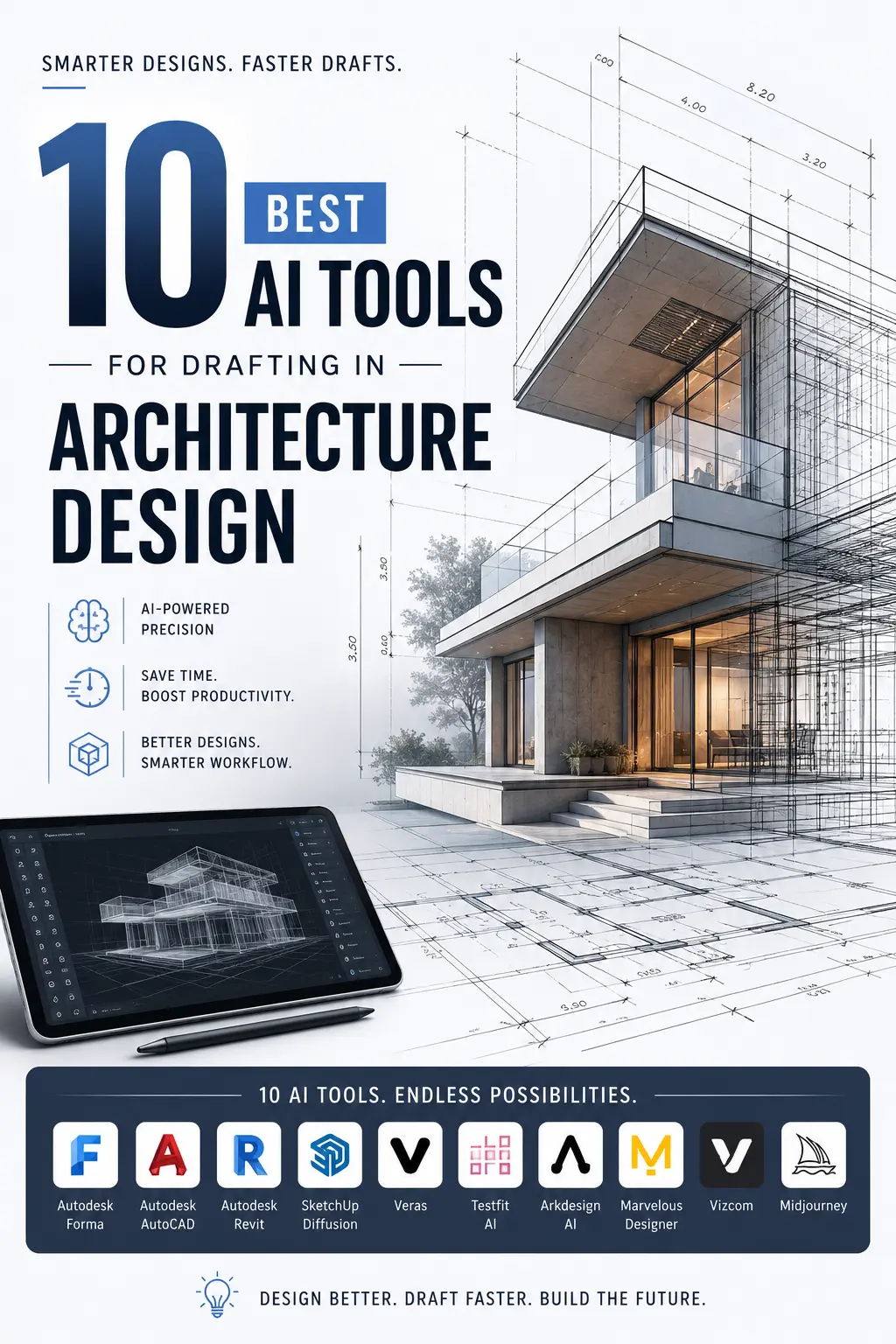
The architecture, engineering, and construction (AEC) industry is undergoing a significant digital transformation. Architectural drafting, once dependent on manual processes and conventional CAD workflows, now benefits from advanced artificial intelligence technologies that improve productivity, accuracy, visualization, and design optimization. The article put spotlight on Best AI Tools for Drafting in architectural design.
From conceptual sketches to detailed construction documentation, AI-powered drafting tools help architects streamline workflows, automate repetitive tasks, reduce errors, and explore multiple design alternatives in less time.
This comprehensive guide analyzes the top 10 Best AI Tools for Drafting in Architecture Design that are reshaping the future of architectural design and project delivery.
Why AI is Becoming Essential in Architectural Drafting
Modern architecture firms face increasing pressure to deliver projects faster while maintaining design quality and compliance standards. AI-powered drafting solutions provide several advantages:
- Accelerated design iterations
- Improved drafting accuracy
- Automated documentation generation
- Enhanced BIM integration
- Better sustainability analysis
- Real-time visualization capabilities
- Reduced project delivery timelines
- Data-driven design optimization
According to research published by the Autodesk Architecture Resource Center, AI-assisted workflows can significantly reduce repetitive drafting efforts while improving project coordination. Here are the list of 10 Best AI Tools for Drafting in Architecture Design.
1. Autodesk Revit with AI-Powered Generative Design
Website: https://www.autodesk.com/products/revit
Overview
Autodesk Revit remains one of the most widely adopted Building Information Modeling (BIM) platforms globally. Its AI-powered Generative Design capabilities allow architects to automatically evaluate multiple layout and planning options based on predefined project constraints.
Key Drafting Features
Automated Space Planning
The platform generates numerous floor plan alternatives while considering occupancy, circulation, and spatial efficiency.
Intelligent Documentation
AI assists in creating coordinated drawings, schedules, and annotations automatically.
Clash Detection
Advanced algorithms identify design conflicts before construction begins.
Best For
- Large-scale commercial projects
- BIM-based workflows
- Integrated architectural drafting
2. TestFit
Website: https://testfit.io
Overview
TestFit specializes in real estate feasibility and rapid site planning. The platform automates complex drafting tasks that traditionally require hours of manual effort.
Key Drafting Features
Instant Site Layout Generation
Architects can generate optimized building layouts within seconds.
Parking Optimization
AI evaluates parking configurations based on zoning requirements.
Density Analysis
The software determines maximum project yield for a given site.
Advantage
Developers and architects often use TestFit during pre-design phases to validate project feasibility before detailed drafting begins.
3. Hypar
Website: https://hypar.io
Overview
Hypar introduces computational design automation into architectural workflows by enabling architects to create rule-based design systems.
Key Drafting Features
Automated Floor Plan Creation
Generate multiple building configurations based on project requirements.
Parametric Design Intelligence
Design elements automatically adapt to changing parameters.
Cloud-Based Collaboration
Real-time updates improve multidisciplinary coordination.
Best Applications
- Office buildings
- Residential developments
- Mixed-use projects
4. Spacemaker AI
Website: https://www.spacemakerai.com
Overview
Acquired by Autodesk, Spacemaker AI focuses on early-stage architectural planning and site optimization.
Key Drafting Features
Environmental Analysis
Evaluates sunlight, wind, and noise conditions.
Site Layout Optimization
Generates multiple massing studies based on performance metrics.
Density Planning
Balances profitability and livability factors.
Why Architects Use It
The platform reduces manual drafting iterations while improving site utilization efficiency.
5. ArkDesign AI
Website: https://arkdesign.ai
Overview
ArkDesign AI specializes in automated residential and commercial floor plan generation.
Key Drafting Features
AI Floor Plan Generation
Produces optimized layouts from project inputs.
Compliance-Aware Drafting
Considers zoning regulations during planning.
Multiple Design Alternatives
Generates numerous layout options instantly.
Ideal Use Cases
- Housing developments
- Apartment complexes
- Urban planning projects
6. Finch 3D
Website: https://finch3d.com
Overview
Finch 3D focuses on real-time design optimization and architectural feasibility studies.
Key Drafting Features
Instant Design Feedback
Adjustments automatically update project metrics.
Performance-Based Drafting
Evaluates floor area ratios, daylight, and circulation.
Dynamic Building Models
Drafting evolves automatically as project parameters change.
Architectural Benefits
Finch significantly reduces repetitive redesign efforts during schematic design phases.
7. Veras by EvolveLAB
Website: https://www.evolvelab.io/veras
Overview
Veras integrates AI visualization directly into architectural workflows.
Key Drafting Features
Sketch-to-Render Conversion
Transforms conceptual drawings into realistic visualizations.
BIM Integration
Works seamlessly with Revit and SketchUp environments.
Rapid Design Exploration
Generate multiple visual interpretations instantly.
Productivity Impact
Architects can communicate design intent more effectively during early project presentations.
8. Midjourney
Website: https://www.midjourney.com
Overview
Midjourney has become a powerful conceptual design companion for architects exploring design directions before drafting begins.
Key Drafting Benefits
Concept Generation
Produces high-quality architectural inspirations.
Material Exploration
Tests facade and interior concepts visually.
Design Ideation
Expands creative possibilities during pre-design phases.
Although not a drafting platform itself, Midjourney significantly accelerates conceptual design development.
Strategic Value
9. Stable Diffusion Architecture Workflows
Website: https://stability.ai
Overview
Stable Diffusion provides open-source AI image generation capabilities that architects increasingly integrate into design workflows.
Key Features
Concept Visualization
Transforms sketches into architectural imagery.
Facade Development
Rapidly explores material combinations.
Design Presentation Enhancement
Creates compelling client-facing visuals.
Best For
Architects seeking flexible and customizable AI-assisted design exploration.
10. Autodesk Forma
Website: https://www.autodesk.com/products/forma
Overview
Autodesk Forma represents the next generation of AI-powered planning and design technology.
Key Drafting Features
Real-Time Site Analysis
Evaluates environmental and urban factors.
Automated Massing Studies
Generates building forms optimized for project goals.
Integrated Design Decision Support
Uses predictive analytics to guide planning decisions.
Industry Significance
Forma is increasingly viewed as a cornerstone platform for AI-enabled architectural planning and drafting workflows.
Comparative Analysis of AI Drafting Tools
| Tool | Best Stage | AI Strength | BIM Support |
|---|---|---|---|
| Revit | Detailed Design | Generative Design | Excellent |
| TestFit | Feasibility | Site Planning | Moderate |
| Hypar | Design Automation | Parametric Systems | Good |
| Spacemaker | Early Planning | Site Optimization | Good |
| ArkDesign AI | Residential Layouts | Floor Plan Generation | Moderate |
| Finch 3D | Schematic Design | Real-Time Optimization | Good |
| Veras | Visualization | Rendering Assistance | Excellent |
| Midjourney | Concept Design | Creative Ideation | Limited |
| Stable Diffusion | Visualization | Custom Image Generation | Limited |
| Forma | Urban Planning | Predictive Analytics | Excellent |
How to Choose the Right AI Drafting Tool
Selecting the ideal solution depends on project requirements.
For BIM-Centric Firms
Choose Autodesk Revit and Autodesk Forma.
For Developers
TestFit provides unmatched feasibility analysis capabilities.
For Residential Planning
ArkDesign AI offers specialized floor-plan automation.
For Visualization Workflows
Veras, Midjourney, and Stable Diffusion provide exceptional rendering support.
For Parametric Design Teams
Hypar and Finch 3D deliver powerful computational design capabilities.
Future of AI in Architectural Drafting
The future of architectural drafting will increasingly rely on intelligent automation, predictive analytics, and generative design technologies. Emerging systems will likely automate substantial portions of documentation, compliance checking, sustainability analysis, and construction coordination.
Architects who adopt AI-enhanced workflows today position themselves to deliver projects more efficiently, improve design quality, and maintain a competitive advantage in a rapidly evolving industry.
One thought on “10 Best AI Tools for Drafting in Architecture Design”