Complete Guide to Natural Building Stones for Construction, Architecture and Interior Design
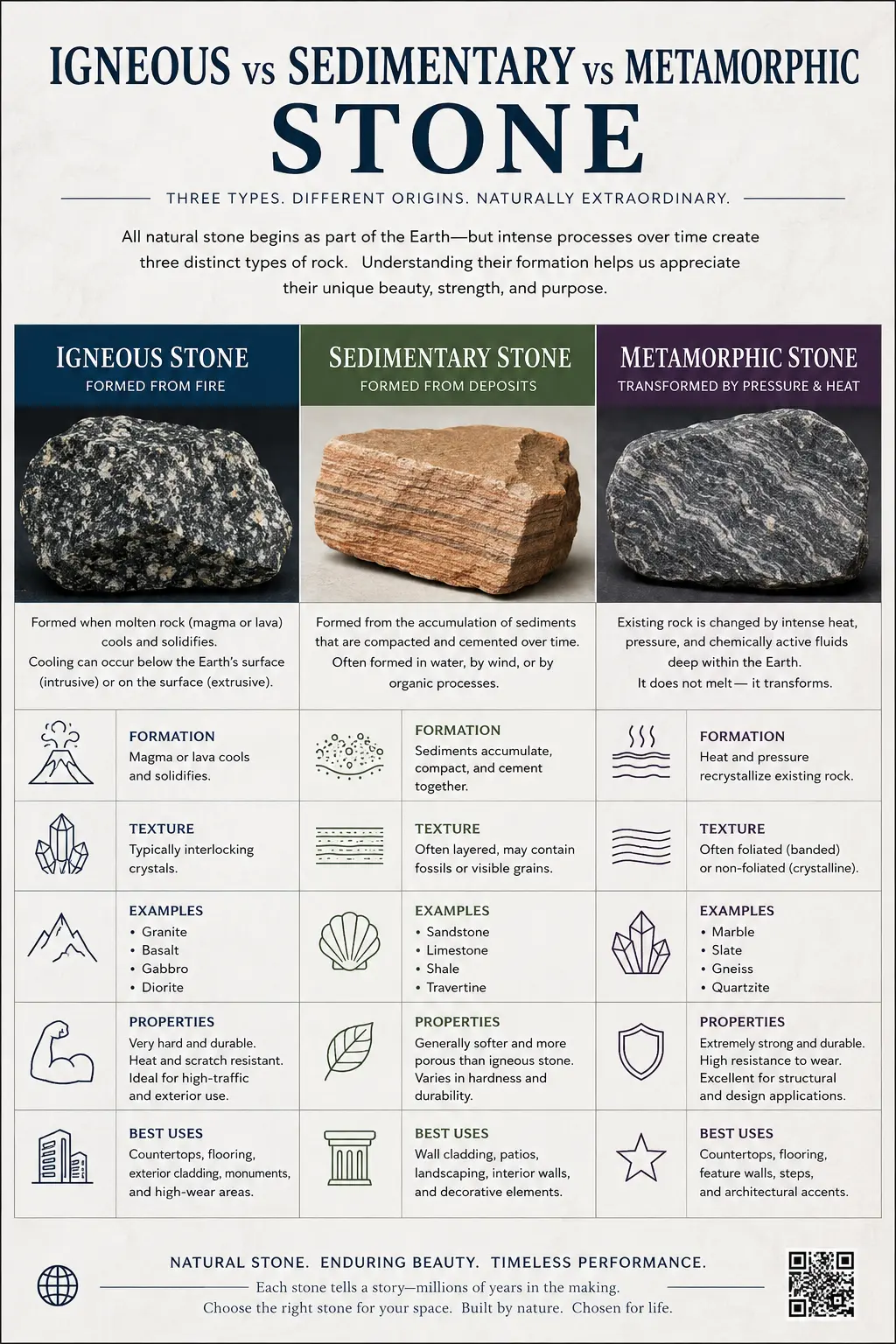
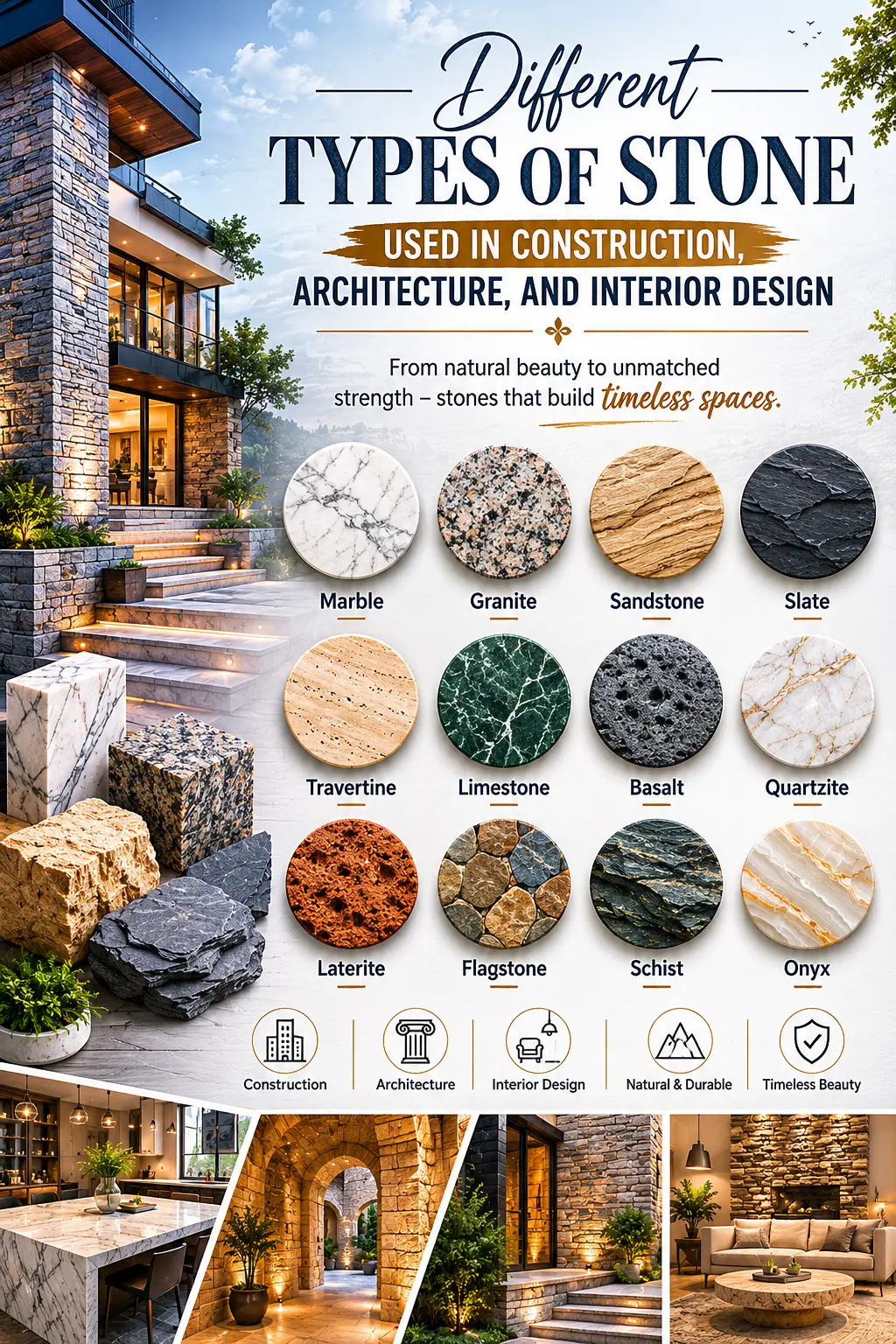
Natural stone has remained one of the most reliable construction materials for centuries due to its exceptional strength, durability, aesthetic appeal, and long-term performance. From monumental structures and commercial buildings to luxury residences and modern interiors, different types of stones serve different functional and decorative purposes. The article discuss the Stone Used in Construction industries based on several parameters.
Understanding the physical and engineering properties of stone—including density, compressive strength, water absorption, permeability, weather resistance, maintenance requirements, and lifecycle cost—is essential for selecting the right material for a project.
Related Reading: Natural Stone Buying Guide
Why Stone Selection Matters in Construction
Selecting the correct stone directly impacts:
- Structural integrity
- Long-term maintenance costs
- Moisture resistance
- Thermal performance
- Aesthetic appearance
- Lifecycle value
- Sustainability metrics
A stone that performs exceptionally well in exterior facades may not be ideal for kitchen countertops, while a decorative interior stone may fail under heavy structural loads.
Explore: Stone Selection Services
Key Technical Parameters Used to Evaluate Building Stones
Before comparing stone types, it is important to understand the engineering criteria commonly used in construction.
1. Density
It determines weight, load-bearing capacity, and structural implications.
Classification
| Category | Density (kg/m³) |
|---|---|
| Low Density | Below 2,200 |
| Medium Density | 2,200–2,600 |
| High Density | Above 2,600 |
Higher-density stones generally offer:
- Better compressive strength
- Improved wear resistance
- Lower water absorption
- Longer service life
2. Water Absorption & Permeability
Water absorption significantly affects durability.
Lower permeability means:
- Better freeze-thaw resistance
- Reduced staining
- Enhanced weather durability
- Lower maintenance costs
Recommended absorption levels:
| Application | Ideal Water Absorption |
| Exterior Cladding | Below 1% |
| Flooring | Below 0.5% |
| Wet Areas | Below 0.3% |
Learn More: Stone Waterproofing Solutions
3. Compressive Strength
Measured in MPa (Megapascals), compressive strength indicates the load-bearing capability of a stone.
| Strength Category | MPa |
| Moderate | 50–100 |
| High | 100–200 |
| Very High | 200+ |
4. Durability
Durability considers:
- Weather resistance
- Abrasion resistance
- Chemical stability
- UV stability
- Structural longevity
High-quality natural stones can easily exceed 75–150 years of service life.
Granite
Overview
Granite is one of the hardest and most durable natural stones available for construction and interior applications.
Formed through the slow crystallization of magma beneath the earth’s surface, granite possesses exceptional structural characteristics.
Browse Granite Products: Premium Granite Collection
Technical Properties
| Property | Granite |
| Density | 2,600–2,800 kg/m³ |
| Water Absorption | 0.1–0.4% |
| Compressive Strength | 130–250 MPa |
| Durability | Excellent |
| Maintenance | Low |
Building Applications
Exterior Applications
- Building facades
- Cladding systems
- Bridge components
- Monument construction
- Landscaping elements
Interior Applications
- Kitchen countertops
- Flooring
- Staircases
- Wall panels
- Vanity tops
Cost Analysis
Granite generally falls into the medium-to-premium price category.
Factors affecting cost include:
- Quarry origin
- Thickness
- Color rarity
- Finish type
- Transportation costs
Best Use Cases
- Luxury residential projects
- Commercial buildings
- High-traffic flooring
- Kitchen surfaces
Marble
Overview
Marble remains synonymous with luxury architecture and premium interiors.
Produced through the metamorphism of limestone, marble offers unmatched visual elegance.
Related Resource: Marble Design Inspiration
Technical Properties
| Property | Marble |
| Density | 2,500–2,700 kg/m³ |
| Water Absorption | 0.2–0.8% |
| Compressive Strength | 70–140 MPa |
| Durability | Good |
| Maintenance | Moderate to High |
Interior Applications
Flooring
Marble flooring remains a preferred choice in:
- Luxury homes
- Hotels
- Corporate headquarters
- Premium retail spaces
Decorative Applications
- Accent walls
- Fireplace surrounds
- Bathroom vanities
- Reception counters
Cost Analysis
Marble costs vary significantly based on:
- Country of origin
- Veining patterns
- Color consistency
- Slab size
Imported marble typically commands higher pricing than domestic varieties.
Advantages
- Premium aesthetics
- High resale value
- Excellent polish retention
Limitations
- Susceptible to etching
- Requires sealing
- Higher maintenance requirements
Limestone
Overview
Limestone is among the most widely used natural stones in both traditional and contemporary architecture.
Explore Limestone Options: Limestone Products
Technical Properties
| Property | Limestone |
| Density | 2,200–2,700 kg/m³ |
| Water Absorption | 1–12% |
| Compressive Strength | 30–180 MPa |
| Durability | Moderate to High |
Building Applications
Structural Uses
- Masonry construction
- Architectural blocks
- Facades
Interior Uses
- Flooring
- Feature walls
- Decorative elements
Cost Analysis
Limestone generally offers a favorable balance between cost and performance.
Typical advantages include:
- Lower acquisition cost
- Easy fabrication
- Versatile finishes
Sandstone
Overview
Sandstone consists primarily of compacted quartz grains and has been used in architecture for centuries.
Read More: Sandstone Applications Guide
Technical Properties
| Property | Sandstone |
| Density | 2,000–2,600 kg/m³ |
| Water Absorption | 1–6% |
| Compressive Strength | 20–170 MPa |
| Durability | Moderate |
Common Applications
Exterior
- Garden paving
- Walkways
- Landscaping
- Exterior cladding
Interior
- Rustic flooring
- Decorative walls
- Fireplace surrounds
Cost Considerations
Sandstone is often considered cost-effective for:
- Large landscape projects
- Residential paving
- Architectural facades
Slate
Overview
Slate is a fine-grained metamorphic stone known for exceptional weather resistance and natural texture.
See Available Finishes: Slate Stone Collection
Technical Properties
| Property | Slate |
| Density | 2,700–2,900 kg/m³ |
| Water Absorption | Below 0.5% |
| Durability | Excellent |
| Maintenance | Low |
Applications
Roofing
Slate roofing can last well over a century when properly installed.
Flooring
Ideal for:
- Wet areas
- Commercial spaces
- Outdoor applications
Cost Analysis
Initial costs are relatively high, but lifecycle costs remain among the lowest due to exceptional longevity.
Quartzite
Overview
Quartzite combines the visual appeal of marble with durability approaching granite.
Related Article: Quartzite vs Granite Comparison
Technical Properties
| Property | Quartzite |
| Density | 2,600–2,800 kg/m³ |
| Water Absorption | Very Low |
| Compressive Strength | 150–300 MPa |
| Durability | Outstanding |
Ideal Applications
- Kitchen countertops
- Commercial flooring
- Luxury wall cladding
- Outdoor installations
Cost Analysis
Quartzite generally occupies the premium segment due to:
- Limited availability
- Processing complexity
- High performance characteristics
Travertine
Overview
Travertine offers a timeless aesthetic with naturally occurring pores and textures.
Explore: Travertine Stone Solutions
Technical Properties
| Property | Travertine |
| Density | 2,300–2,600 kg/m³ |
| Water Absorption | Moderate |
| Durability | Good |
Common Applications
- Luxury flooring
- Pool surrounds
- Feature walls
- Hospitality projects
Comparative Analysis of Major Building Stones
| Stone Type | Cost | Durability | Density | Water Resistance | Maintenance |
| Granite | High | Excellent | High | Excellent | Low |
| Marble | High | Good | High | Moderate | High |
| Limestone | Medium | Moderate | Medium | Moderate | Medium |
| Sandstone | Medium | Moderate | Medium | Moderate | Medium |
| Slate | Medium-High | Excellent | High | Excellent | Low |
| Quartzite | Premium | Outstanding | High | Excellent | Low |
| Travertine | Medium-High | Good | Medium | Moderate | Medium |
Which Stone Offers the Best Long-Term Value?
For lifecycle performance and minimum maintenance, the top-performing stones are:
- Granite
- Quartzite
- Slate
For luxury interiors:
- Marble
- Quartzite
- Travertine
For budget-conscious architectural projects:
- Limestone
- Sandstone
Final Thoughts
The ideal selection of Stone Used in Construction industries depends on project objectives, structural requirements, climate conditions, maintenance expectations, and budget constraints. While granite, quartzite, and slate excel in durability and long-term performance, marble, limestone, sandstone, and travertine continue to play critical roles in architectural design due to their distinctive aesthetics and cost-performance balance.
Successful construction projects evaluate stone not merely by appearance, but by measurable performance indicators such as density, compressive strength, permeability, weather resistance, and lifecycle cost. A data-driven selection process ultimately ensures superior durability, reduced maintenance expenses, and stronger return on investment over the building’s lifespan.