
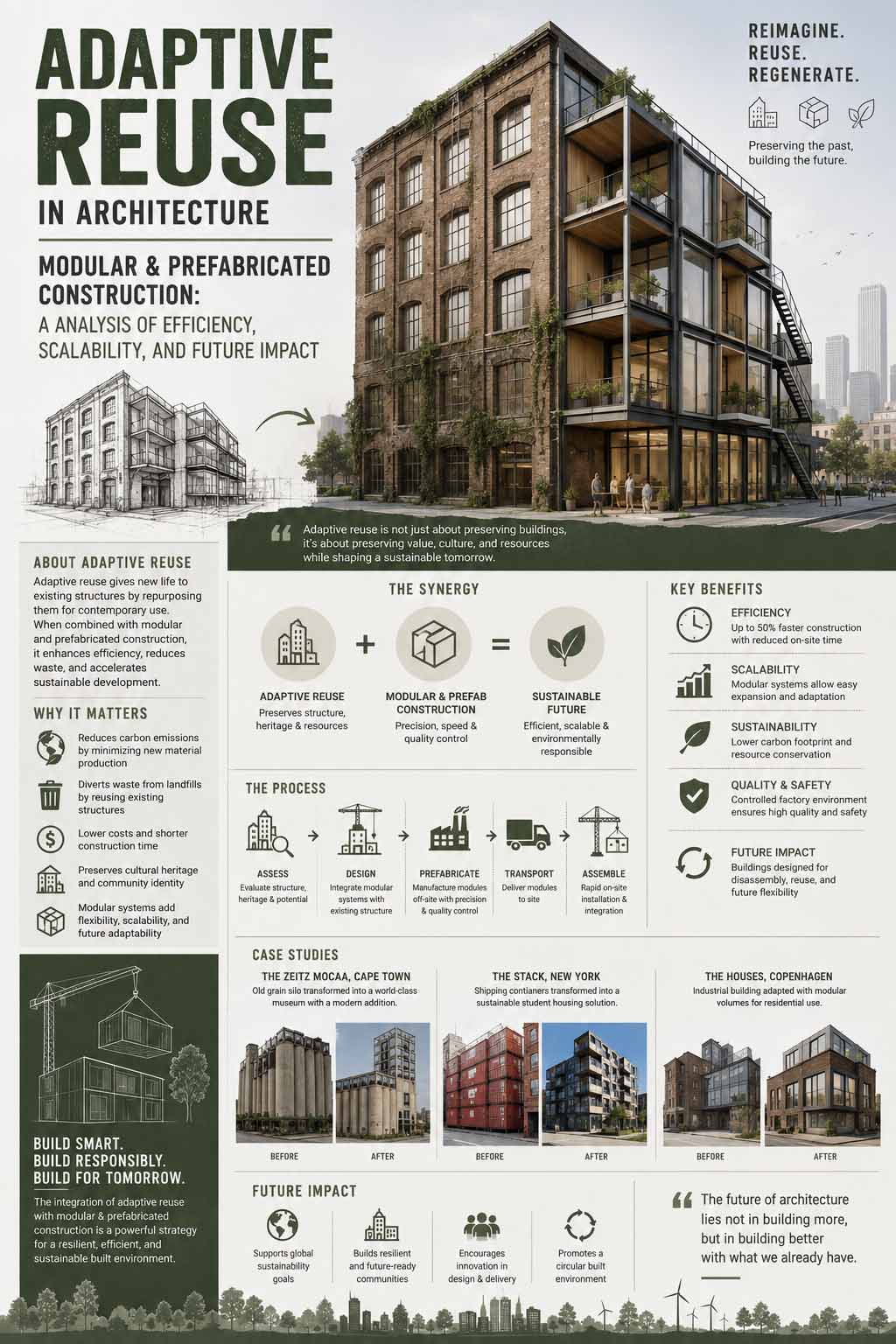
Adaptive reuse has emerged as a critical strategy in contemporary architecture and urban development, offering a pragmatic response to the environmental, economic, and cultural challenges posed by rapid urbanization. Unlike demolition and new construction, adaptive reuse emphasizes the transformation of existing structures into functional spaces while preserving their historical and material integrity. This grounded exploration examines the measurable benefits, constraints, and long-term implications of adaptive reuse, supported by data-driven insights and authoritative sources.
1. Defining Adaptive Reuse Through Quantitative Metrics
Adaptive reuse refers to the process of repurposing buildings for new uses while retaining their core structure. According to research by the U.S. Environmental Protection Agency (EPA), reusing existing buildings can reduce construction and demolition waste by up to 90% (https://www.epa.gov/smm/sustainable-management-construction-and-demolition-materials).
From a lifecycle assessment (LCA) perspective, adaptive reuse significantly lowers embodied carbon. A study by the Carbon Leadership Forum indicates that 50–75% of a building’s embodied carbon is retained when reused instead of demolished (https://carbonleadershipforum.org). This directly contributes to global decarbonization targets.
2. Environmental Impact: Data-Backed Sustainability Gains
The environmental advantages of adaptive reuse are measurable and substantial:
- Carbon Emissions Reduction: Reusing buildings avoids emissions from material production. Cement alone accounts for ~8% of global CO₂ emissions (https://www.iea.org/reports/cement).
- Energy Conservation: Retrofitting consumes approximately 50% less energy than new construction, as per the National Trust for Historic Preservation (https://savingplaces.org).
- Material Efficiency: Adaptive reuse reduces demand for raw materials such as steel and concrete, which are resource-intensive.
Moreover, urban heat island mitigation improves when existing structures are retained rather than replaced with high-emission construction processes.
3. Economic Viability and ROI Analysis
Adaptive reuse is not only environmentally sound but also economically advantageous:
- Cost Savings: Reuse projects can be 16–20% cheaper than new builds, particularly when structural integrity is preserved (https://www.brookings.edu).
- Faster Project Timelines: Reduced permitting and construction time can accelerate ROI.
- Tax Incentives: Many governments offer financial incentives. For example, the U.S. Federal Historic Preservation Tax Incentives program provides a 20% income tax credit for certified rehabilitation (https://www.nps.gov/tps/tax-incentives.htm).
Additionally, adaptive reuse often increases property value due to unique architectural character and location advantages.
4. Urban Density Optimization and Land Use Efficiency
With increasing urban population density, adaptive reuse offers a strategic solution to land scarcity:
- Infill Development: Reusing underutilized buildings reduces urban sprawl.
- Transit-Oriented Development (TOD): Many reuse projects are located in established areas with existing infrastructure, reducing transportation emissions.
- Vacancy Reduction: According to CBRE data, adaptive reuse can reduce vacancy rates in central business districts by repurposing obsolete office spaces (https://www.cbre.com).
This aligns with smart growth principles and sustainable city planning frameworks.
5. Cultural Preservation and Social Impact Metrics
Adaptive reuse contributes to cultural continuity and community identity:
- Heritage Conservation: Preserving historical architecture maintains urban memory and identity.
- Community Engagement: Reuse projects often involve local stakeholders, increasing social cohesion.
- Tourism Revenue: Heritage buildings converted into hotels or museums can boost local economies.
A report by UNESCO highlights that cultural heritage reuse can increase local tourism revenue by up to 30% (https://whc.unesco.org).
6. Functional Flexibility and Design Innovation
Adaptive reuse fosters architectural innovation through constraints:
- Hybrid Typologies: Industrial buildings transformed into mixed-use developments.
- Spatial Creativity: Designers must work within existing structural grids, leading to innovative layouts.
- Technological Integration: Smart building systems can be retrofitted into old structures, enhancing performance.
Case studies from ArchDaily demonstrate how adaptive reuse projects often outperform new builds in design awards and sustainability benchmarks (https://www.archdaily.com).
7. Challenges and Risk Assessment
Despite its benefits, adaptive reuse presents several challenges:
- Structural Limitations: Older buildings may not meet current seismic or load-bearing standards.
- Regulatory Constraints: Zoning laws and heritage protection regulations can complicate approvals.
- Hidden Costs: Unexpected repairs (e.g., asbestos removal) can increase project costs.
A McKinsey report notes that cost overruns in reuse projects can reach 10–15% if not properly assessed (https://www.mckinsey.com).
8. Comparative Lifecycle Analysis: Reuse vs New Construction
Lifecycle cost analysis (LCCA) and lifecycle assessment (LCA) provide a comprehensive comparison:
| Metric | Adaptive Reuse | New Construction |
|---|---|---|
| Embodied Carbon | Low | High |
| Construction Waste | Minimal | Significant |
| Initial Cost | Moderate | High |
| Time to Completion | Shorter | Longer |
| Cultural Value | High | Low |
Data from the World Green Building Council supports that adaptive reuse can reduce total lifecycle emissions by up to 40% (https://www.worldgbc.org).
9. Policy Frameworks and Global Trends
Governments and institutions are increasingly supporting adaptive reuse:
- EU Green Deal: Encourages building renovation over demolition (https://ec.europa.eu).
- India’s Smart Cities Mission: Promotes reuse of heritage structures in urban renewal (https://smartcities.gov.in).
- LEED Certification: Offers credits for building reuse under MR (Materials and Resources) category (https://www.usgbc.org/leed).
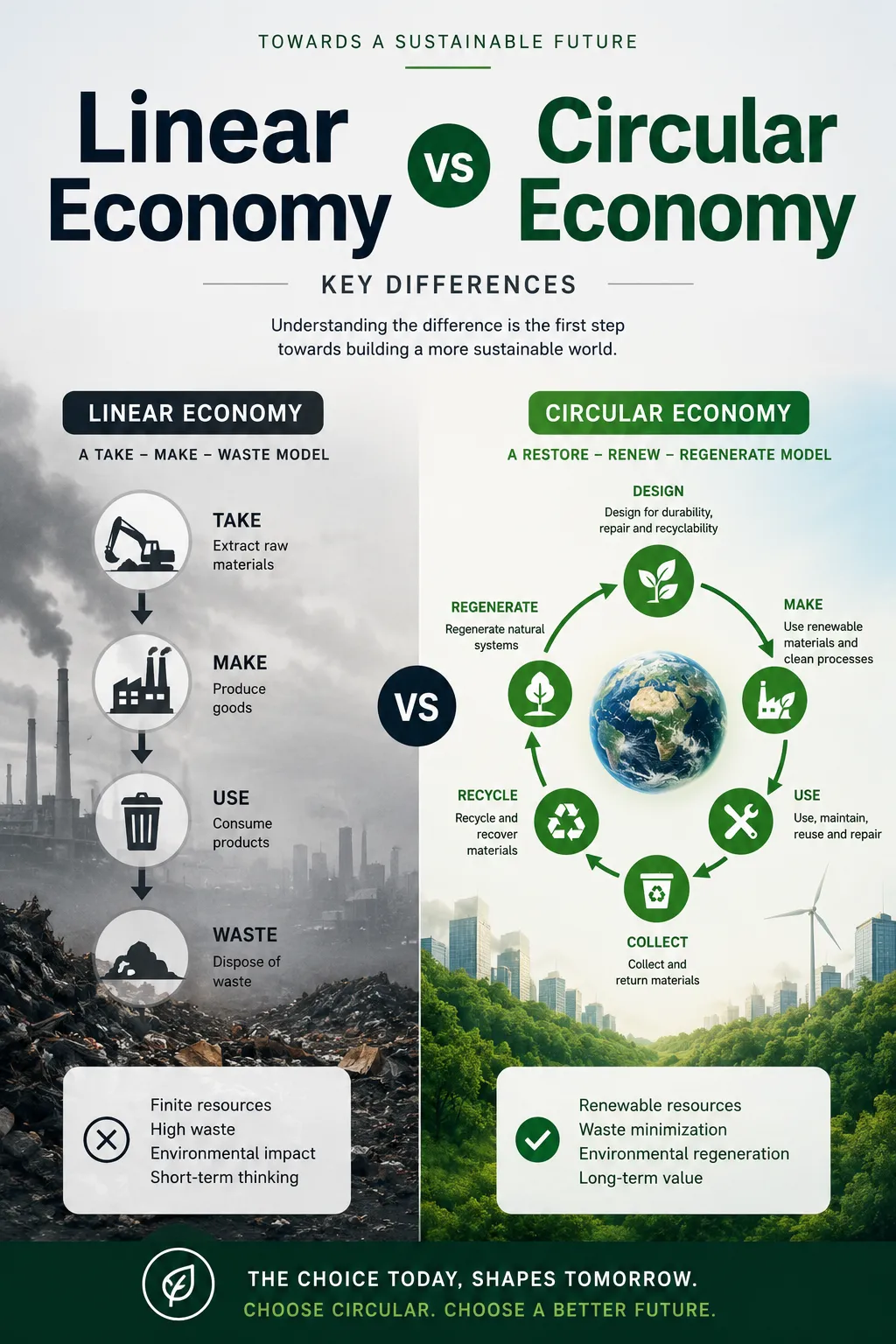
These policies reflect a global shift toward circular economy principles in construction.
10. Future Outlook: Data-Driven Scalability
The scalability of adaptive reuse depends on integrating data analytics and digital tools:
- Building Information Modeling (BIM): Enables precise assessment of existing structures.
- AI-Based Structural Analysis: Predicts feasibility and cost implications.
- Urban Data Platforms: Identify underutilized assets for potential reuse.
According to Deloitte, the adaptive reuse market is expected to grow at a CAGR of 6.5% through 2030 (https://www2.deloitte.com).
Conclusion
Adaptive reuse stands at the intersection of sustainability, economics, and cultural preservation. Its advantages—reduced carbon footprint, cost efficiency, and urban optimization—are supported by robust data and global policy alignment. While challenges exist, advancements in technology and regulatory frameworks are steadily mitigating risks. As cities strive for resilience and sustainability, adaptive reuse is not merely an alternative—it is a necessity grounded in measurable impact and strategic foresight.


One thought on “Adaptive Reuse in Architecture”