
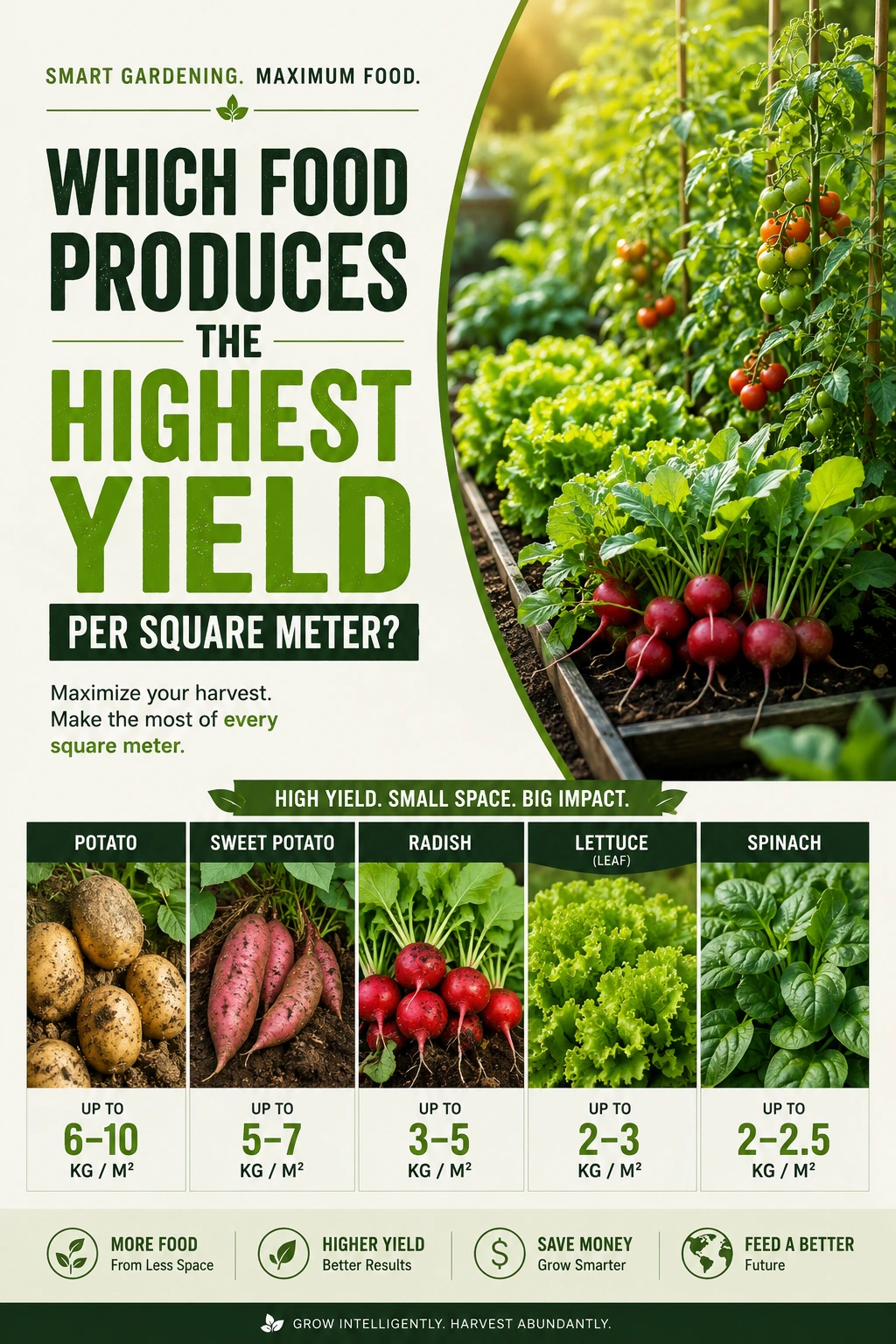
As global farmland shrinks and food demand rises, one question has become increasingly important in modern agriculture:
Which food crop produces the highest yield per square meter?
From urban farming and hydroponics to commercial agriculture and survival gardening, land efficiency is now one of the most critical metrics in food production. Farmers, sustainability researchers, investors, and food security analysts are increasingly evaluating crops not only by total harvest weight but by:
- Calories produced per square meter
- Nutritional density per hectare
- Water efficiency
- Storage stability
- Economic profitability
- Climate resilience
This research article evaluates the world’s highest-yielding food crops using agricultural production data, caloric output studies, and modern farming performance benchmarks.
Understanding Yield Per Square Meter
Agricultural yield is usually measured in:
- Kilograms per hectare
- Calories per square meter
- Protein per hectare
- Revenue generated per acre
However, the most practical measure for food security and land optimization is:
Calories Produced Per Square Meter
This metric reveals how much usable human energy a crop can generate from limited land.
According to datasets analyzed by:
- Our World in Data
- FAO Agricultural Statistics
- World Bank Agricultural Yield Research
- Hunger Math Crop Yield Analysis
certain crops dramatically outperform others in land-use efficiency.
Top Foods With the Highest Yield Per Square Meter
1. Potatoes — The Global Leader in Calorie Yield
Why Potatoes Rank #1
Potatoes consistently rank among the highest calorie-producing staple foods per square meter.
Modern intensive farming systems can produce:
- 3,000–4,500 calories per square meter annually
- Up to 40–50 tonnes per hectare in optimized conditions
- Nearly twice the caloric yield of wheat in many environments
Key Advantages
- Extremely high carbohydrate density
- Fast growth cycle
- Adaptable to colder climates
- Excellent storage capability
- Lower water requirement compared to rice
Agricultural Efficiency Analysis
Potatoes convert sunlight and soil nutrients into edible calories more efficiently than most cereal crops.
This is one reason potatoes became foundational to food security in regions such as:
- India
- China
- Russia
- Northern Europe
- Peru
According to comparative agricultural calorie studies, potatoes can produce almost 5.7 times more calories per growing area than dry beans under certain conditions.
Recommended Reading
2. Sweet Potatoes — The Underrated Super Crop
Sweet potatoes are among the most efficient crops for both calories and micronutrients.
Yield Metrics
Average intensive cultivation can generate:
- 2,000–4,000 calories per 100 square feet
- Exceptional vitamin A output
- High drought tolerance
Why Agricultural Experts Favor Sweet Potatoes
Researchers increasingly view sweet potatoes as a climate-resilient food source because they:
- Grow in poor soils
- Require relatively low inputs
- Resist drought conditions
- Store well after curing
- Produce edible leaves in addition to roots
Nutritional Advantage
Unlike many high-calorie crops, sweet potatoes also provide:
- Beta carotene
- Fiber
- Potassium
- Antioxidants
This dual benefit of calorie density and nutritional quality makes sweet potatoes one of the best crops for sustainable agriculture.
Relevant Sources
3. Maize (Corn) — Industrial Scale Yield Champion
Maize remains one of the most productive crops globally when measured by total calories produced.
Average Yield Performance
In high-efficiency agricultural systems:
- 10–14 million calories per acre are achievable
- Modern hybrids exceed 10 tonnes per hectare
- Strong adaptability across climates
Why Corn Dominates Global Agriculture
Corn benefits from:
- Advanced seed genetics
- Mechanized harvesting
- High fertilizer responsiveness
- Massive global demand
It is now the backbone of:
- Livestock feed
- Biofuel production
- Food manufacturing
- Industrial starches
The Trade-Off
Despite exceptional calorie output, maize production often depends heavily on:
- Nitrogen fertilizers
- Irrigation systems
- Industrial agriculture inputs
This raises sustainability concerns compared with root crops.
Useful Agricultural References
4. Cassava — The Tropical Survival Crop
Cassava is one of the most land-efficient staple foods in tropical climates.
Why Cassava Matters
Cassava thrives where many crops fail.
It performs well in:
- Low fertility soil
- Drought-prone areas
- Tropical regions with irregular rainfall
Yield Efficiency
Cassava can produce:
- Massive root biomass
- High carbohydrate output
- Reliable harvests under climate stress
Major Producing Regions
Cassava is essential for food security in:
- Nigeria
- Brazil
- Thailand
- Indonesia
- Democratic Republic of Congo
Limitation
Cassava is calorie-rich but comparatively low in protein and essential amino acids.
For this reason, nutrition experts recommend combining cassava with legumes or protein crops.
Reference Links
5. Mushrooms — The Vertical Farming Powerhouse
When evaluating food yield per square meter, mushrooms deserve special attention.
Why Mushrooms Are Different
Mushrooms can outperform traditional crops because they are often cultivated vertically.
This means:
- Multiple production layers
- Controlled indoor environments
- Continuous harvest cycles
- Minimal land footprint
Production Efficiency
Studies analyzing calories per ground-area footprint often rank mushrooms surprisingly high because vertical stacking multiplies production density.
Economic Benefits
Mushrooms also offer:
- High market value
- Rapid crop turnover
- Strong demand in urban food systems
- Compatibility with hydroponic infrastructure
Best Mushroom Varieties for Yield
- Oyster mushrooms
- Button mushrooms
- Shiitake mushrooms
Related Resources
6. Dry Beans — Protein Yield Specialists
While beans do not always dominate calorie-per-square-meter rankings, they excel in protein efficiency.
Why Beans Matter
Beans provide:
- High protein density
- Nitrogen fixation benefits
- Long-term storage capability
- Improved soil fertility
Agricultural Importance
Beans reduce dependence on synthetic fertilizers because legumes naturally improve nitrogen availability in soil.
This makes them critical in regenerative agriculture systems.
Common High-Yield Bean Crops
- Soybeans
- Kidney beans
- Lentils
- Chickpeas
- Black beans
Recommended External Sources
Comparative Yield Table: Highest Yield Foods Per Square Meter
| Crop | Approximate Calorie Yield | Key Advantage | Best Climate |
|---|---|---|---|
| Potatoes | Very High | Maximum calories per land area | Cool to temperate |
| Sweet Potatoes | Very High | Nutrition + drought resistance | Warm climates |
| Maize | Extremely High | Industrial scale production | Diverse |
| Cassava | High | Climate resilience | Tropical |
| Mushrooms | Exceptionally Dense | Vertical farming efficiency | Controlled indoor |
| Dry Beans | Moderate Calories + High Protein | Soil regeneration | Multiple climates |
| Rice | High | Feeds billions globally | Wet tropical |
| Wheat | Moderate-High | Long shelf life | Temperate |
Which Crop Is Best for Small Land Farming?
For small-scale farming operations, the answer depends on the objective.
If Your Goal Is Maximum Calories
Choose:
- Potatoes
- Sweet potatoes
- Cassava
If Your Goal Is Maximum Profit
Choose:
- Mushrooms
- Microgreens
- Specialty vegetables
- Hydroponic lettuce
If Your Goal Is Protein Production
Choose:
- Soybeans
- Lentils
- Chickpeas
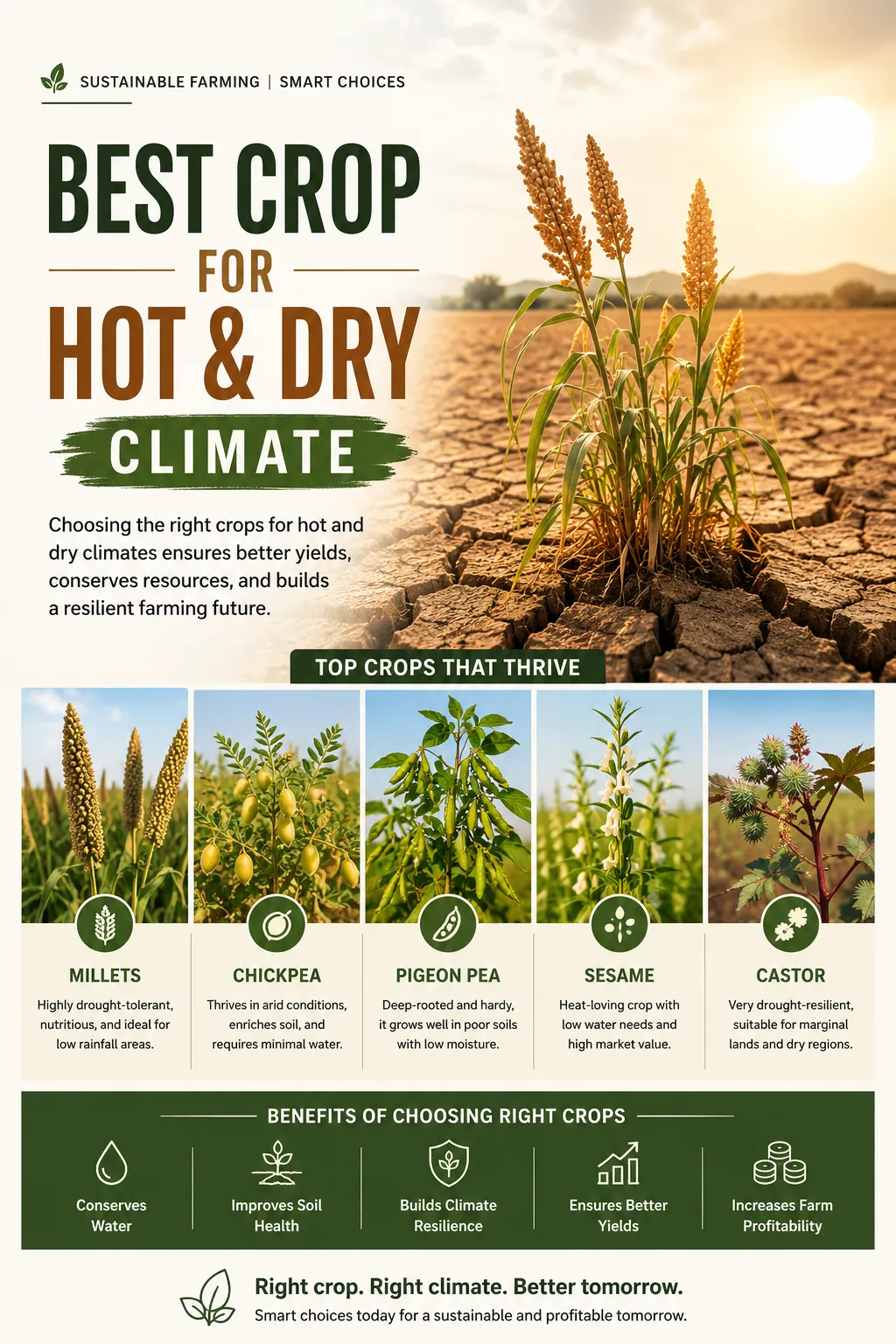
If Your Goal Is Climate Resilience
Choose:
- Cassava
- Sweet potatoes
- Millet
- Sorghum
The Future of High-Yield Food Production
The future of agriculture is moving toward:
- Precision farming
- Hydroponics
- Vertical farming
- AI-driven irrigation systems
- Climate-smart crop genetics
- Sustainable intensification
Countries investing heavily in food-yield optimization include:
- Netherlands
- Israel
- China
- India
- United States
The next generation of food systems will prioritize:
- Higher yield per square meter
- Lower water consumption
- Reduced carbon emissions
- Greater nutritional output
wish you all the best