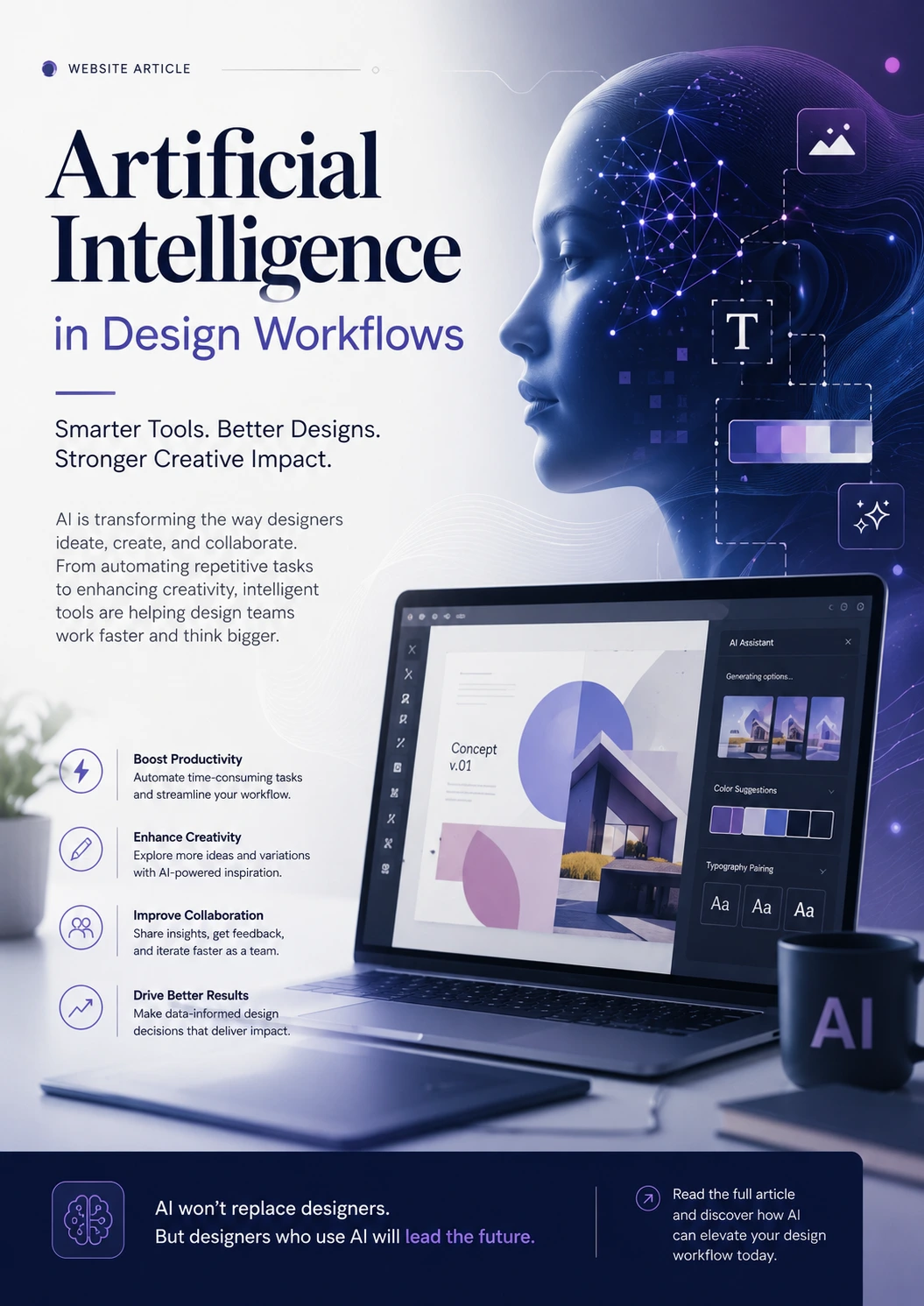
How AI is Reshaping Creative Industries
Introduction
Artificial Intelligence (AI) in design workflows has rapidly evolved from an experimental concept into a mainstream operational strategy for businesses, agencies, product teams, and creative professionals. Across industries such as UI/UX design, architecture, fashion, branding, motion graphics, and industrial product development, AI-driven tools are transforming how teams ideate, prototype, optimize, and scale creative output.
The growing adoption of AI-powered design platforms is not merely a trend—it is a structural shift in the digital economy. According to market research by McKinsey & Company, organizations integrating AI into creative and operational workflows report measurable gains in productivity, faster project delivery, and improved customer personalization.
As digital competition intensifies, companies are increasingly leveraging AI design automation, generative design systems, machine learning-assisted creativity, and predictive analytics to gain a competitive advantage. This article explores how artificial intelligence in design workflows is changing modern creative processes, the measurable business impact, leading AI design tools, and future industry implications.
Understanding AI in Design Workflows
AI in design workflows refers to the integration of machine learning algorithms, neural networks, computer vision, and generative systems into creative production processes. These technologies automate repetitive tasks, generate design suggestions, analyze user behavior, and assist decision-making throughout the design lifecycle.
Traditional design workflows often involve multiple iterative stages including research, wireframing, prototyping, testing, revision, and deployment. AI accelerates each phase by reducing manual labor and improving accuracy.
Core Components of AI-Driven Design
- Generative Design Systems – Algorithms create multiple design variations based on predefined parameters.
- Predictive User Experience Analytics – AI predicts user behavior and engagement patterns.
- Automated Asset Creation – AI generates layouts, images, icons, and typography recommendations.
- Natural Language Processing (NLP) – Text-to-design systems convert written prompts into visual concepts.
- Computer Vision – AI analyzes visual aesthetics, branding consistency, and design composition.
Leading companies such as Adobe, Figma, and Autodesk are heavily investing in AI-enhanced design ecosystems to improve collaboration and efficiency.
Market Growth of AI in Creative Industries
The global AI design tools market has witnessed significant expansion over the past five years. Industry reports from Gartner and Statista indicate that AI-driven creative software adoption is increasing among enterprises and small businesses alike.
Key Market Statistics
- Over 65% of digital design teams now use at least one AI-assisted tool in their daily workflows.
- Businesses adopting AI-powered UX optimization tools report conversion rate improvements of up to 30%.
- Automated design generation can reduce production time by nearly 40%.
- AI-enhanced prototyping significantly decreases product iteration cycles.
- Creative automation platforms are projected to become a multi-billion-dollar market segment before 2030.
The rise of remote collaboration and digital-first customer experiences has accelerated investment in AI-based creative technologies.
How AI Improves Design Efficiency
1. Faster Ideation and Concept Generation
One of the most transformative aspects of AI in design workflows is rapid idea generation. Designers can now create multiple visual concepts within minutes using generative AI platforms.
Tools such as Midjourney, Canva, and Runway allow users to generate graphics, layouts, and visual compositions through natural language prompts.
This dramatically reduces the time spent on:
- Mood board development
- Early-stage concept sketches
- Visual experimentation
- Branding exploration
- Style variation testing
Instead of starting from a blank canvas, designers can focus on refining strategic creative direction.
2. Automated Repetitive Tasks
AI-powered automation is streamlining repetitive design operations that previously consumed substantial time.
Examples include:
- Background removal
- Image enhancement
- Layout resizing
- Color correction
- Typography pairing
- Asset tagging
- Content-aware editing
Platforms such as Adobe Firefly and Remove.bg exemplify how automation increases productivity while preserving creative quality.
3. Data-Driven UX Optimization
Modern user experience design increasingly relies on behavioral analytics. AI systems analyze interaction data to identify design bottlenecks and optimize digital interfaces.
Companies using AI-powered UX analytics tools like Hotjar and Crazy Egg can:
- Track user engagement patterns
- Identify friction points
- Improve navigation structures
- Optimize conversion funnels
- Enhance accessibility
This approach enables evidence-based design decisions instead of subjective assumptions.
AI in UI/UX Design Workflows
User interface and user experience design have become major beneficiaries of AI integration.
Intelligent Wireframing
AI-driven wireframing systems can generate layout structures based on content requirements and user intent. Designers can quickly prototype interfaces without manually arranging every component.
Platforms like Uizard and Framer use machine learning to simplify interface creation.
Personalization at Scale
AI enables adaptive interfaces that respond dynamically to user preferences, device behavior, demographics, and interaction history.
Benefits include:
- Personalized recommendations
- Dynamic content adaptation
- Smarter onboarding experiences
- Improved retention rates
- Enhanced customer engagement
E-commerce and SaaS companies are increasingly deploying AI-driven personalization to improve user satisfaction.
Accessibility Enhancements
AI-powered accessibility tools can automatically detect issues related to:
- Color contrast
- Readability
- Navigation structure
- Screen reader compatibility
- Visual hierarchy
Organizations following accessibility standards through platforms like W3C improve inclusivity while strengthening SEO performance.
Generative AI and Creative Innovation
Generative AI represents one of the most disruptive innovations in modern design.
Unlike traditional automation, generative AI creates entirely new visual assets based on learned design patterns and contextual prompts.
Applications of Generative AI in Design
Branding and Identity Design
AI tools can generate logo concepts, typography systems, and brand palettes aligned with market trends and audience psychology.
Product Design
Industrial designers use AI-assisted simulations to optimize structural performance, materials, and manufacturing efficiency.
Architectural Design
Generative algorithms help architects create optimized floor plans, sustainability-focused structures, and space-efficient environments.
Motion Graphics and Video Editing
AI automates transitions, scene detection, voice synchronization, and visual effects production.
Companies such as NVIDIA and OpenAI continue pushing advancements in generative visual intelligence.
Business Impact of AI in Design Operations
Organizations implementing AI in design workflows experience measurable operational and financial benefits.
Increased Productivity
Creative teams can manage larger workloads without proportionally increasing staffing costs.
Reduced Time-to-Market
AI shortens development cycles by accelerating prototyping, testing, and revision processes.
Improved Creative Consistency
AI systems maintain branding consistency across large-scale digital campaigns.
Enhanced Decision-Making
Analytics-driven design strategies improve campaign performance and customer engagement.
Scalable Content Production
Businesses producing large volumes of digital assets benefit significantly from AI-assisted automation.
According to research from PwC, AI implementation across operational functions can contribute trillions of dollars to the global economy over the next decade.
Challenges and Limitations of AI in Design
Despite its advantages, AI in design workflows also presents notable challenges.
Creative Originality Concerns
Over-reliance on AI-generated outputs may reduce uniqueness and creative diversity.
Ethical and Copyright Issues
Questions regarding training data, intellectual property rights, and content ownership remain unresolved.
Human Oversight Requirements
AI-generated designs still require professional review to ensure brand alignment, usability, and strategic coherence.
Bias in AI Systems
Machine learning models can unintentionally reflect biases present in training datasets.
Industry organizations and technology leaders are increasingly advocating for ethical AI governance frameworks.
Future Trends in AI-Powered Design Workflows
The next generation of AI design systems is expected to become more collaborative, context-aware, and strategically integrated.
Emerging Trends
Multimodal Design Systems
AI platforms will combine text, image, video, audio, and 3D generation into unified workflows.
Real-Time Collaboration AI
Collaborative AI assistants will support design teams during live brainstorming sessions.
Predictive Creativity Engines
AI systems will anticipate user preferences and generate highly targeted visual experiences.
Hyper-Personalized Interfaces
Digital products will dynamically adapt layouts and interactions based on individual behavior.
AI-Augmented Creative Direction
Rather than replacing designers, AI will increasingly function as a strategic creative partner.