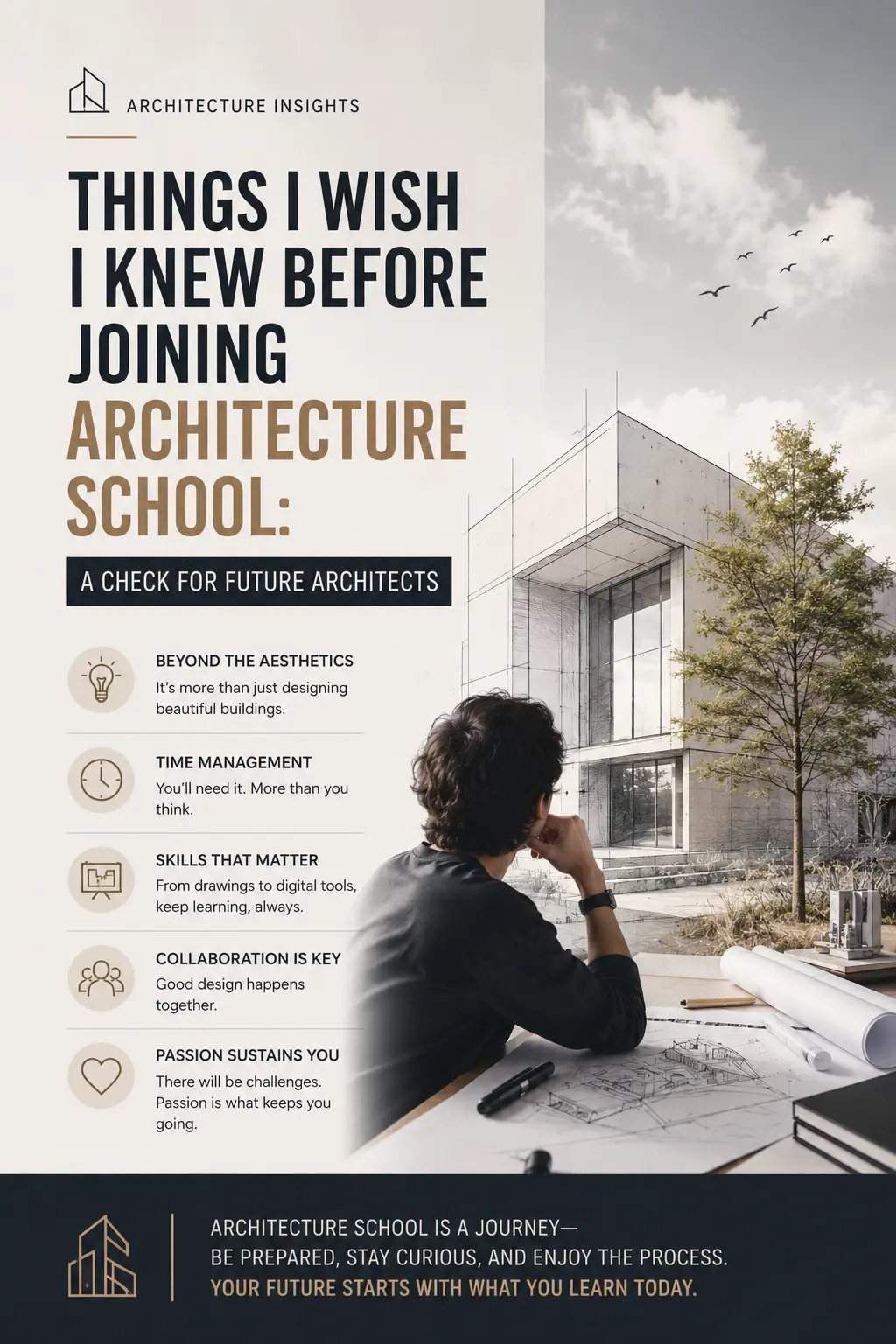
Choosing architecture school is often driven by creativity, passion for buildings, and the idea of designing spaces that shape human experiences. However, the reality of studying architecture is far more complex than many students expect.
A degree in architecture is not only about drawing beautiful buildings. It combines design thinking, engineering logic, environmental understanding, human psychology, technology, and continuous problem-solving. Before entering architecture school, understanding these realities can help students make better academic and career decisions.
Here are the most important things I wish I knew before joining architecture school, based on academic patterns, industry requirements, and student experiences.
1. Architecture School Is About Problem-Solving, Not Just Creativity
Many students enter architecture believing that strong sketching skills or artistic ability automatically make someone a good architect. In reality, architecture education focuses heavily on analytical thinking and solving spatial problems.
Every design decision requires research:
- Who will use the space?
- How will people move through it?
- How does climate affect the building?
- What materials are practical?
According to global architecture education standards, modern architectural training focuses on developing critical thinking along with creative abilities.
Learn more: Architecture Design Process Guide
The best architecture students are not always the best artists; they are often the strongest observers and problem-solvers.
2. Design Studio Will Become the Core of Your Academic Life
Unlike traditional courses where exams determine most results, architecture revolves around the design studio culture.
A large portion of student time goes into:
- Concept development
- Site analysis
- Drawings
- Physical models
- Digital presentations
- Design reviews
Architecture students commonly spend significantly more hours on project-based work compared to many other university programs.
Related resource: How Architecture Studio Works
Time management becomes one of the most valuable skills because architecture rewards consistent development rather than last-minute effort.
3. Software Skills Matter Earlier Than Expected
Many beginners assume architecture software is something they will learn after graduation. The industry trend shows otherwise.
Digital skills now influence academic performance, internships, and professional opportunities.
Important tools include:
- AutoCAD for technical drawings
- SketchUp for conceptual modelling
- Revit for Building Information Modelling (BIM)
- Rhino and Grasshopper for computational design
- Photoshop and Illustrator for presentations
Explore: Best Architecture Software Every Student Should Learn
Students who develop digital workflows early often handle complex projects more efficiently.
4. Architecture Requires Strong Research Skills
A good building is not created only from imagination. Successful architecture depends on evidence-based decisions.
Before designing, architects study:
- User behaviour
- Local culture
- Climate conditions
- Construction technology
- Environmental impact
This is why subjects like architectural history, building science, urban studies, and sustainability play an important role.
Recommended reading: Importance of Research in Architecture
Architecture teaches students how to ask better questions before creating solutions.
5. Presentation Skills Are Almost as Important as Design Skills
A strong idea loses impact if it cannot be communicated clearly.
Architecture students regularly present their work through:
- Jury presentations
- Concept boards
- Technical drawings
- Models
- Verbal explanations
Professional architects spend considerable time communicating ideas to clients, engineers, consultants, and communities.
Useful guide: Architecture Presentation Techniques
Learning storytelling and visual communication early provides a major advantage.
6. Architecture Is More Collaborative Than Most People Imagine
The popular image of a single architect designing a masterpiece alone is outdated.
Modern projects involve collaboration between:
- Architects
- Structural engineers
- Urban planners
- Environmental consultants
- Contractors
- Clients
Architecture school prepares students through group projects, discussions, and interdisciplinary thinking.
Read more: How Architects Work With Other Professionals
The ability to listen, communicate, and coordinate becomes as important as creativity.
7. Sustainability Is No Longer Optional
Climate-responsive design has become one of the biggest priorities in architecture.
Future architects need knowledge of:
- Energy-efficient buildings
- Passive cooling techniques
- Sustainable materials
- Green certifications
- Low-carbon construction methods
Research shows that the building sector has a major influence on global energy consumption and environmental impact.
Reference: Sustainable Architecture Principles
Students entering architecture today must think beyond aesthetics and focus on long-term environmental responsibility.
8. Your Portfolio Matters More Than Your Grades Alone
Academic performance is important, but architecture careers heavily depend on portfolio quality.
A strong portfolio demonstrates:
- Design thinking
- Technical ability
- Creativity
- Software skills
- Research approach
Employers often evaluate how students approach problems, not only the final design output.
Portfolio guide: How to Create an Architecture Portfolio
Documenting every project from the beginning saves significant effort later.
9. Architecture Offers More Career Paths Than Designing Buildings
Many students believe becoming a traditional architect is the only career option after graduation.
Architecture graduates work in areas such as:
- Urban design
- Interior architecture
- Landscape design
- Real estate development
- Construction management
- BIM specialization
- Architectural visualization
- Sustainability consulting
- Academic research
Explore careers: Architecture Career Options After Graduation
The degree develops versatile skills applicable across multiple industries.
10. Passion Helps, but Discipline Builds Architects
Architecture school is demanding because it combines creativity with technical responsibility.
Success requires:
- Consistent learning
- Accepting criticism
- Improving designs repeatedly
- Managing deadlines
- Staying curious
Architecture education changes the way students observe cities, buildings, people, and everyday spaces.
The biggest lesson before joining architecture school is simple: you are not only learning how to design buildings — you are learning how to understand problems and create meaningful environments.
Final Thoughts
Architecture school can be challenging, but understanding its realities before entering makes the journey more rewarding.
Future architecture students should focus on building curiosity, observation skills, technical knowledge, communication ability, and adaptability.
The profession continues to evolve with technology, sustainability, and changing human needs. Students prepared for continuous learning will always have an advantage in shaping the future of architecture.