Double Glazing and Triple Glazing: How Insulated Glass Units Reduce Building Heat Gain and Cooling Load
Double Glazing vs. Triple Glazing: A Data-Driven Analysis
Insulated Glass Units (IGUs) are among the most effective passive building-envelope technologies for reducing unwanted heat transfer. Double glazing and triple glazing work by minimizing conductive, convective, and radiative heat flow through windows, thereby lowering indoor heat gain during summer and reducing cooling energy demand.
Heat Transfer Comparison
Window Type
Number of Panes
Typical U-value (W/m²K)
Typical SHGC
Relative Heat Gain
Single Glazing
1
5.5–6.0
0.80–0.90
100%
Double Glazing
2
1.5–2.8
0.25–0.45
65–75%
Triple Glazing
3
0.5–1.2
0.20–0.35
50–60%
Category
Double Glazing
Triple Glazing
Configuration
Two glass panes with one sealed air/gas cavity
Three glass panes with two sealed air/gas cavities
Typical U-value
1.0–2.8 W/m²K
0.5–1.2 W/m²K
Typical SHGC
0.25–0.60
0.20–0.50
Heat Transfer
Reduces conduction, convection, and radiation
Further reduces all three heat transfer mechanisms
Cooling Load Reduction
15–30%
20–40% (depending on climate and design)
Heating Load Reduction
Moderate
Very High
Noise Reduction
25–35 dB
35–45 dB
Weight
Moderate
High
Initial Cost
Moderate
High
Best Application
Hot, warm, and mixed climates
Cold climates, Passive House, Net-Zero buildings
1. How Insulated Glass Units (IGUs) Work
An Insulated Glass Unit consists of two or three glass panes separated by sealed cavities filled with air or inert gases such as argon or krypton. Low-Emissivity (Low-E) coatings further reduce infrared heat transfer while maintaining high visible light transmission.
Heat Transfer Mechanisms Reduced
Conduction: Multiple glass layers and gas-filled cavities reduce thermal conductivity.
Convection: Sealed cavities suppress air circulation between panes.
Technical guidance published by the Efficient Windows Collaborative explains that combining Low-E coatings with insulated glazing substantially lowers window heat transfer.
2. Double Glazing Performance
Double glazing consists of two glass panes separated by a spacer and insulating gas.
Typical Performance
U-value: 1.0–2.8 W/m²K
Solar Heat Gain Coefficient (SHGC): 0.25–0.60
Noise reduction: 25–35 dB
Cooling load reduction: 15–30% depending on climate and glazing specification.
The National Fenestration Rating Council (NFRC) provides standardized ratings for U-factor, SHGC, Visible Transmittance (VT), and Air Leakage to compare window performance objectively.
3. Triple Glazing Performance
Triple glazing adds a third pane and a second insulating cavity.
Typical Performance
U-value: 0.5–1.2 W/m²K
SHGC: 0.20–0.50
Noise reduction: 35–45 dB
Cooling and heating energy savings exceed conventional double glazing in extreme climates.
Insulated Glass Units reduce conductive, convective, and radiative heat transfer.
Double glazing offers an effective balance between cost and energy savings for most climates.
Triple glazing provides superior insulation where heating and cooling loads are extreme.
Low-E coatings and inert gas fills are critical to maximizing thermal efficiency.
Proper glazing selection can reduce building cooling loads, improve occupant comfort, and contribute to lower operational carbon emissions.
Example Building Performance
Building
Country
Building Type
Glazing Used
Purpose
Key Performance Benefit
Burj Khalifa
UAE
Mixed-use Skyscraper
Double Glazing (Low-E IGU)
Reduce solar heat gain in desert climate
Solar heat transmission reduced to <16%; lower cooling load
The Edge
Netherlands
Office
Triple Glazing (selected façade areas)
Improve energy efficiency
Lower HVAC energy demand and enhanced occupant comfort
Bullitt Center
USA
Office
Triple Glazing
Living Building Challenge
Very low U-value (~0.8–1.0 W/m²K); reduced heating/cooling loads
Powerhouse Brattørkaia
Norway
Office
Triple Glazing
Energy-positive building
Extremely low heating demand and net-positive energy generation
The Crystal
United Kingdom
Exhibition & Office
High-performance insulated glazing (including triple-glazed assemblies in parts of the façade)
Sustainable façade design
Reduced cooling load and improved daylight quality
BedZED
United Kingdom
Residential
Triple Glazing
Passive energy conservation
Lower heat loss and improved acoustic performance
Analytical Example: Office Building Retrofit
Parameter
Before (Single Glazing)
After (Low-E Double Glazing)
Improvement
Floor Area
500 m²
500 m²
—
Window Area
120 m²
120 m²
—
Peak Solar Heat Gain
24 kW
17 kW
≈30% Reduction
HVAC Cooling Demand
85 kW
78 kW
≈8% Reduction
Indoor Comfort
Moderate
Improved
Reduced temperature fluctuations
Key Takeaways
Aspect
Summary
Most Cost-Effective Option
Double glazing offers the best balance of performance and cost in warm and mixed climates.
Highest Thermal Performance
Triple glazing provides superior insulation for cold climates and ultra-low-energy buildings.
Burj Khalifa
Uses high-performance double-glazed Low-E IGUs, optimized for Dubai’s hot desert climate rather than triple glazing.
Triple Glazing Leaders
Bullitt Center, Powerhouse Brattørkaia, The Edge, BedZED, and The Crystal demonstrate the application of triple glazing in high-performance buildings.
Overall Benefit
Both double and triple glazing reduce solar heat gain, improve occupant comfort, lower HVAC loads, and contribute to reduced building energy consumption and operational carbon emissions.
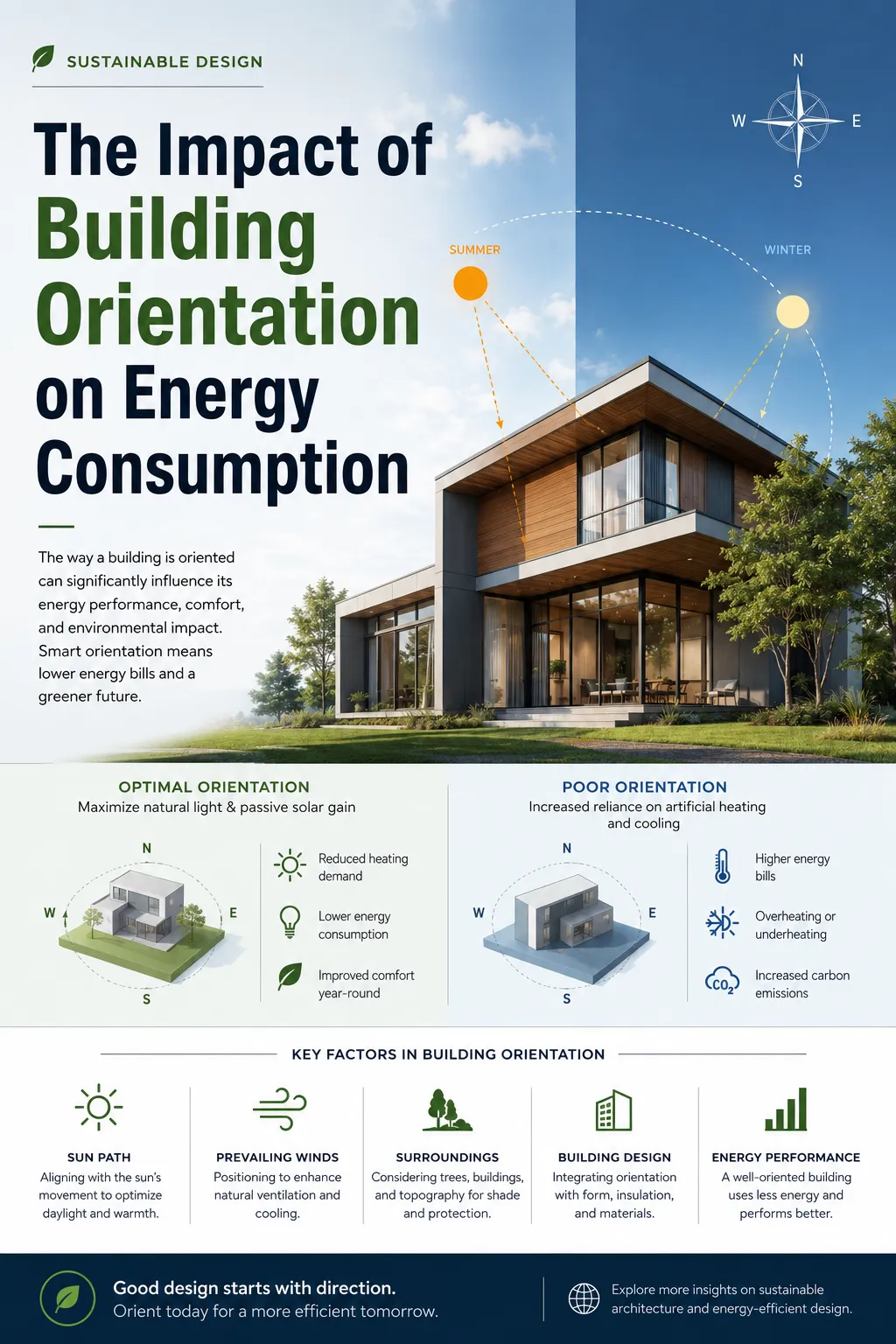
Building orientation is one of the highest-return, lowest-cost design decisions in sustainable architecture. The orientation of a building determines how much solar radiation, daylight, and natural ventilation it receives throughout its operational life. According to the U.S. Department of Energy, proper orientation significantly improves daylight utilization, reduces unwanted solar heat…
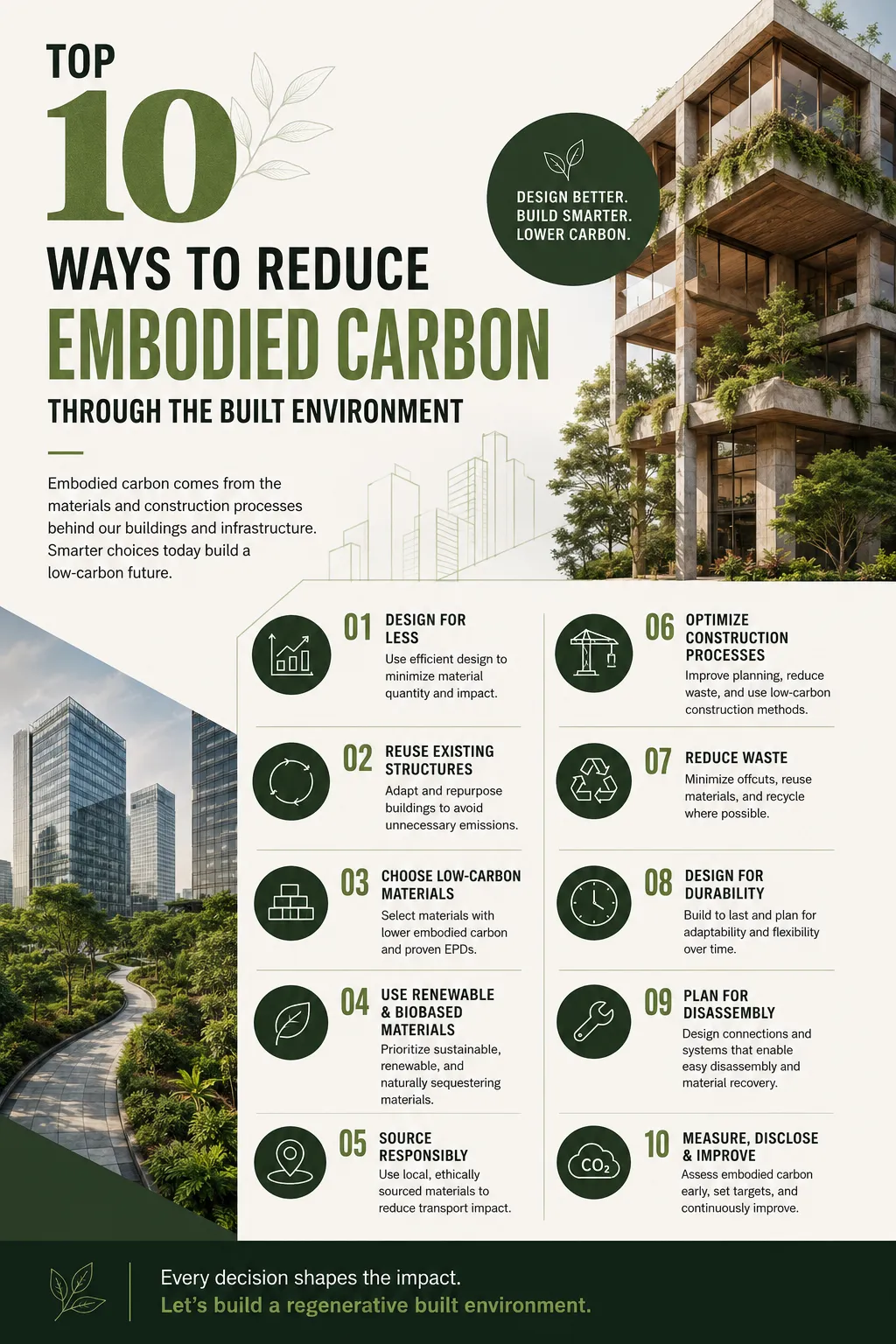
1. Reuse and Renovate Existing Buildings Renovating and repurposing existing buildings instead of demolishing them is one of the most effective ways to reduce embodied carbon. Reusing the existing structure and foundations can cut construction emissions by up to 50%, while also lowering costs, improving energy efficiency, and reducing urban…
What is Embodied Carbon? Embodied carbon refers to the total greenhouse gas (GHG) emissions generated throughout the lifecycle of building materials before and after a building becomes operational. It includes emissions from raw material extraction, manufacturing, transportation, construction, maintenance, replacement, demolition, and disposal. 1. Why Embodied Carbon Has Become a…