

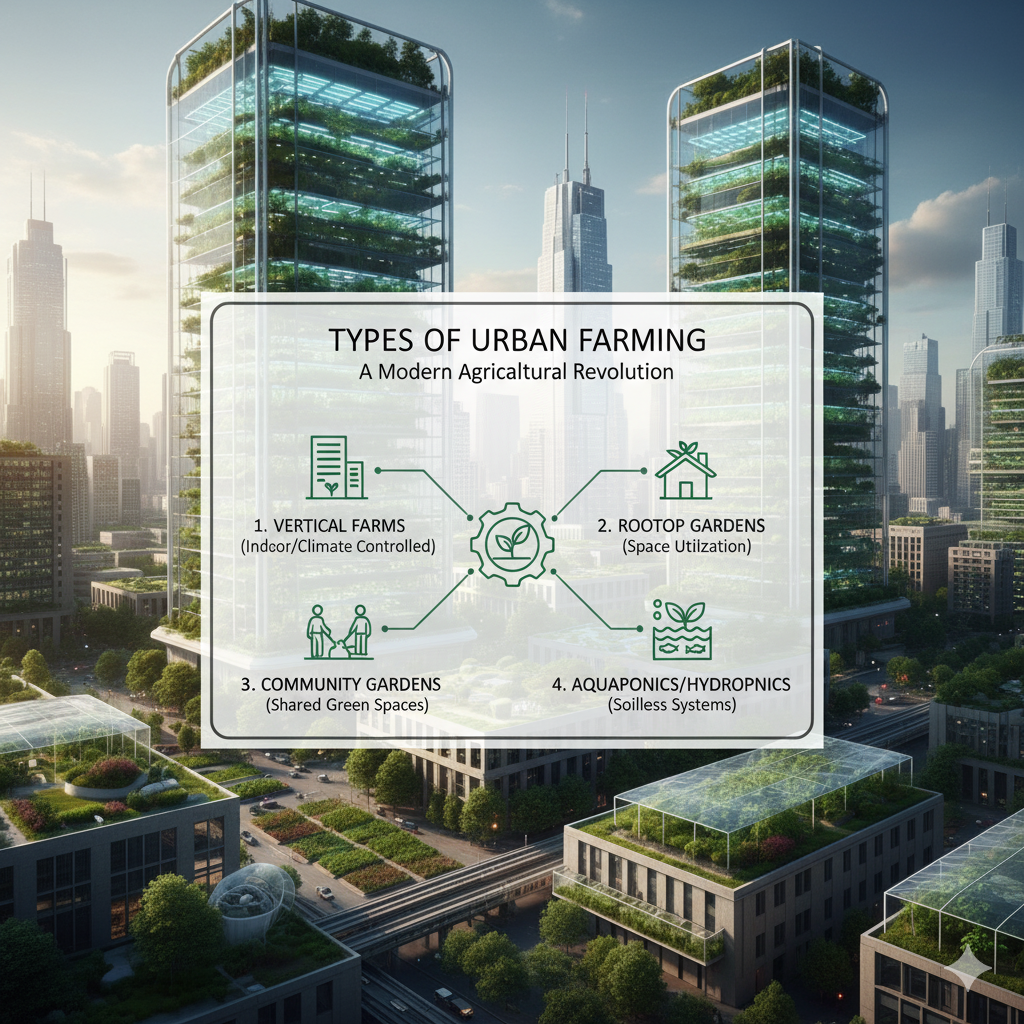
Types of Urban Farming – A Modern Agricultural Revolution
Exploring Sustainable Agriculture in Cities In an age where sustainable living and food security are critical concerns, urban farming has emerged as a powerful solution. As cities expand and populations

Exploring Sustainable Agriculture in Cities
In an age where sustainable living and food security are critical concerns, urban farming has emerged as a powerful solution. As cities expand and populations grow, more people are turning to various types of urban farming to produce fresh, local, and organic food right in the heart of urban areas. This guide explores the diverse methods used in urban agriculture, their benefits, and how they are shaping the future of food.
What is Urban Farming?
Urban farming, also known as urban agriculture, is the practice of cultivating, processing, and distributing food in or around urban areas. This includes growing crops, raising animals, and utilizing innovative techniques to maximize limited space.
Urban farming serves several purposes:
Enhancing food security
Reducing food deserts
Promoting community engagement
Encouraging sustainable agriculture
Decreasing carbon footprints
Before diving into the types of urban farming, it’s important to understand why it’s growing in popularity. With increasing concerns about food quality, supply chain disruptions, and environmental sustainability, urban agriculture offers an efficient and eco-friendly alternative.
Why Explore Different Types of Urban Farming?
Understanding the different types of urban farming helps in choosing the right method for your space, climate, budget, and goals. Whether you’re a beginner or an experienced grower, there’s a type of urban agriculture that can fit your needs.
1. Container Gardening
Container gardening is one of the most accessible and popular types of urban farming. It involves growing plants in containers like pots, buckets, or recycled materials, making it ideal for balconies, rooftops, and windowsills.
Key Features:
Low cost and beginner-friendly
Perfect for herbs, tomatoes, peppers, and lettuce
Flexible and space-efficient
Requires minimal tools
Learn more about container gardening: The Spruce – Container Gardening Basics
2. Vertical Farming
Vertical farming is a high-tech form of urban farming that involves growing crops in vertically stacked layers, often in controlled indoor environments using hydroponics or aeroponics.
Benefits of Vertical Farming:
Maximizes space in urban settings
Reduces water usage by up to 95%
Year-round crop production
Often uses LED lighting and automation
Explore vertical farming further: Vertical Farming at Plenty
3. Hydroponics
Hydroponics is a method of growing plants without soil, using a nutrient-rich water solution. This technique is popular in urban areas due to its efficiency and scalability.
Why Choose Hydroponics:
Faster growth rates than soil farming
No need for arable land
Pest and disease control is easier
Environmentally sustainable
Great resource: Hydroponics 101 – Epic Gardening
4. Aquaponics
Aquaponics combines aquaculture (raising fish) with hydroponics. Fish waste provides nutrients for the plants, and the plants help purify the water for the fish.
Key Advantages:
Creates a self-sustaining ecosystem
High yields from both plants and fish
Minimal water usage
Great educational tool for schools and communities
Dive deeper: Aquaponics Association
5. Rooftop Farming
As urban space becomes more limited, rooftop farming has become increasingly popular. It involves growing food on the flat rooftops of buildings.
Benefits:
Utilizes underused space
Reduces urban heat island effect
Improves building insulation
Can support greenhouses or open-air gardens
Case study: Brooklyn Grange Rooftop Farm
6. Community Gardens
Community gardens are shared spaces where individuals grow fruits, vegetables, and flowers together. These gardens promote food access and social engagement.
Community Garden Highlights:
Fosters community collaboration
Encourages education and skill-sharing
Beautifies neighborhoods
Can be funded by local governments or NGOs
Get involved: American Community Gardening Association
7. Greenhouses
Urban greenhouses allow year-round cultivation in controlled environments. These structures can be installed on rooftops or in community spaces.
Benefits:
Protects crops from harsh weather
Allows for exotic or delicate plant growth
Efficient pest and disease management
Compatible with hydroponic or aquaponic systems
Example: Gotham Greens – Urban Greenhouses
8. Indoor Farming
With advancements in technology, indoor farming has become one of the fastest-growing types of urban farming. It can involve vertical farming, hydroponics, or even mushroom cultivation inside homes or warehouses.
Why Indoor Farming is Popular:
Total environmental control
No need for sunlight or outdoor space
Safe from weather and pests
Efficient for herbs, leafy greens, microgreens
Learn more: Indoor Farming Systems – Upstart University
9. Guerrilla Gardening
Guerrilla gardening is a form of activism where individuals cultivate plants in neglected or public urban spaces without formal permission.
Characteristics:
Raises awareness about land use and food access
Encourages beautification of neglected areas
Often temporary or mobile
Can inspire policy change
Example: Guerrilla Gardening Movement
10. Edible Landscaping
Edible landscaping combines aesthetic design with food production. It’s the practice of growing food-producing plants in decorative urban landscapes.
Features:
Integrates fruit trees, herbs, and vegetables with ornamental plants
Sustainable and low-maintenance
Encourages biodiversity
Adds functional beauty to urban areas
Resource: Edible Landscaping Basics – Mother Earth News
Advantages of Urban Farming
Urban agriculture offers a multitude of benefits, making it more than just a trend.
Environmental:
Reduces transportation emissions
Improves air quality
Recycles urban waste
Social:
Promotes community bonding
Educates youth and adults
Reduces crime and blight in neighborhoods
Economic:
Creates jobs and income opportunities
Lowers food costs
Supports local economies
Challenges of Urban Farming
Despite the benefits, urban farming faces several challenges:
Limited space and zoning laws
Initial setup costs for hydroponic or vertical systems
Water access and quality
Soil contamination in older cities
Lack of farming knowledge in urban populations
Solutions include supportive policies, urban planning integration, educational programs, and community partnerships.
Future Trends in Urban Farming
The future of urban farming is bright, with innovations that make it more efficient and scalable.
Trends to Watch:
AI and automation in farming
Smart irrigation systems
Integration with smart cities
Climate-controlled vertical towers
Blockchain in supply chains
Conclusion
Urban farming is not a one-size-fits-all solution. There are numerous types of urban farming, each suited to different spaces, goals, and resources. Whether you’re planting a single tomato in a container or managing a rooftop aquaponic system, urban agriculture empowers individuals and communities to take control of their food sources.
As cities continue to grow, these methods will play a crucial role in building resilient, sustainable, and self-sufficient communities.
Want to Learn More About the Types of Urban Farming?
Here are some trusted resources and blogs that dive deeper:

2 Comments
That is really attention-grabbing, You are a very professional blogger.
I’ve joined your feed and look forward to seeking
more of your fantastic post. Also, I’ve shared your website in my social networks
Also visit my web page :: convert youtube on mp3
Admiring the persistence you put into your blog and in depth information you
present. It’s good to come across a blog every once in a while that isn’t the same unwanted rehashed
material. Great read! I’ve bookmarked your site and I’m adding your RSS
feeds to my Google account.
Also visit my homepage y2mate .com co