Key principles for Sustainability in Architecture
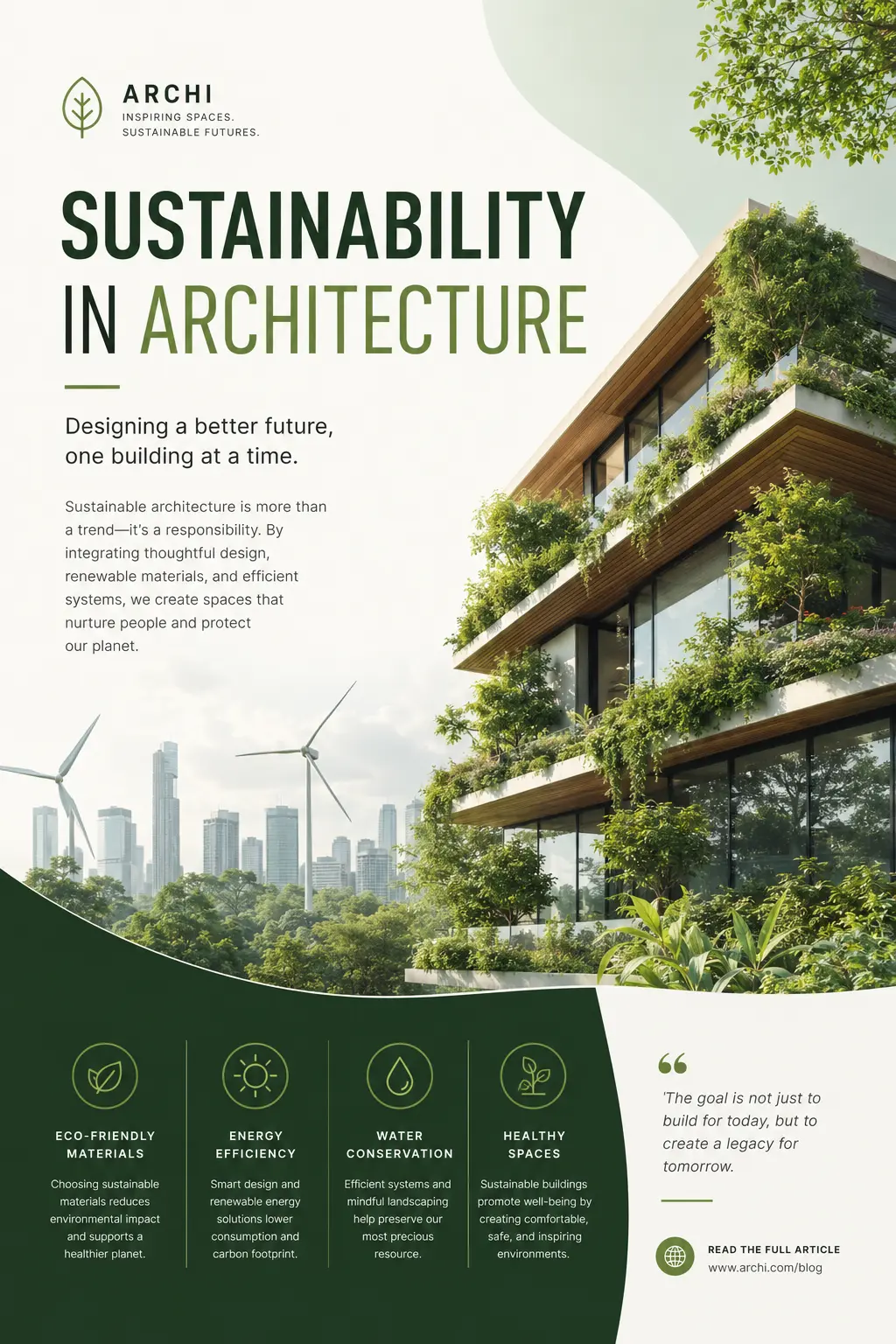
1. Energy Efficiency
Reduce energy consumption through smart design (passive solar heating, natural ventilation, insulation).
Use renewable energy sources (solar panels, wind, geothermal).
Optimize building orientation and window placement.
2. Sustainable Materials
Use recycled, renewable, or low-impact materials.
Choose local materials to reduce transportation emissions.
Consider the life-cycle impact of materials (from production to disposal).
3. Water Conservation
Incorporate low-flow fixtures and appliances.
Use rainwater harvesting and greywater systems.
Landscape with native, drought-tolerant plants (xeriscaping).
4. Indoor Environmental Quality (IEQ)
Ensure good air quality, natural lighting, and thermal comfort.
Use non-toxic, low-VOC (volatile organic compound) materials.
Design spaces that promote occupant health and productivity.
5. Site and Community Integration
Design to respect and enhance the local ecosystem and community.
Avoid disrupting existing landforms and habitats.
Ensure access to public transportation, bike paths, and walkways.
6. Waste Reduction
Design for adaptability and disassembly (future-proofing).
Minimize construction and demolition waste.
Promote recycling and reuse during construction and throughout the building’s life.
7. Resilience and Durability
Design buildings to withstand climate extremes and natural disasters.
Use durable materials to extend building lifespan.
Plan for future needs and changing environmental conditions.