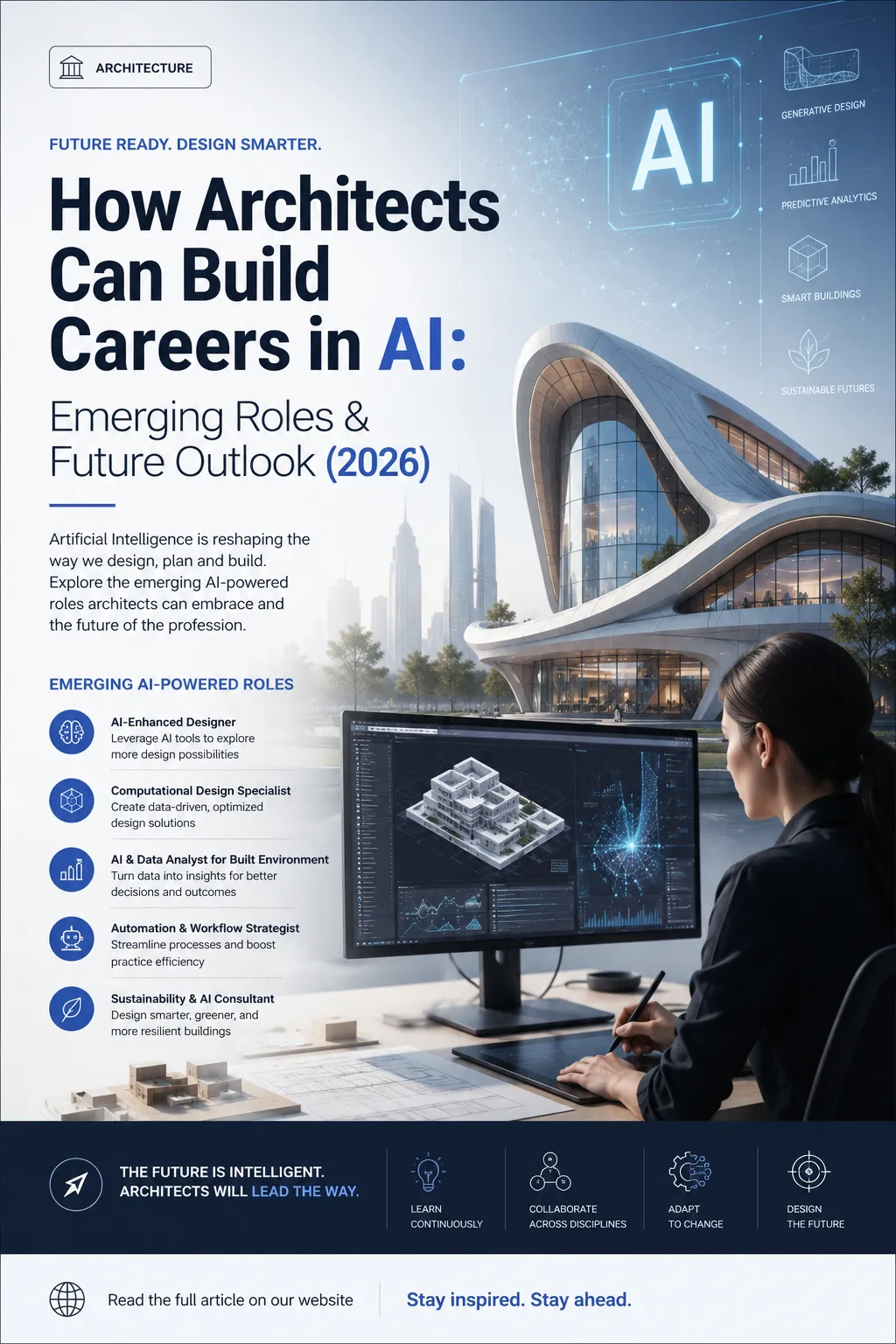
How Architects Can Build Careers in AI: Emerging Roles & Future Outlook (2026)
Discover how architects can build AI-powered careers with emerging roles, skills, and future opportunities in 2026.
Artificial Intelligence (AI) is fundamentally reshaping the Architecture, Engineering, and Construction (AEC) industry. Rather than replacing architectural designers, AI is transforming their responsibilities from manual drafting to data-driven design strategy, computational decision-making, Building Information Modeling (BIM), and AI-assisted design optimization. Industry research indicates that organizations adopting AI are increasing demand for professionals capable of combining architectural expertise with machine learning workflows, automation, and digital collaboration.
Category
Summary
Industry Trend
AI is augmenting architectural design through automation, BIM, generative design, and digital twins, while increasing demand for designers with digital expertise.
Primary Role
Bridge architectural design principles with AI-powered workflows to improve design quality, efficiency, sustainability, and collaboration.
Key Job Positions
AI Architectural Designer, Computational Design Specialist, BIM & AI Integration Specialist, Digital Twin Designer, Generative Design Consultant, AI Design Strategist.
Core Technical Skills
Building Information Modeling (BIM), Autodesk Revit, Rhino 3D, Grasshopper, Computational Design, Parametric Design, Python, Design Automation, Generative AI, Digital Twin Technologies, Prompt Engineering.
Demand for professionals who combine architectural design with AI, BIM, and computational workflows is expected to continue rising as architecture firms, engineering consultancies, and technology companies invest in intelligent design, automation, and digital twin technologies. The future architectural designer will increasingly serve as a strategic design technologist, bridging creativity with AI-powered innovation.
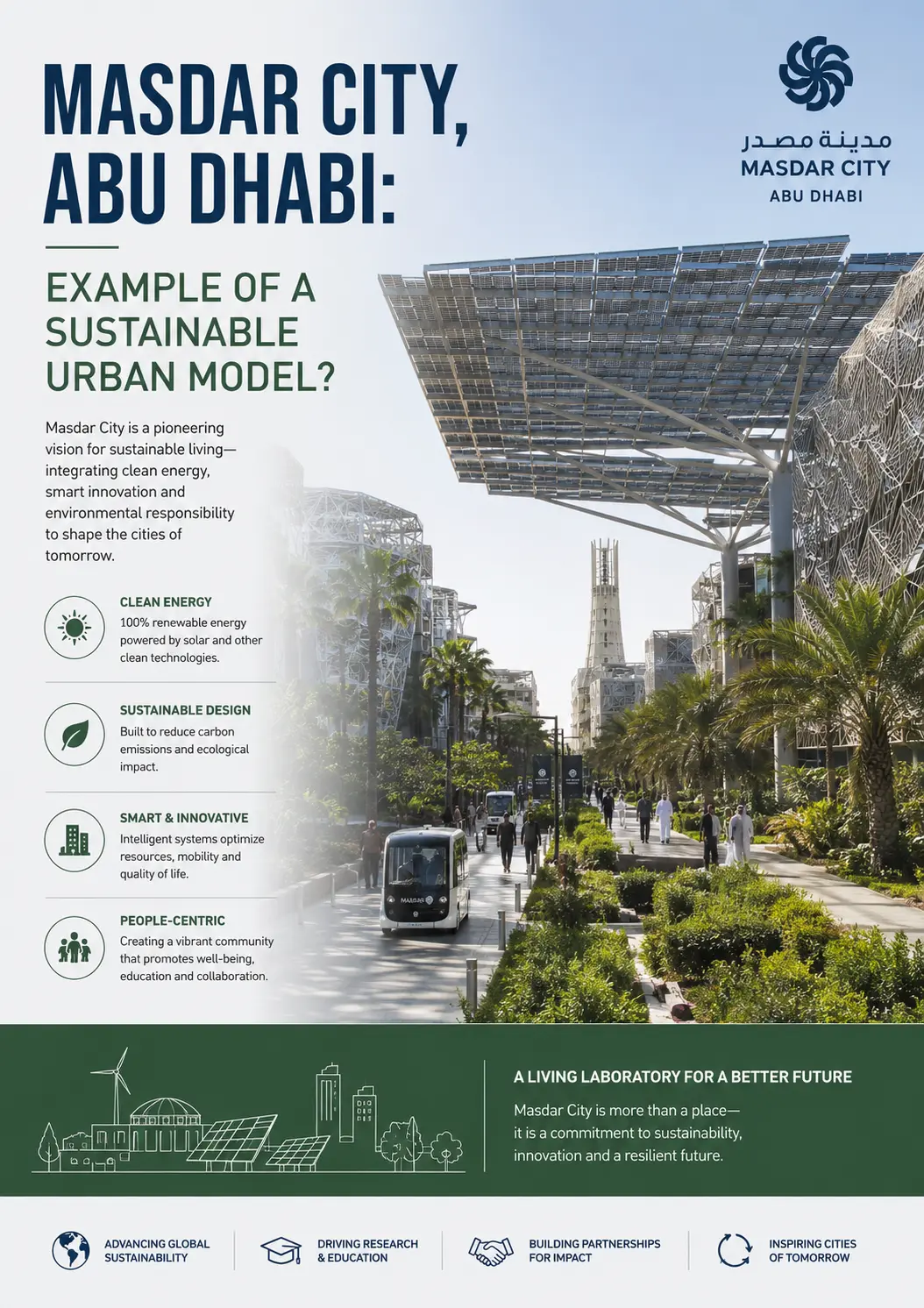
Geographic Area and Urban Scale Masdar City is located approximately 17 kilometers from central Abu Dhabi and was initially planned across nearly 6 square kilometers of urban land area. The masterplan targeted a population of around 40,000 permanent residents and an additional 50,000 daily commuters working within commercial and research…
Introduction Designing buildings for hot and dry climates requires careful control of solar heat gain, indoor temperature and ventilation. Regions such as Rajasthan, parts of India, the Middle East, North Africa and other arid regions experience high daytime temperatures, intense solar radiation and relatively low humidity. Passive cooling strategies reduce…
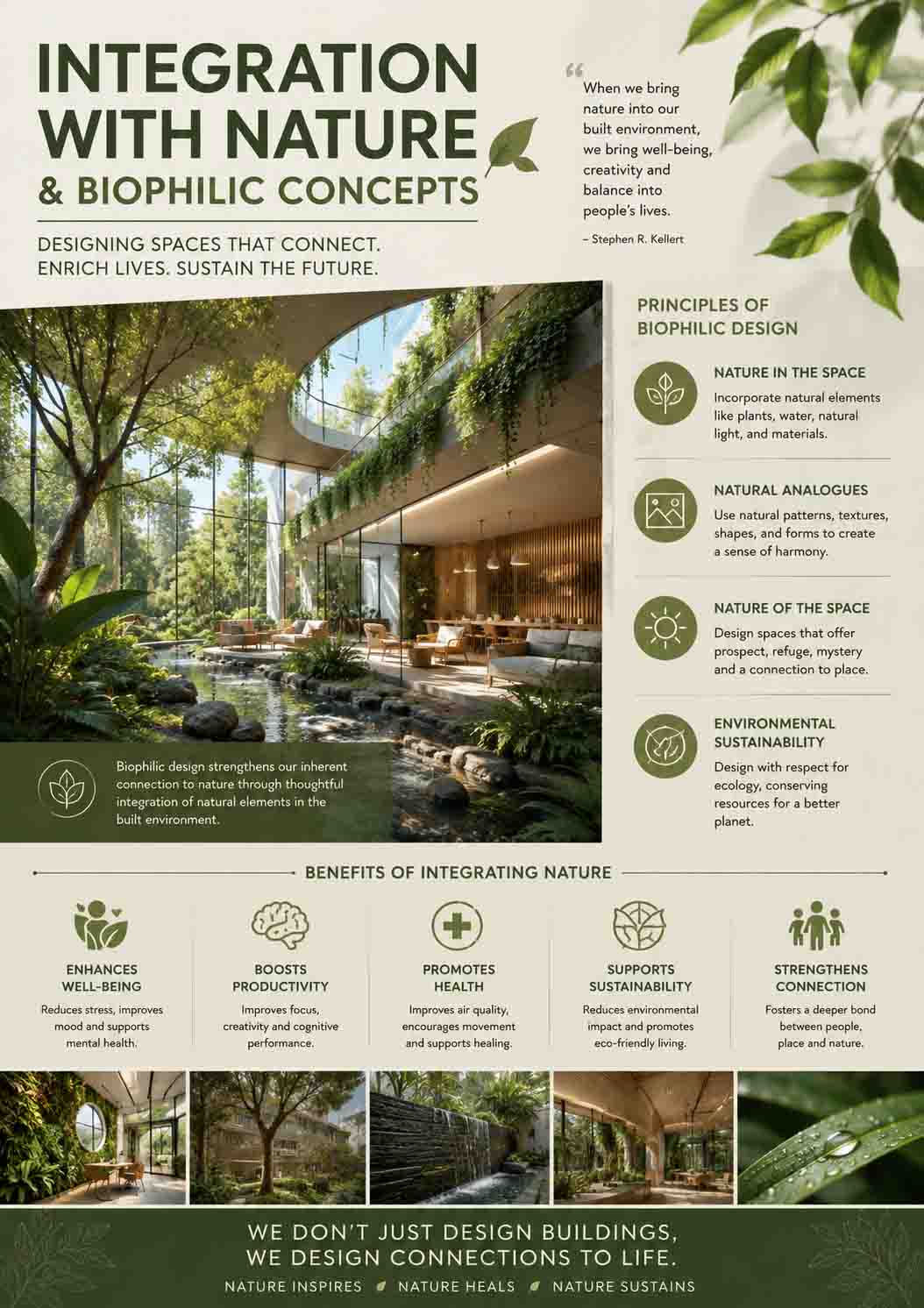
1. Conceptual Framework of Integration with Nature Integration with nature refers to the intentional incorporation of natural systems, processes, and elements into human-designed environments to enhance ecological balance, human well-being, and long-term sustainability. This concept is rooted in the recognition that human physiological and psychological systems evolved in close interaction…
One thought on “How Architects Can Build Careers in AI: Emerging Roles & Future Outlook (2026)”
One thought on “How Architects Can Build Careers in AI: Emerging Roles & Future Outlook (2026)”