
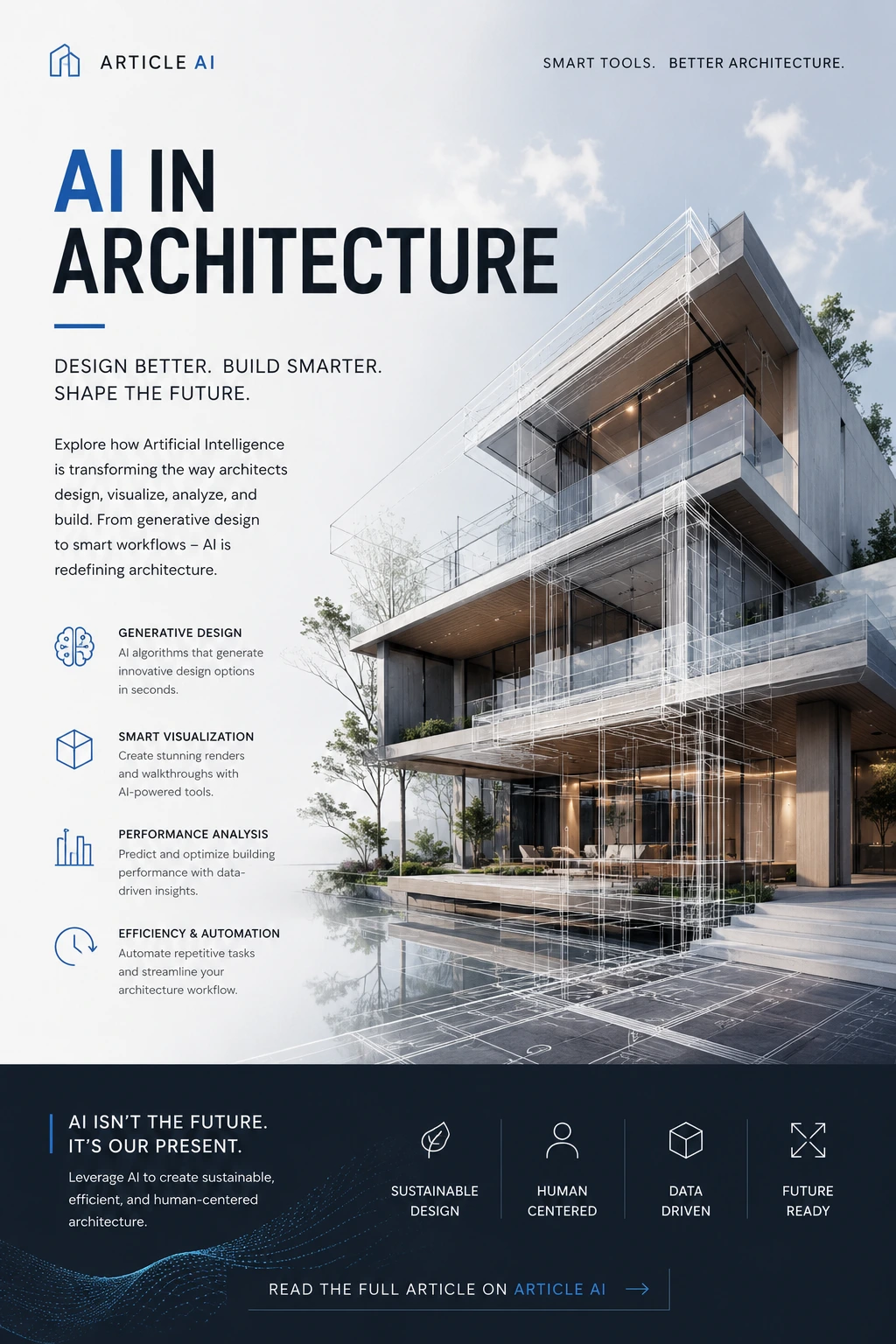
AI in architecture is increasingly used to enhance efficiency, innovation, and sustainability, offering tools for design exploration, project management, and building performance optimization, without replacing human architects.
| Category | Key Points |
|---|---|
| Overview | AI in architecture improves efficiency, innovation, and sustainability by assisting architects in design, project management, and building optimization. It supports architects rather than replacing them. |
| 1. Enhancing Design Processes | Generative Design: Creates multiple optimized design options. 3D Rendering & Modeling: Produces realistic visualizations for better communication. Design Innovation: Explores new design trends and creative possibilities. Building Performance: Optimizes energy efficiency, daylighting, and sustainability. Material Selection: Recommends sustainable and efficient building materials. |
| 2. Streamlining Project Management | Real-time BIM Updates: Enhances collaboration through Building Information Modeling. Task Automation: Automates repetitive tasks, saving time. Project Planning: Predicts delays, identifies risks, and improves scheduling. Collaboration: Improves communication among architects, clients, and contractors. |
| 3. AI Tools & Applications | Leonardo.AI: Generates design concepts and presentation visuals. Revit AI Tools: Simulates building performance and energy optimization. Gendo: Converts sketches and text prompts into realistic visualizations. Midjourney: Creates AI-generated images from text prompts. Architechtures: Optimizes building design and increases productivity. |
| 4. Future of AI in Architecture | AI will become more integrated into architectural workflows, enhancing human creativity and decision-making. It will enable smarter, more sustainable buildings and contribute to urban planning and city development. |
| Overall Benefits | ✔ Faster design process ✔ Increased creativity and innovation ✔ Better project management ✔ Improved sustainability and energy efficiency ✔ Enhanced collaboration and productivity |
Here’s a more detailed look at how AI in architecture is impacting industry:
1. Enhancing Design Processes:
- Generative Design: AI algorithms can analyze vast datasets and generate numerous design options, optimizing layouts, structures, and materials based on specific criteria.
- Virtual 3D Rendering and Modeling: AI can assist in creating realistic visualizations and models, helping architects explore design concepts and communicate ideas effectively.
- Design Exploration and Innovation: AI tools can help architects explore new design trends, patterns, and possibilities, pushing the boundaries of creativity.
- Optimizing Building Performance: AI can analyze building performance data (energy consumption, daylighting, etc.) to optimize designs for sustainability and efficiency.
- Material Selection: AI can assist in selecting sustainable materials and optimizing their use in construction.
2. Streamlining Project Management and Workflow:
- Real-time BIM Updates: AI can facilitate real-time updates and collaboration within Building Information Modeling (BIM) workflows.
- Automated Tasks: AI can automate repetitive tasks, freeing up architects to focus on more complex design challenges.
- Project Planning and Scheduling: AI algorithms can analyze project data to predict potential delays, identify risks, and recommend efficient scheduling.
- Improved Communication and Collaboration: AI-powered tools can facilitate seamless communication and collaboration among architects, contractors, and clients.
3. Examples of AI Tools and Applications:
- Leonardo.AI: Offers AI in architecture tools for generating design mockups, refining presentation imagery, and exploring new visual ideas.
- Revit AI Tools: Integrate AI analytics to simulate building performance, optimize energy use, and select sustainable materials.
- Gendo: Turns sketches or written prompts into realistic visualizations in seconds.
- Midjourney: A platform offering text-to-image generation.
- Architechtures: An AI in Architecture Generator that optimizes building design and improves productivity.
4. The Future of AI in Architecture:
- AI is expected to continue to evolve and become more integrated into the architectural design process.
- The focus will be on using AI to augment human capabilities, not replace them.
- AI will enable architects to create smarter, more sustainable, and efficient buildings that respond to the needs of people and the environment.
- AI will also play a role in urban planning and the development of entire cityscapes.
One thought on “AI in Architecture”