How Architects Can Build Careers in AI: Emerging Roles & Future Outlook (2026)
Discover how architects can build AI-powered careers with emerging roles, skills, and future opportunities in 2026.
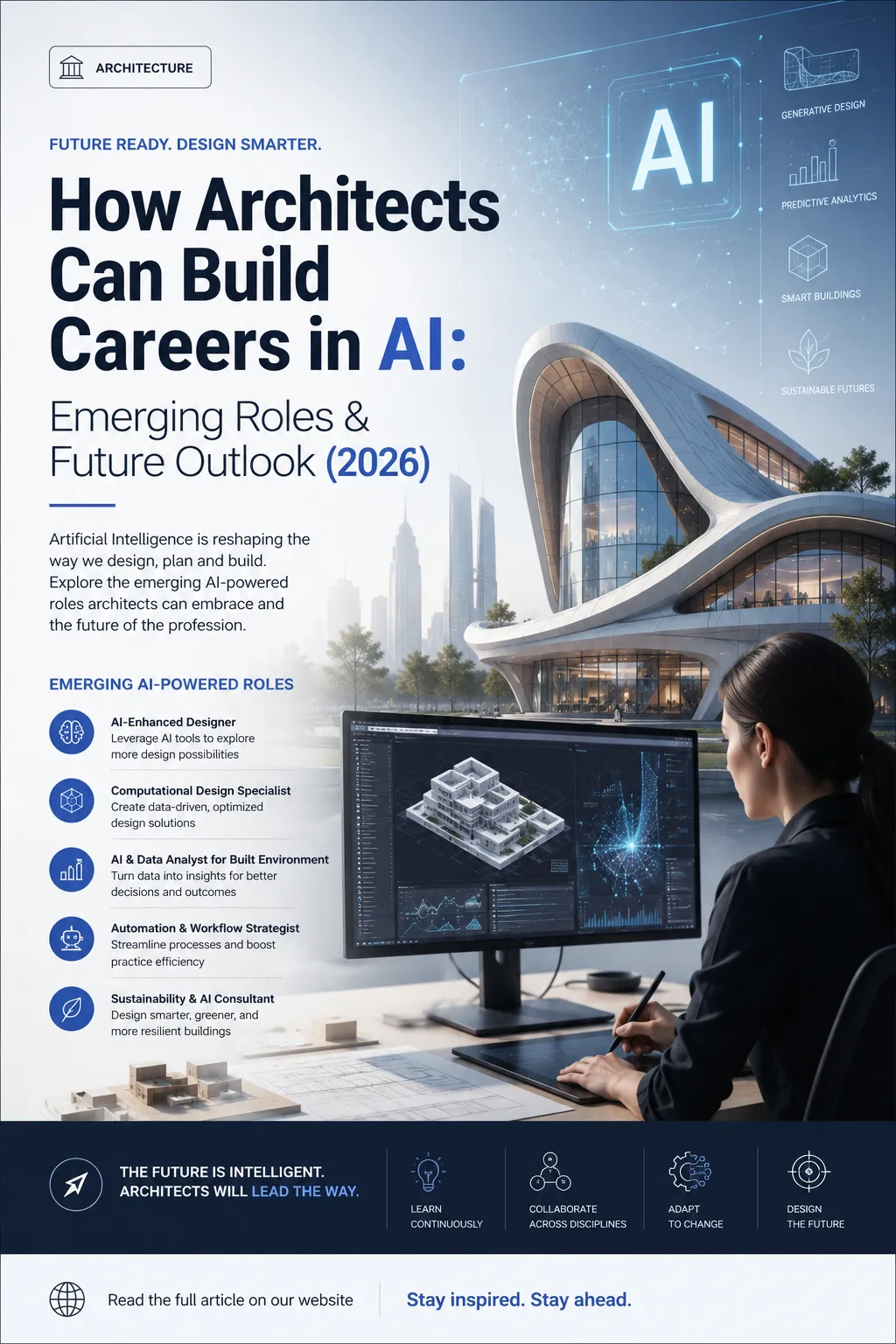
Artificial Intelligence (AI) is fundamentally reshaping the Architecture, Engineering, and Construction (AEC) industry. Rather than replacing architectural designers, AI is transforming their responsibilities from manual drafting to data-driven design strategy, computational decision-making, Building Information Modeling (BIM), and AI-assisted design optimization. Industry research indicates that organizations adopting AI are increasing demand for professionals capable of combining architectural expertise with machine learning workflows, automation, and digital collaboration.
Category
Summary
Industry Trend
AI is augmenting architectural design through automation, BIM, generative design, and digital twins, while increasing demand for designers with digital expertise.
Primary Role
Bridge architectural design principles with AI-powered workflows to improve design quality, efficiency, sustainability, and collaboration.
Key Job Positions
AI Architectural Designer, Computational Design Specialist, BIM & AI Integration Specialist, Digital Twin Designer, Generative Design Consultant, AI Design Strategist.
Core Technical Skills
Building Information Modeling (BIM), Autodesk Revit, Rhino 3D, Grasshopper, Computational Design, Parametric Design, Python, Design Automation, Generative AI, Digital Twin Technologies, Prompt Engineering.
Demand for professionals who combine architectural design with AI, BIM, and computational workflows is expected to continue rising as architecture firms, engineering consultancies, and technology companies invest in intelligent design, automation, and digital twin technologies. The future architectural designer will increasingly serve as a strategic design technologist, bridging creativity with AI-powered innovation.
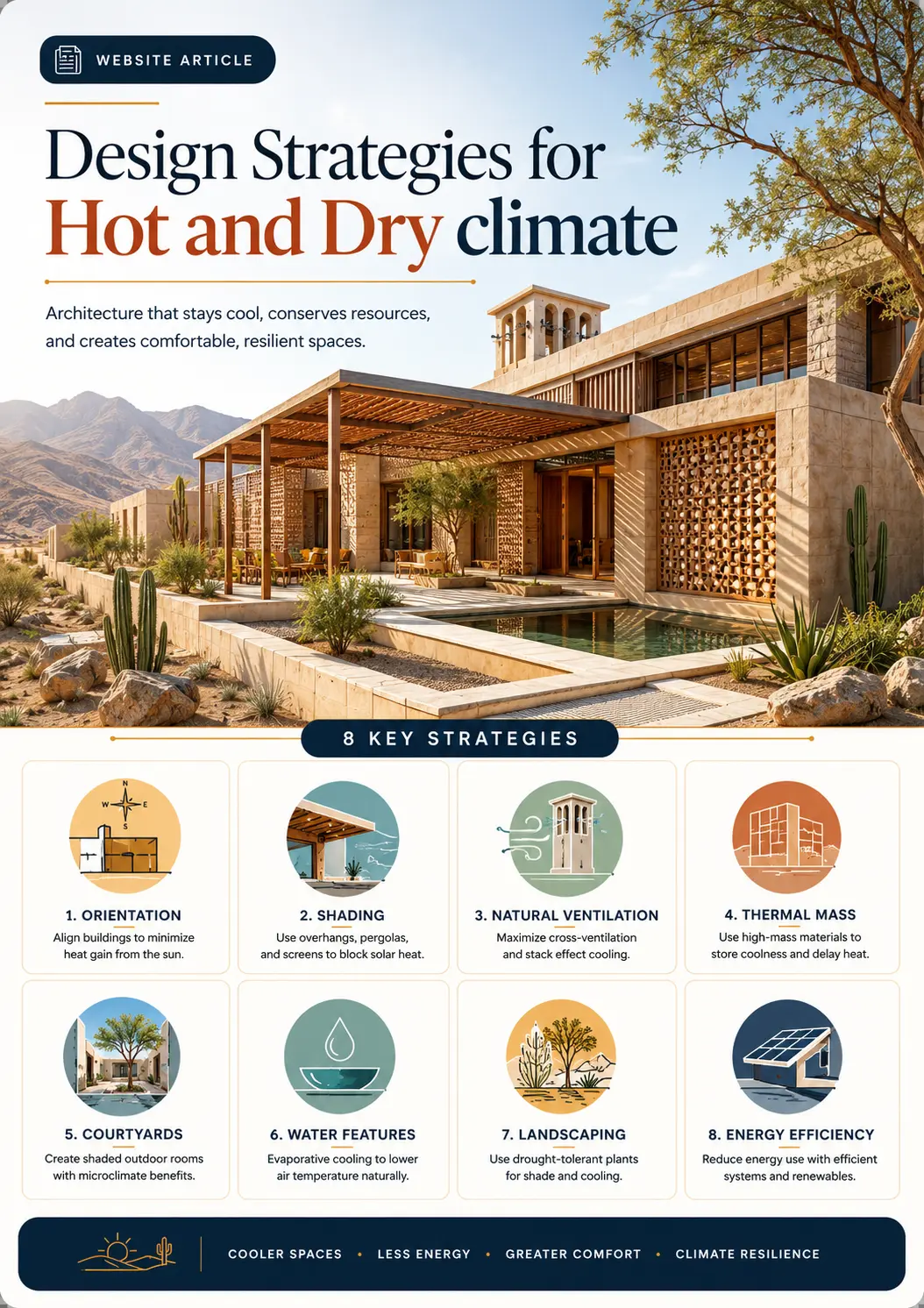
Designing for a hot and dry climate means focusing on keeping interiors cool, reducing water use, and using materials and layouts that handle intense sun and large temperature swings. Here’s a tailored list of sustainable design ideas for this environment: 🌞 Climate-Specific Passive Design 💨 Natural Cooling Techniques 💧 Water…
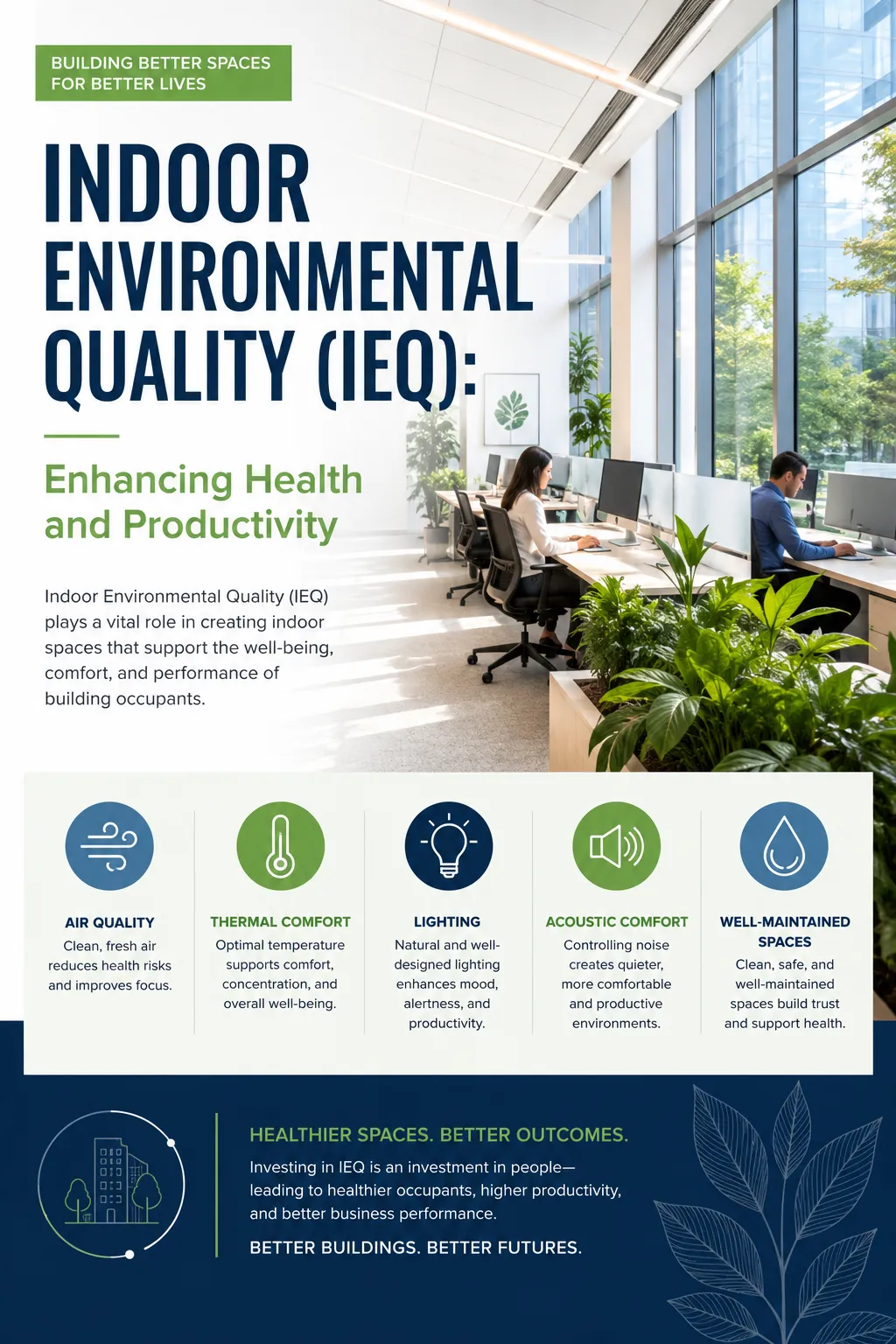
Introduction Indoor Environmental Quality (IEQ) refers to the conditions within a building that affect the health, comfort, and productivity of its occupants. The quality of the indoor environment plays a crucial role in enhancing the well-being of individuals in residential, commercial, and institutional settings. As people spend up to 90%…
Shipping container architecture has evolved from a niche architectural concept into a commercially viable solution for residential homes, offices, cafés, retail spaces, emergency shelters, and modular commercial buildings. The primary appeal lies in speed of construction, modularity, structural durability, and material reuse. However, recent academic research suggests that container buildings…
One thought on “How Architects Can Build Careers in AI: Emerging Roles & Future Outlook (2026)”

One thought on “How Architects Can Build Careers in AI: Emerging Roles & Future Outlook (2026)”