
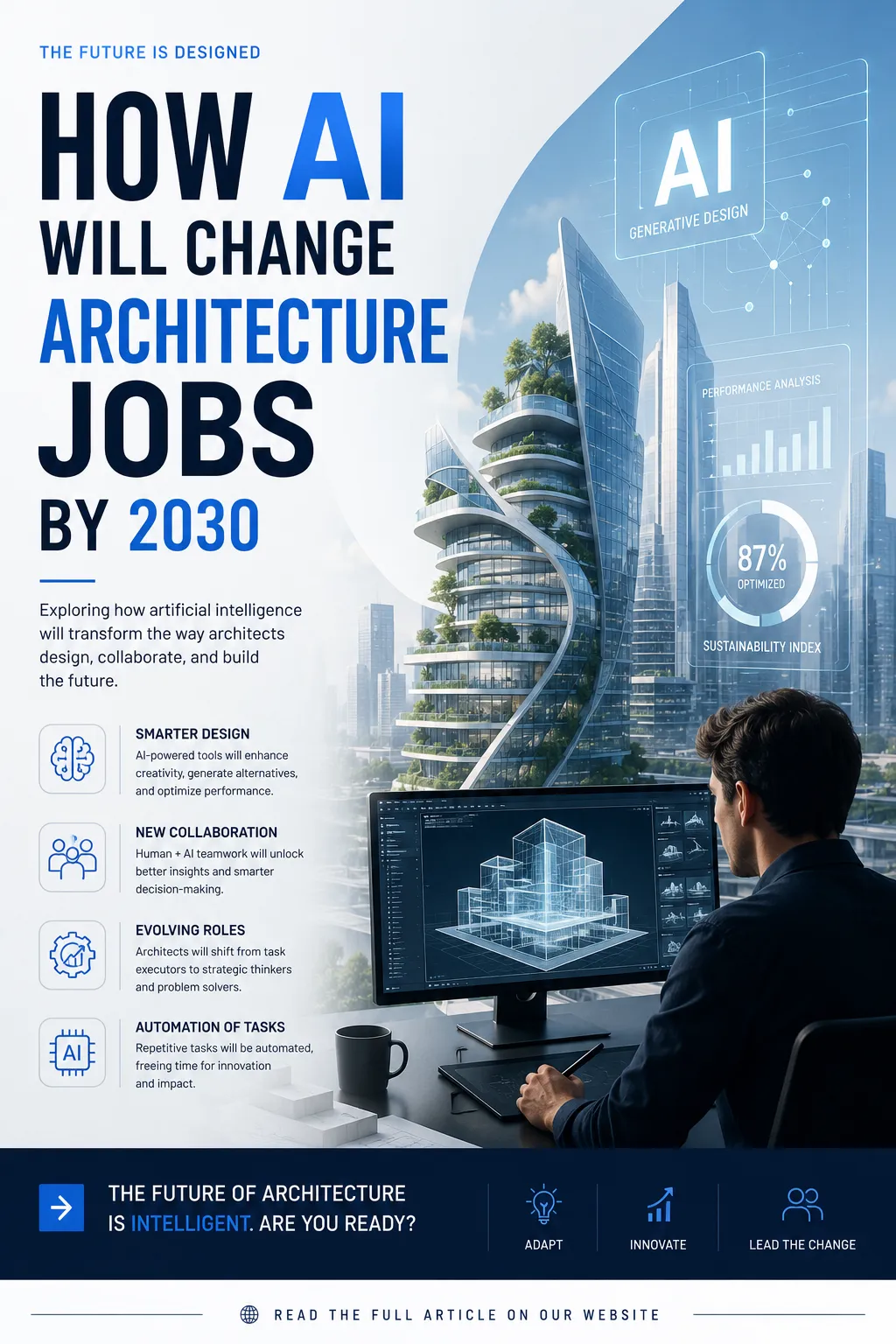
Introduction: AI Is Reshaping Architecture, Not Replacing Architects
Artificial Intelligence (AI) is becoming one of the biggest technological shifts in the architecture industry. By 2030, architecture jobs are expected to move from traditional drafting and documentation-heavy roles toward data-driven design, automation management, and intelligent building solutions.
Research by the World Economic Forum suggests that technology adoption will transform millions of jobs globally, creating demand for professionals with advanced digital skills.
Source: https://www.weforum.org/reports/future-of-jobs-report/
For architects, this transformation means future roles will focus less on repetitive production work and more on creativity, strategy, sustainability, and human-centered design.
1. Automated Design Will Change Traditional Architecture Workflows
One of the largest impacts of AI in architecture will be the automation of repetitive tasks such as:
- drawing production
- design variations
- documentation checks
- code analysis
- space planning studies
AI-powered generative design platforms can already produce thousands of design possibilities based on parameters such as cost, materials, daylight, energy performance, and site limitations.
Companies like Autodesk have invested heavily in generative design technology, demonstrating how computational systems can support faster architectural decision-making.
Reference: https://www.autodesk.com/solutions/generative-design
By 2030, architects are likely to spend more time evaluating intelligent design options instead of manually producing every iteration.
2. BIM Specialists and AI-Integrated Design Roles Will Grow
Building Information Modeling (BIM) has already changed architectural project delivery. The next phase will combine BIM with artificial intelligence, creating demand for specialized professionals.
Future architecture roles may include:
- AI Design Coordinator
- Computational Design Architect
- BIM Automation Specialist
- Digital Twin Consultant
- Sustainable Data Analyst
According to McKinsey research, construction and design industries have significant potential for productivity improvement through digital technologies and automation.
Reference: https://www.mckinsey.com/capabilities/operations/our-insights/imagining-constructions-digital-future
Architects who understand BIM, coding, data analysis, and automation workflows will have a competitive advantage.
3. Entry-Level Architecture Jobs Will Experience the Biggest Shift
Junior architecture positions traditionally involve large amounts of drafting, modeling, and documentation. These are exactly the areas where automation delivers the fastest efficiency improvements.
By 2030, entry-level architects may need stronger abilities in:
- AI-assisted modeling
- parametric design
- computational thinking
- digital fabrication
- environmental simulation tools
The role of young architects will move from “drawing production” toward “design intelligence management.”
Learning platforms from organizations like the Royal Institute of British Architects highlight the increasing importance of digital transformation in architectural education.
Reference: https://www.architecture.com/
4. Sustainable Architecture Will Become More Data-Driven
Climate-focused design will be one of the strongest career opportunities created by AI.
Advanced systems can analyze:
- building energy consumption
- carbon impact
- material efficiency
- climate response
- lifecycle performance
The International Energy Agency reports that buildings represent a major share of global energy-related emissions, making smarter design methods essential.
Reference: https://www.iea.org/topics/buildings
Future architects using AI-based environmental analysis tools will be better positioned to design efficient and sustainable buildings.
5. Human Creativity Will Become the Architect’s Strongest Asset
Despite automation growth, architecture depends on factors that technology cannot fully replace:
- cultural understanding
- emotional experience
- client relationships
- creative storytelling
- ethical decision-making
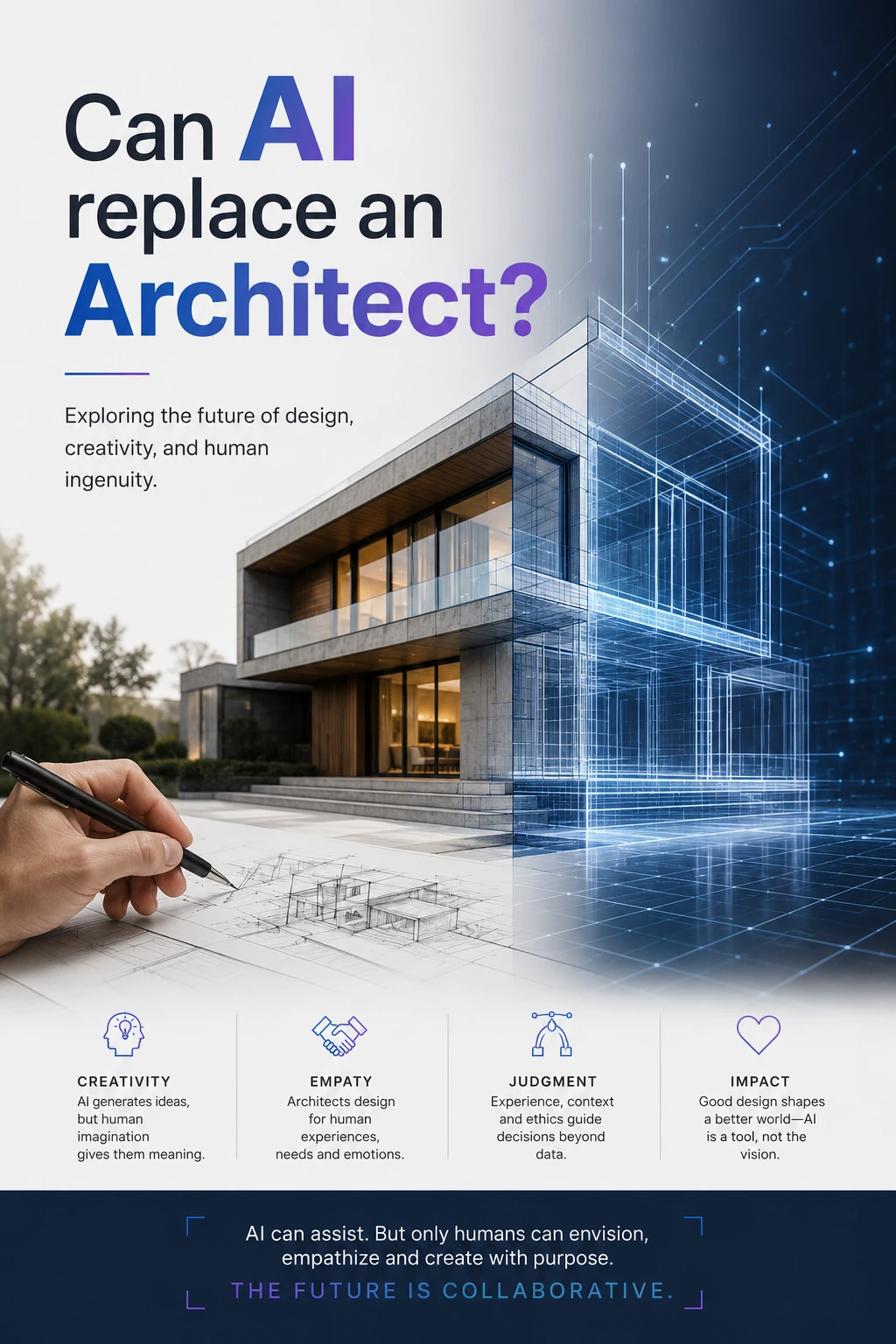
AI can process information, but architects translate human needs into meaningful spaces.
The future architect will likely become a hybrid professional: part designer, part strategist, and part technology manager.
Architecture Skills Expected to Be Valuable by 2030
Future-ready architects should focus on developing:
Technical Skills
- AI design tools
- BIM automation
- parametric modeling
- computational design
- data visualization
Strategic Skills
- problem solving
- sustainable thinking
- project leadership
- design research
- client communication
Professionals who combine creativity with technological expertise will have stronger career opportunities.
One thought on “How AI Will Change Architecture Jobs by 2030”