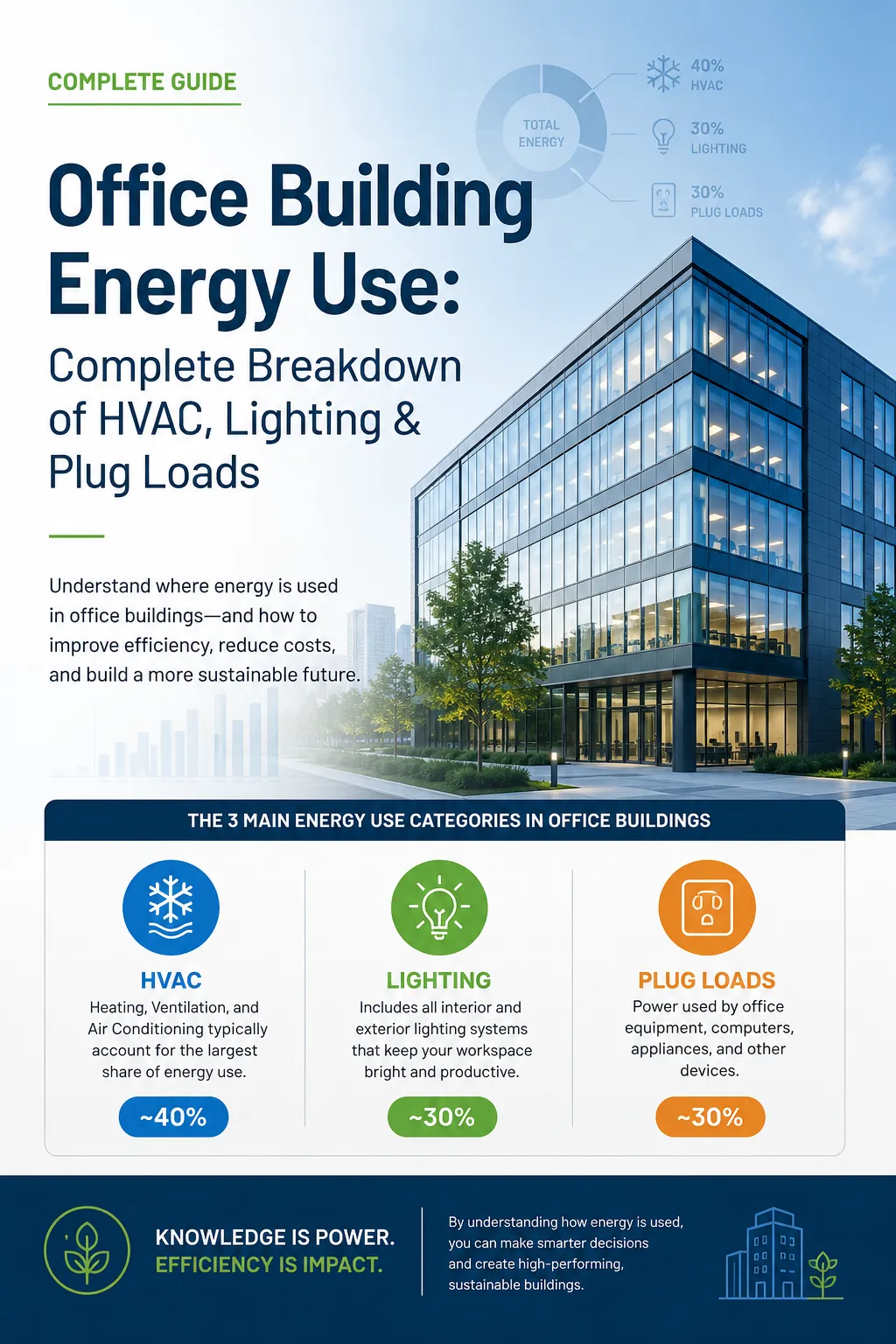
Modern office buildings consume electricity across multiple end-use categories, with HVAC, lighting, office equipment, and miscellaneous electrical loads accounting for over 90% of total electricity demand. While the exact distribution depends on climate, occupancy density, operating schedules, and building efficiency, industry research consistently identifies HVAC systems as the dominant energy consumer, followed by lighting and plug loads.
| Electrical Load Category | Typical Energy Consumption (%) | Primary Equipment Included | Key Insight |
|---|
| HVAC (Heating, Ventilation & Air Conditioning) | 40–50% | Chillers, AHUs, FCUs, cooling towers, ventilation fans, pumps | Largest energy consumer in office buildings; efficiency improvements offer the highest energy-saving potential. |
| Lighting | 18–25% | LED/fluorescent fixtures, emergency lighting, lighting controls | Second-largest electrical load; LED retrofits and occupancy sensors can reduce lighting energy by over 50%. |
| Computers & IT Equipment | 10–15% | Desktop PCs, laptops, monitors, networking devices, servers | Growing load due to increasing digitalization and hybrid workplaces. |
| Office Equipment & Plug Loads | 8–15% | Printers, photocopiers, UPS, chargers, coffee machines, conference equipment | Plug loads continue to increase as HVAC and lighting become more efficient. |
| Elevators, Pumps & Motors | 3–7% | Elevators, escalators, domestic water pumps, sump pumps, motor-driven systems | Consumption depends on building height, occupancy, and operating schedules. |
| Fire & Life Safety Systems | 1–3% | Fire alarm panels, fire pumps, emergency lighting, smoke extraction, exit signage | Continuous standby operation results in relatively low overall electricity consumption. |
| Other Miscellaneous Loads | 3–8% | CCTV, access control, BMS, telecommunications, security systems | Auxiliary systems contribute a small but essential portion of total building energy use. |
1. HVAC Load (40–50%)
Heating, Ventilation and Air Conditioning (HVAC) remains the largest electrical energy consumer in commercial office buildings. Air handling units, chillers, cooling towers, ventilation fans and circulation pumps operate continuously to maintain occupant comfort and indoor air quality. Studies conducted by the U.S. Energy Information Administration (EIA) and commercial building research organizations consistently place HVAC at approximately 40–50% of total building electricity consumption, making it the highest priority for energy optimization.
Reference Resources
- U.S. EIA Commercial Building Energy Survey (CBECS)
- Energy Efficiency Council – Office End-Use Research
2. Lighting Load (18–25%)
Lighting typically accounts for 18–25% of office electricity consumption, depending on fixture technology and occupancy schedules. Buildings equipped with LED lighting, daylight harvesting, occupancy sensors and smart lighting controls can reduce lighting energy use by more than 50% compared with conventional fluorescent installations. Despite widespread LED adoption, lighting continues to remain one of the largest controllable electrical loads in commercial buildings.
Reference Resources
- U.S. General Services Administration – Building Energy Efficiency
- U.S. EIA Commercial Building Energy Survey
3. Computers & IT Equipment (10–15%)
Desktop computers, laptops, monitors, docking stations, networking devices and small servers generally contribute 10–15% of total office electricity demand. As businesses become increasingly digital, computing loads continue to rise despite improvements in hardware efficiency. Recent forecasts suggest computing electricity demand will become one of the fastest-growing commercial building end uses over the coming decades.
Reference Resources
4. Office Equipment & Plug Loads (8–15%)
Printers, photocopiers, conference room electronics, chargers, coffee machines, UPS systems and miscellaneous plug-connected appliances collectively account for approximately 8–15% of total electricity consumption. Research indicates that plug loads are becoming increasingly significant as HVAC and lighting systems become more energy efficient, making unmanaged plug loads one of the fastest-growing categories in commercial buildings.
Reference Resources
5. Fire & Life Safety Electrical Load (1–3%)
Fire alarm panels, emergency lighting, smoke extraction systems, fire pumps, exit signs and emergency communication systems generally consume 1–3% of total electrical energy under normal operating conditions. Although these systems operate continuously in standby mode, their overall energy demand remains relatively low compared with HVAC and lighting systems. However, they are essential for regulatory compliance and occupant safety.
6. Other Building Services (3–8%)
Additional electrical consumption originates from elevators, escalators, domestic water pumps, sump pumps, security systems, CCTV, access control, telecommunications infrastructure and building management systems (BMS). Collectively, these auxiliary systems typically contribute 3–8% of total office building electricity consumption, depending on building height and operational complexity.
Key Findings
- HVAC systems remain the largest electricity consumer, representing approximately 40–50% of total office building energy use.
- Lighting contributes around 18–25%, making it the second-largest controllable electrical load.
- Computers and IT equipment account for 10–15%, with continued growth driven by digital workplaces.
- Plug loads and office equipment typically represent 8–15%, and their share increases in high-performance buildings where HVAC and lighting have already been optimized.
- Fire protection systems generally consume 1–3%, while other auxiliary electrical services contribute 3–8% of total building electricity demand.