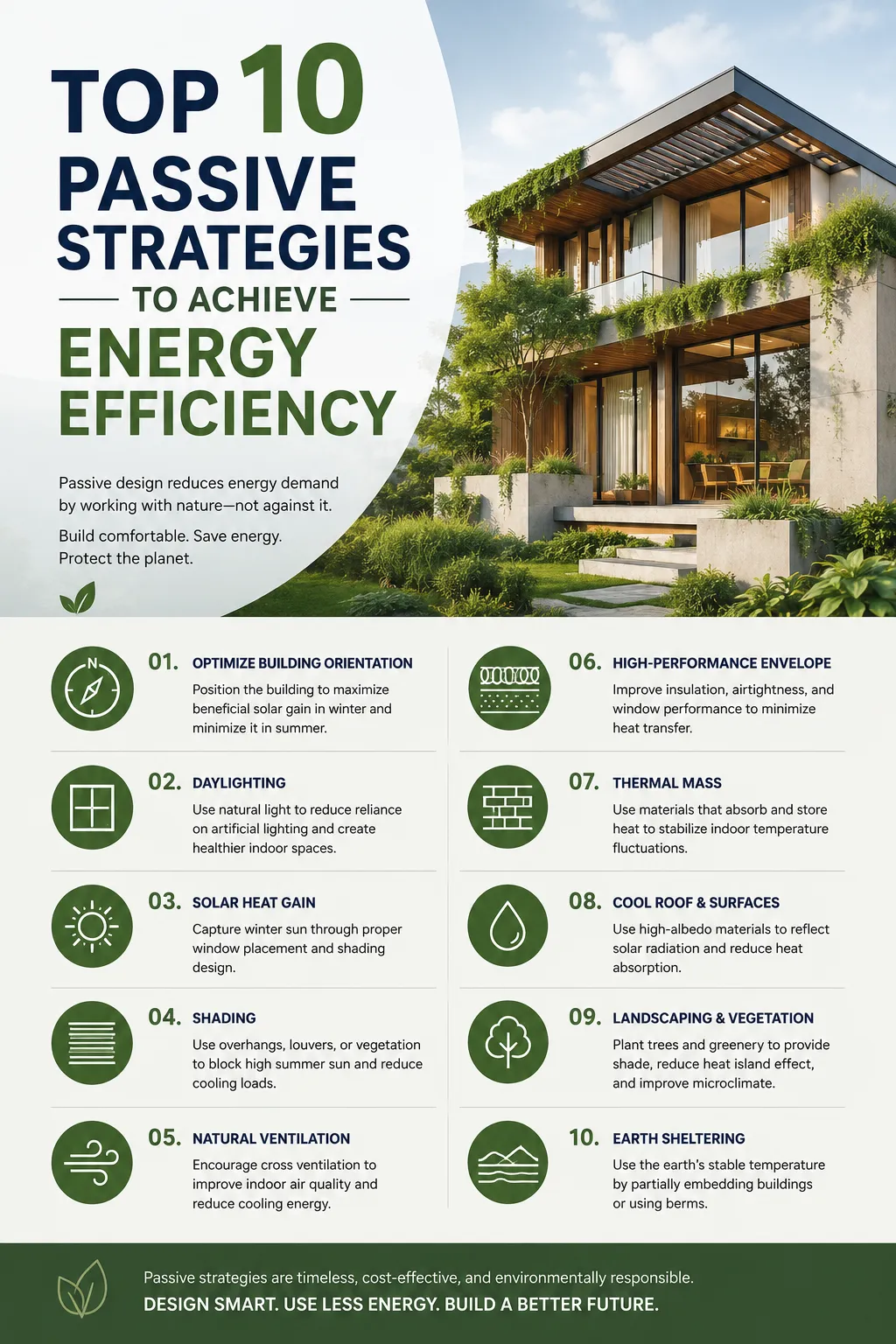
Energy-efficient buildings rely heavily on passive design strategies that reduce heating, cooling, and lighting demand before mechanical systems are introduced. According to multiple building performance studies, integrating passive measures during the design stage can significantly reduce operational energy consumption while improving occupant comfort and lowering lifecycle costs. Research from the Engineering Science & Technology Journal, NZEB Knowledge Centre, and recent simulation-based studies consistently identifies the following passive strategies as the highest-impact solutions.
| Passive Strategy | How It Improves Energy Efficiency | Primary Benefit |
|---|
| Building Orientation | Aligns the building to maximize daylight and seasonal solar gain while reducing heat exposure. | Lower heating and cooling demand |
| High-Performance Insulation | Minimizes heat transfer through walls, roofs, and floors. | Reduced HVAC energy consumption |
| Passive Solar Design | Utilizes natural solar heat in winter and controls overheating in summer. | Improved thermal performance |
| Natural Ventilation | Promotes airflow through cross and stack ventilation. | Reduced reliance on air conditioning |
| Thermal Mass | Stores and gradually releases heat to stabilize indoor temperatures. | Lower peak energy loads |
| External Shading | Blocks direct solar radiation before it enters the building. | Reduced cooling requirements |
| Daylighting | Maximizes natural light using windows, skylights, and reflective surfaces. | Lower artificial lighting energy |
| Energy-Efficient Windows | Uses insulated glazing and Low-E coatings to reduce heat transfer. | Improved indoor comfort and energy savings |
| Cool Roofs | Reflective roofing materials reduce solar heat absorption. | Lower indoor temperatures and cooling costs |
| Climate-Responsive Design | Tailors building design to local climate conditions for optimal performance. | Long-term energy efficiency and sustainability |
1. Building Orientation
Proper orientation maximizes natural daylight and winter solar gain while minimizing summer heat, significantly reducing heating and cooling loads.
Reference: https://nzeb.in/knowledge-centre/passive-design/
2. High-Performance Insulation
Well-insulated walls, roofs, and floors reduce heat transfer, lowering HVAC energy demand throughout the building’s lifecycle.
Reference: https://netzerocities.app/resource-194
3. Passive Solar Design
Strategic window placement and thermal storage materials capture solar heat during winter while limiting overheating in summer.
Reference: https://en.wikipedia.org/wiki/Passive_solar_building_design
4. Natural Ventilation
Cross and stack ventilation improve indoor air circulation, reducing dependence on air conditioning.
Reference: https://en.wikipedia.org/wiki/Passive_ventilation
5. Thermal Mass
Materials like concrete and brick absorb and release heat gradually, stabilizing indoor temperatures and reducing peak energy demand.
6. External Shading
Overhangs, louvers, and vegetation block unwanted solar heat before it enters the building, improving cooling efficiency.
7. Daylighting
Optimized windows, skylights, and reflective interiors maximize natural lighting, reducing electricity consumption.
Reference: https://nzeb.in/knowledge-centre/passive-design/
8. Energy-Efficient Windows
Double or triple glazing with Low-E coatings minimizes heat loss and unwanted solar gain, improving overall building performance.
Reference: https://netzerocities.app/resource-194
9. Cool Roofs
Reflective roofing materials reduce heat absorption, lowering indoor temperatures and cooling energy requirements.
Reference: https://www.civilengineeringjournals.com/ijceae/article/70/6-2-4-505.pdf
10. Climate-Responsive Design
Designing buildings according to local climate conditions enhances the effectiveness of all passive strategies and delivers long-term energy savings.
Key Takeaway
Studies consistently identify building orientation, insulation, passive solar design, natural ventilation, thermal mass, shading, daylighting, efficient glazing, cool roofs, and climate-responsive planning as the most effective passive strategies for reducing building energy consumption and improving long-term sustainability.
See also: