
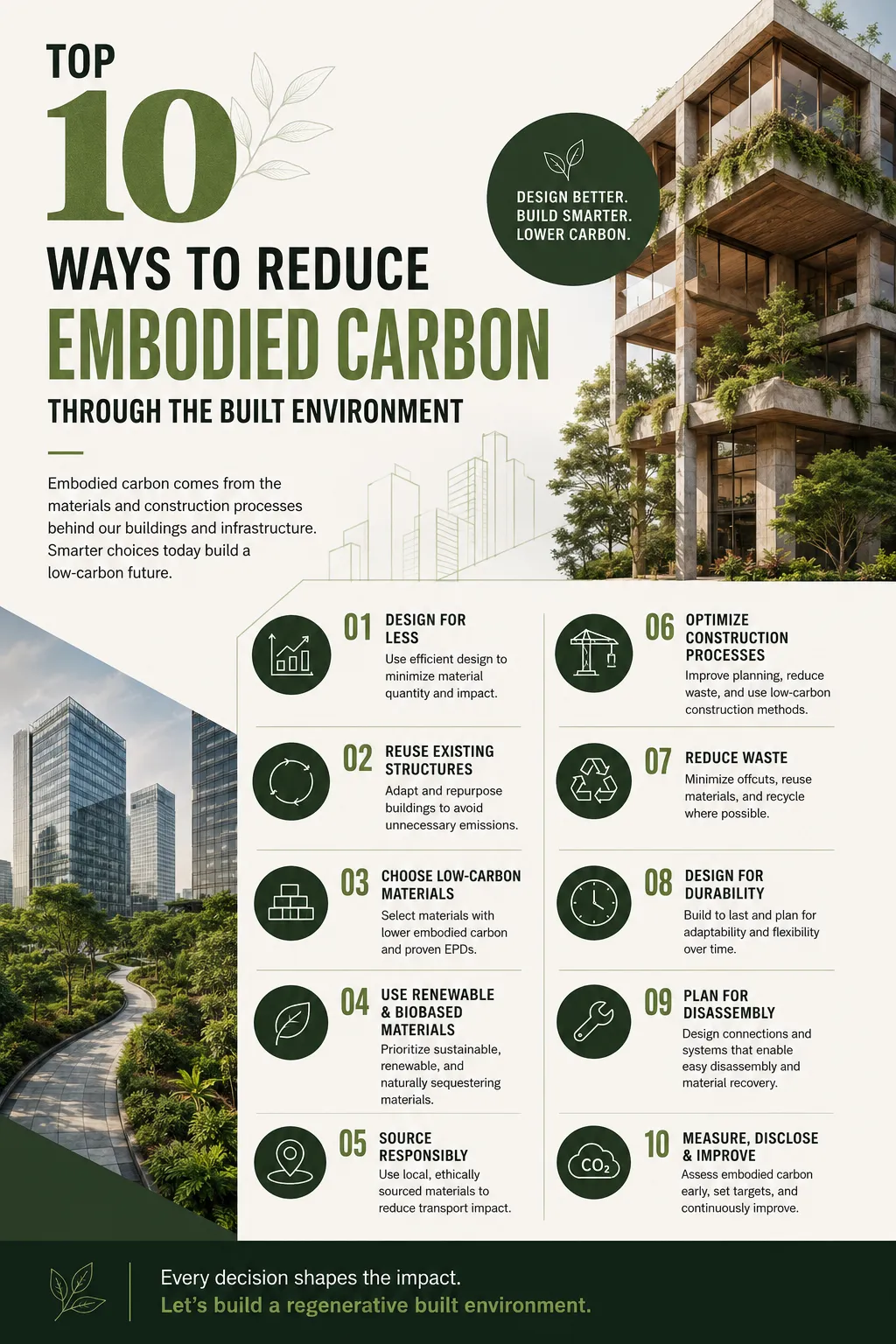
1. Reuse and Renovate Existing Buildings
Renovating and repurposing existing buildings instead of demolishing them is one of the most effective ways to reduce embodied carbon. Reusing the existing structure and foundations can cut construction emissions by up to 50%, while also lowering costs, improving energy efficiency, and reducing urban sprawl.
2. Reuse Building Materials
When a building cannot be preserved, reuse materials such as bricks, steel, concrete, and timber. Since these materials have already been manufactured, using them again avoids the emissions associated with producing new ones.
3. Conduct Life Cycle Assessments
A life cycle assessment (LCA) evaluates a building’s environmental impact from construction to demolition. Performing an LCA early helps identify sustainable materials and design choices that reduce embodied carbon.
4. Reduce High-Carbon Materials
Materials like concrete, steel, aluminium, plastics, and some insulation products have high embodied carbon. Reducing their use and choosing lower-carbon alternatives can significantly decrease emissions.
5. Use Low-Carbon Materials
When reused materials are not available, choose low embodied carbon options such as timber, hemp, or straw. These materials are more sustainable and can replace conventional materials in many applications.
6. Improve Structural Efficiency
Optimizing the building’s structural design helps reduce the amount of high-carbon materials required. Efficient designs achieve the same performance while using fewer resources.
7. Minimise Construction Waste
Reducing waste during construction and demolition lowers embodied carbon. Careful planning, recycling, and efficient material use help minimise environmental impacts.
8. Use Carbon-Sequestering Materials
Natural materials such as timber, hemp, and straw store carbon throughout their lifespan, helping reduce the overall carbon footprint of a building.
9. Choose Recycled Materials
Materials with high recycled content have much lower embodied carbon than those made from virgin resources. Using recycled steel, concrete, and other materials is a simple way to reduce emissions.
10. Use Prefabricated or Modular Construction
Prefabricated construction produces building components off-site, reducing material waste, speeding up construction, and lowering embodied carbon through more efficient manufacturing.
| Strategy | Key Benefit |
|---|---|
| Reuse & Renovate Buildings | Cuts embodied carbon and saves resources. |
| Reuse Building Materials | Reduces emissions from new material production. |
| Life Cycle Assessment | Identifies low-carbon design opportunities. |
| Reduce High-Carbon Materials | Lowers overall embodied carbon. |
| Use Low-Carbon Materials | Replaces carbon-intensive materials with sustainable alternatives. |
| Improve Structural Efficiency | Uses fewer materials without compromising strength. |
| Minimise Construction Waste | Reduces waste and environmental impact. |
| Use Carbon-Sequestering Materials | Stores carbon and lowers emissions. |
| Choose Recycled Materials | Reduces carbon through recycled content. |
| Prefabricated/Modular Construction | Minimises waste and improves construction efficiency. |
See also:

One thought on “Top 10 ways to reduce embodied carbon through built environment”