



Sustainability

Integration with Nature & Biophilic Concepts: A Research Perspective

1. Conceptual Framework of Integration with Nature Integration with nature refers to the intentional incorporation of natural systems, processes, and elements into human-designed environments to enhance ecological balance, human well-being, and long-term sustainability. This concept is rooted in the recognition that human physiological and psychological systems evolved in close interaction…

China

New Chinese / “Neo-Chinese” Design Aesthetics: Cultural Continuity in a Contemporary Visual Language

Introduction: The Emergence of Neo-Chinese Design New Chinese, often referred to as “Neo-Chinese,” design aesthetics represent a defining shift in contemporary visual culture. Rather than functioning as a revivalist or nostalgic movement, Neo-Chinese design emerges from a critical reassessment of tradition under conditions of globalization, urbanization, and cultural rearticulation. It…

SustainabilityTechnologiesWater Conservation

Singapore Water Security: Data-Driven Governance, Integrated Infrastructure, and Long-Term Resilience

1. Introduction: Water Security in a Water-Scarce City-State Singapore is globally recognised as a benchmark case in urban water security despite having no significant natural aquifers, limited land area, and high population density. Annual rainfall averages around 2,400 mm, yet spatial constraints and rapid urbanisation historically limited the country’s capacity…

Energy EfficiencySustainabilityTechnologies

Singapore Solar Irradiance Data and the Path Toward 100% Solar Energy Dependence

1. Introduction: Singapore’s Energy Challenge and Opportunity Singapore is a highly urbanized island nation with limited natural resources and one of the highest electricity demands per square kilometer in the world. Currently, over 95% of Singapore’s electricity is generated using imported natural gas, making energy security and carbon neutrality a…

China

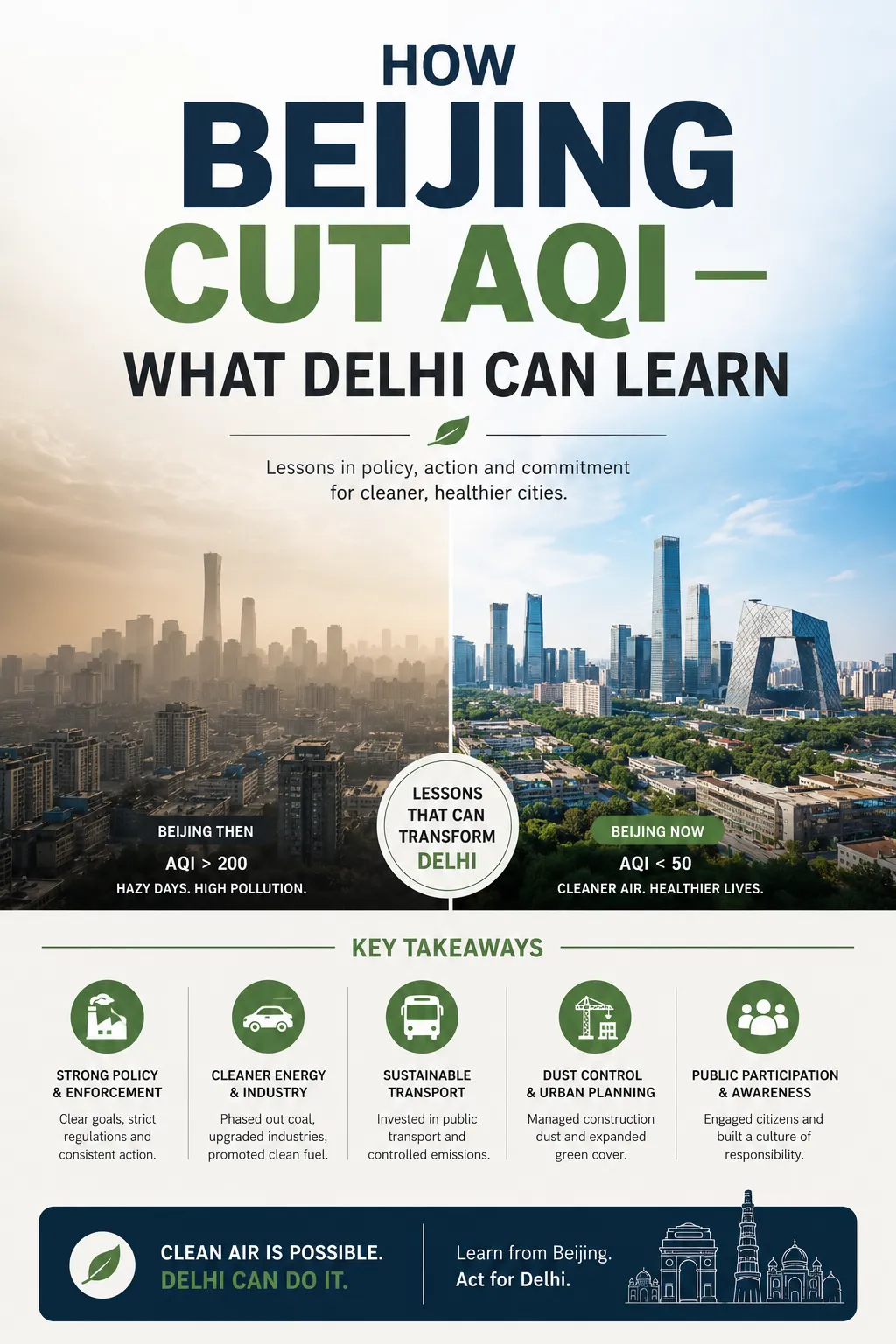
How Beijing Cut AQI — What Delhi Can Learn

Beijing’s transformation from “airpocalypse” to visibly cleaner skies is one of the few large-city air-quality success stories in the last decade. Between 2013 and the late 2010s Beijing reduced annual PM2.5 by roughly a third through targeted, enforceable policies—showing that deep cuts in AQI are possible without sacrificing economic development.…

SustainabilityTechnologies

Urban Farming in Singapore: A Study

Introduction Singapore is a dense, highly urbanised city-state with barely 1% of its land area set aside for conventional agriculture. Default+2Urban Redevelopment Authority+2 This extreme land constraint, combined with strong dependence on food imports (over 90% of fresh produce) Default+2World Economic Forum+2 has prompted Singapore to pursue innovative urban farming…

China

China’s Transport Revolution: Miracle of 21st Century

China’s carbon reduction strategy is evolving beyond renewable energy expansion toward a more comprehensive infrastructure-led decarbonization model. Through massive investments in high-speed rail (HSR), electrified railways, electric vehicle (EV) infrastructure, and modernized waterways, China is reconfiguring its transport system to reduce emissions while sustaining economic growth. This post provides an…

China

China’s Renewable Energy Consumption

Introduction China stands at the crossroads of the global clean-energy transformation, emerging simultaneously as the world’s largest energy consumer and the leading investor in renewable power. As industrialization, urbanization, and technological expansion intensify energy demand, China has accelerated a strategic shift toward renewable resources to enhance energy security, reduce pollution,…