Understanding the Difference Between Igneous, Sedimentary and Metamorphic Stone
Natural stone has been one of the most important building materials throughout human history. Whether used in residential construction, commercial architecture, landscaping, monuments, or interior design, stones are generally classified into three primary geological categories: igneous stones, sedimentary stones, and metamorphic stones.
Understanding the differences between these stone types is essential for architects, builders, contractors, developers, and property owners who want to select the most suitable material for their projects.
What Are Igneous Stones?
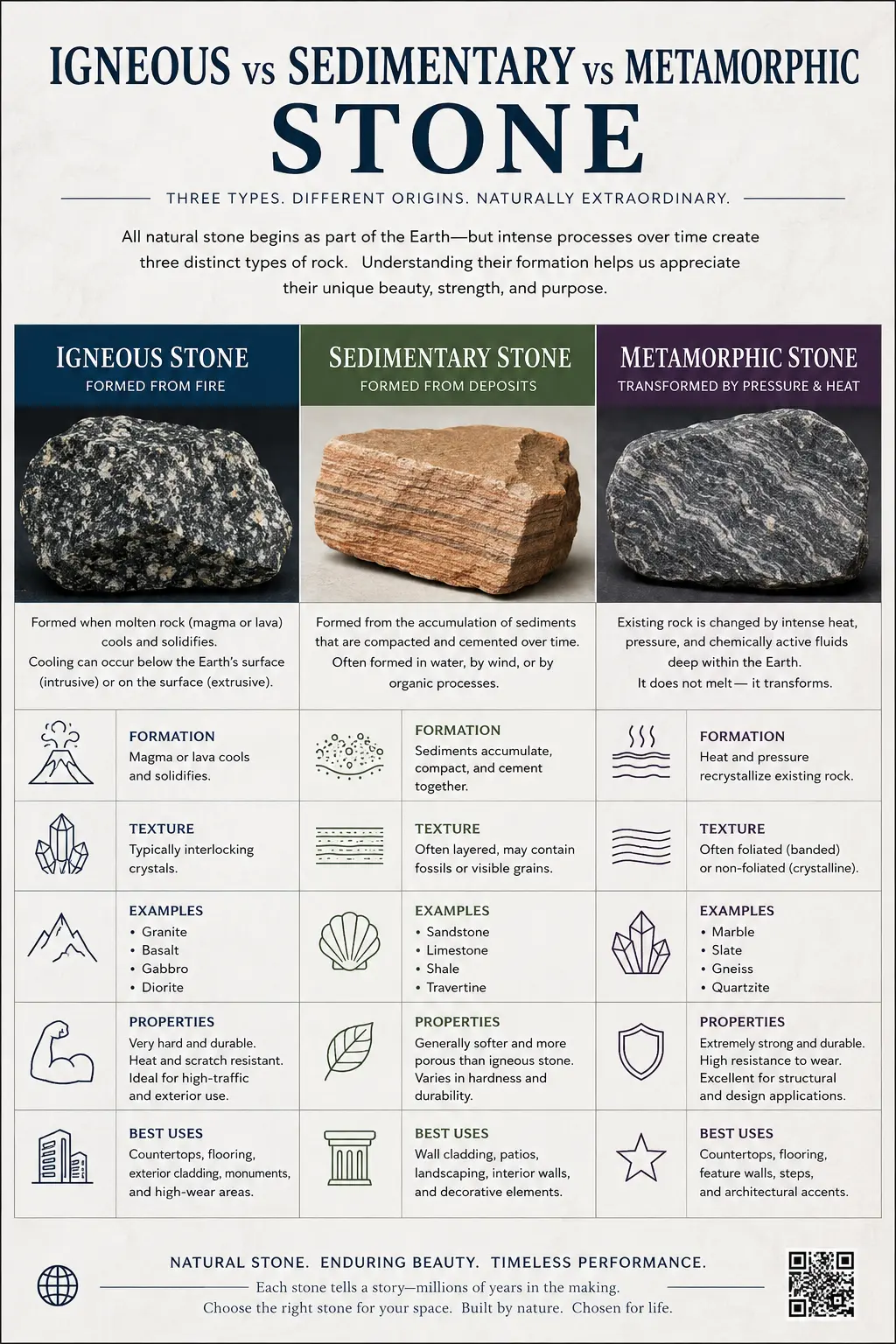
Igneous stones are formed through the cooling and solidification of molten magma or lava. The term “igneous” originates from the Latin word ignis, meaning fire.
Key Characteristics of Igneous Stones
- Formed from cooled magma or lava.
- Extremely hard and durable.
- Highly resistant to weathering and abrasion.
- Usually exhibit crystalline textures.
- Low porosity compared to many sedimentary stones.
Common Examples of Igneous Stones
- Granite
- Basalt
- Diorite
- Gabbro
- Andesite
Major Applications of Igneous Stones
- Building facades
- Kitchen countertops
- Flooring solutions
- Road construction aggregates
- Bridges and infrastructure projects
- Monumental architecture
Because of their high compressive strength, igneous stones are often selected for heavy-duty structural applications.
What Are Sedimentary Stones?
Sedimentary stones form through the accumulation, compaction, and cementation of sediments over millions of years. These sediments may consist of mineral particles, organic materials, or chemical precipitates.
Key Characteristics of Sedimentary Stones
- Formed in layers or strata.
- Often contain fossils.
- Generally more porous than igneous rocks.
- Easier to cut and shape.
- Available in diverse textures and colors.
Common Examples of Sedimentary Stones
- Sandstone
- Limestone
- Travertine
- Shale
- Conglomerate
Major Applications of Sedimentary Stones
- Wall cladding
- Landscaping projects
- Garden pathways
- Exterior facades
- Architectural detailing
- Historic restoration projects
Many sedimentary stones offer a naturally warm aesthetic, making them popular in both contemporary and traditional designs.
What Are Metamorphic Stones?
Metamorphic stones originate when existing igneous, sedimentary, or older metamorphic rocks undergo transformation due to intense heat, pressure, or chemically active fluids.
The original mineral composition changes, producing a denser and often more aesthetically appealing stone.
Key Characteristics of Metamorphic Stones
- Formed through heat and pressure.
- High density and strength.
- Distinctive veining and patterns.
- Superior decorative appeal.
- Enhanced durability in many applications.
Common Examples of Metamorphic Stones
- Marble
- Quartzite
- Slate
- Schist
- Gneiss
Major Applications of Metamorphic Stones
- Luxury flooring
- Wall panels
- Countertops
- Decorative interiors
- Sculptures
- Premium architectural projects
Metamorphic stones are frequently chosen when aesthetics and performance must coexist.
Comparison: Igneous vs Sedimentary vs Metamorphic Stone
1. Formation Process
Igneous Stone
Created by the cooling and solidification of magma or lava.
Sedimentary Stone
Created by deposition and compression of sediments.
Metamorphic Stone
Created when existing rocks transform under heat and pressure.
2. Strength Comparison
Igneous Stones
Generally possess the highest compressive strength due to their crystalline structure.
Sedimentary Stones
Strength varies significantly depending on composition and cementation.
Metamorphic Stones
Typically exhibit excellent structural integrity and density.
3. Porosity and Water Absorption
Igneous Stones
- Low porosity
- Excellent moisture resistance
Sedimentary Stones
- Moderate to high porosity
- May require sealing
Metamorphic Stones
- Low to moderate porosity
- Better water resistance than many sedimentary stones
4. Weather Resistance
Igneous Stones
Excellent weather resistance and longevity.
Sedimentary Stones
Performance depends on mineral composition and environmental exposure.
Metamorphic Stones
Typically provide strong weather resistance, especially quartzite and slate.
5. Appearance and Visual Appeal
Igneous Stones
Feature granular textures and crystalline patterns.
Sedimentary Stones
Offer layered appearances and natural earthy tones.
Metamorphic Stones
Known for dramatic veining, movement, and premium aesthetics.
6. Cost Considerations
Igneous Stones
Moderate to premium pricing depending on rarity.
Sedimentary Stones
Generally economical to moderately priced.
Metamorphic Stones
Often command premium market value because of appearance and processing requirements.
Quick Comparison Table
| Feature | Igneous Stone | Sedimentary Stone | Metamorphic Stone |
|---|---|---|---|
| Formation | Cooling magma/lava | Sediment deposition | Heat and pressure transformation |
| Durability | Very High | Moderate to High | High to Very High |
| Porosity | Low | Moderate to High | Low to Moderate |
| Strength | Excellent | Variable | Excellent |
| Appearance | Crystalline | Layered | Veined and decorative |
| Maintenance | Low | Moderate | Moderate |
| Construction Use | Structural | Decorative & Architectural | Premium Architectural |
Which Stone Type Is Best for Construction?
The ideal stone depends on project requirements.
Choose Igneous Stone When:
- Maximum durability is required.
- Structural strength is critical.
- Heavy traffic areas are involved.
Choose Sedimentary Stone When:
- Natural textures are desired.
- Landscaping is the primary application.
- Budget efficiency is important.
Choose Metamorphic Stone When:
- Luxury aesthetics are prioritized.
- Premium interiors are being designed.
- Long-term visual value is essential.
Geological Relationship Between the Three Stone Types
These stones are interconnected through the rock cycle.
- Igneous rocks can weather into sediments.
- Sediments can compact into sedimentary rocks.
- Sedimentary rocks can transform into metamorphic rocks.
- Metamorphic rocks can melt and become magma again.
- The cycle continuously repeats over geological timescales.
Which is stronger: igneous, sedimentary, or metamorphic stone?
Igneous stones such as granite generally exhibit the highest compressive strength, although certain metamorphic stones like quartzite can provide comparable performance.
Which stone lasts the longest outdoors?
Granite, basalt, quartzite, and slate are among the most durable natural stones for exterior applications.
Why is marble classified as a metamorphic stone?
Marble forms when limestone undergoes recrystallization under intense heat and pressure.
Is sandstone sedimentary or metamorphic?
Sandstone is a sedimentary rock formed from compacted sand-sized mineral particles.
Which stone is best for luxury architecture?
Marble and quartzite remain among the most sought-after metamorphic stones for premium architectural projects.
Conclusion
Igneous vs Sedimentary vs Metamorphic Stone: each possess unique geological origins, physical properties, and practical applications. Igneous stones deliver exceptional durability and structural performance, sedimentary stones provide natural beauty and versatility, while metamorphic stones offer premium aesthetics combined with impressive strength.
Selecting the right stone requires evaluating durability, appearance, maintenance requirements, environmental exposure, and project objectives. By understanding the differences among these three major stone categories, architects, builders, designers, and property owners can make informed material decisions that maximize both performance and long-term value.